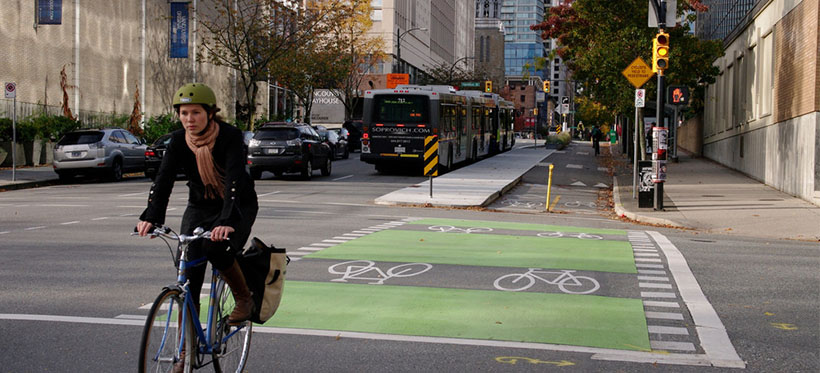
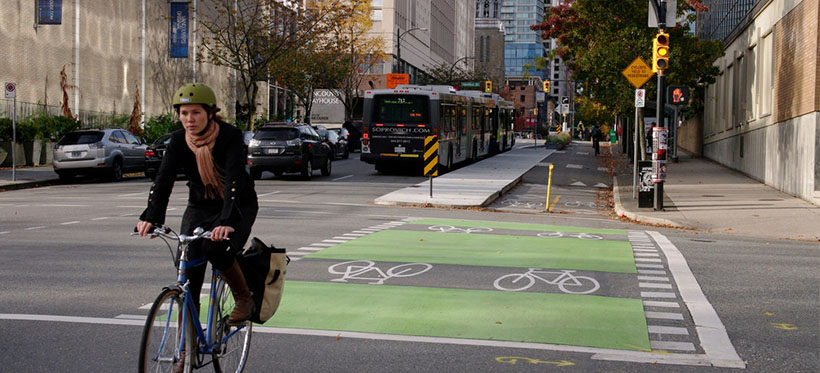
According to a study on global traffic patterns , Vancouver has the 203rd worst traffic in the world. In an effort to solve the congestion issue in city, Vancouver Mayoral candidate Wai Young proposed to remove separate bike lanes and demolish the Georgia and Dunsmuir viaducts if she gets elected. But are these infrastructures really the ones to blame?
Vancouver Magazine invited UBC Civil Engineering and Community and Regional Planning Professor Alex Bigazzi to the conversation on transportation. Bigazzi disagrees with Wai Young’s argument and suggests that population growth has a bigger impact on congestion. On the same note, Bigazzi is not optimistic about the city’s planned demolition of the viaducts, which will be replaced by new road network to expand the northeast False Creek area.
“The effect of demolishing the viaducts will be small in the big picture,” Bigazzi says, “the much bigger effect is going to be changing land use.” He argues that population growth in the planned new neighborhood will add more private cars to the roads which will be a larger contributor to the congestion problem. On that note, he believes that increasing road space for other road users such as cyclists and buses will actually increase transit efficiency, providing a better solution to the congestion problem. If transportation is referred to moving people and goods instead of moving private vehicles, then he asserts that there is really no ideological conflict war on transportation.
IC-IMPACTS (the India-Canada Centre for Innovative Multidisciplinary Partnerships to Accelerate Community Transformation and Sustainability) marked the completion of its first five years by bringing together researchers to discuss their progress on infrastructure, water and health challenges. Special guests at the two-day research conference included India’s High Commissioner to Canada, His Excellency Vikas Swarup, and the Consul General of India to Vancouver, Abhilasha Joshi. The Thursday panel session featured presentations by Civil Engineering faculty, Dr. Nemkumar Banthia and Dr. Pierre Bérubé.
IC-IMPACTS projects focus on several research areas:
low-carbon materials
strengthening infrastructure
sensors for structural, water, and health monitoring
alternative power supplies
water treatment systems
rapid diagnostic devices
solutions to infectious and water-borne diseases
mobile heath technologies
As IC-IMPACTS CEO and Scientific Director, Dr. Banthia provided an overview of the achievements and plans made by this Research Centre of Excellence, including his research on the structural and environmental benefits of using industrial wastes to create fibre-reinforced concrete. His pilot project in Thondebhavi, India has successfully demonstrated how concrete with hydrophilic fibers can not only heal cracks as they form, but reduces its carbon footprint by 50% while extending its lifetime three times over. The next project demonstrating this technology will benefit a community in Canada, the Fisher River Cree Nation.
In the water panel, Professor Bérubé discussed his work developing a passive membrane system demonstration project. He has been collaborating with IC-IMPACTS to make membrane filtration technology (currently prohibitively expensive and complex) cost-effective and modular so it can be put to use in smaller, more remote communities. Tested in a 15 month pilot project at the Eagle Lake Reservoir in West Vancouver, Bérubé’s new system runs on a small battery and requires maintenance every six months, while cleaning water for 10-100 homes – all at a cost of $0.05-$0.50 a day per person. Now at the commercialization stage, this new technology only needs to develop a market-ready version and gain health authority approval before it is ready for use. An upcoming pilot in BC’s Hupacasath First Nation will bring it one step closer to this goal.
Themes that came up during the panel discussions were the importance of creating technology solutions that can be practically applied, opportunities for collaboration between researchers, and thinking about how these solutions could work together. IC-IMPACTS is a fundamentally collaborative undertaking, creating not only a partnership between nations, but fostering the conversations between scientists that create real world solutions.
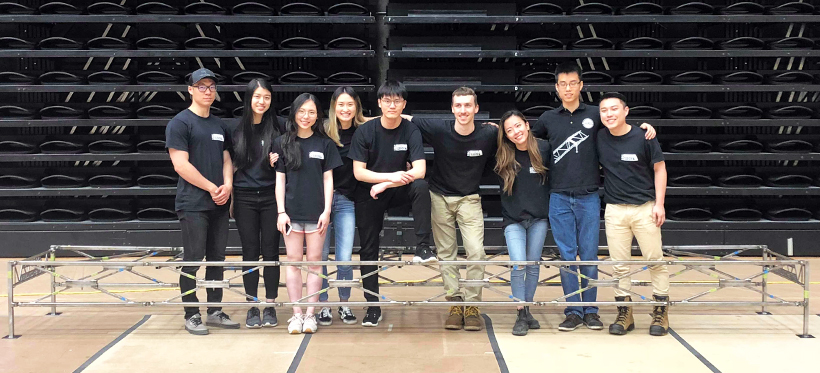
The Seismic Design Competition (SDC) includes over 30 teams from universities across the US and around the world. Each team designed a complex tall building model made from balsa wood that was tested on a shaking table. Student teams were judged on their design presentation, summary poster, the model’s architectural design, ability to fit within the design criteria and constraints, analytical prediction of their model performance, and the response of their model during shaking table testing.
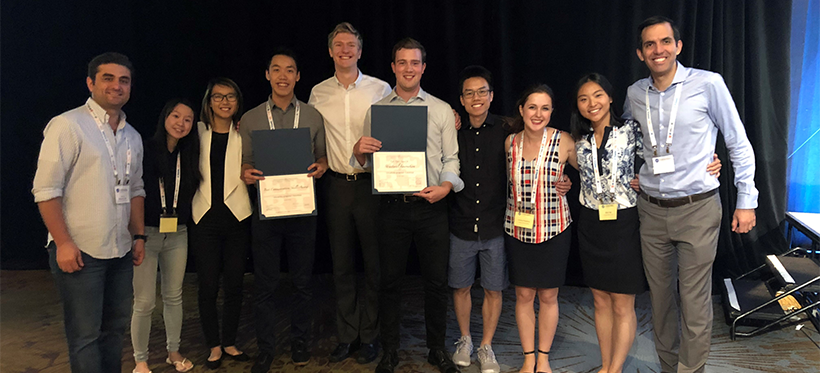
The UBC EERI Seismic Design Competition Team received both the Egor Popov Award for Structural Innovation sponsored by Degenkolb, and the CSI Best Communication Skills Award. The UBC EERI Seismic Design Team is an extracurricular, student-operated team hosted at UBC’s Vancouver campus. The club is open to civil engineering undergraduate students with an interest in structural and seismic design. Congratulations to the team!
The UBC CSCE Student Chapter came first in a nation-wide selection of the best student chapters of the Canadian Society for Civil Engineering (CSCE), an organization that aims to unite civil engineering communities across Canada. Having won the same award in 2015, this is another year of great success for the Student Chapter.
After thorough review and evaluation of 25 student chapters across Canada, the UBC CSCE was chosen to receive the President’s Best Student Chapter as the top CSCE Student Chapter in the 2017/2018 school year. Incoming president Arjun Prihar had the honour of accepting the prestigious award on behalf of the UBC CSCE at the CSCE Annual Conference in Fredericton, New Brunswick, where he was excited to meet industry professionals and other student chapter leaders from across Canada.
Recognized for its diversity of events, UBC’s student chapter strives to help students see beyond their degree by connecting students with industry professionals. This year, under the leadership of Co-Presidents Megan Norwick and Kevin Parrish, the UBC CSCE held a total of 24 events that offered a wide range of professional and personal skills development opportunities for civil engineering students at UBC. For instance, the UBC CSCE Industry Night, one of the highlights of the year, brought together over 300 participating students, professionals and researchers at UBC. Other events like panel discussions, guest lectures and workshops provided excellent opportunities for students to connect with the civil engineering community and learn about the world beyond their classrooms.
Prihar was a second-year student when he was introduced to the student chapter by former president, Antonio Castro. He quickly realized the valuable opportunities and flexible environment the student chapter had to offer. When asked about his future plans for the UBC group, Prihar hoped to carry on the efforts of Co-Presidents Norwick and Parrish to break barriers between students and professionals. Eventually, he hoped to go beyond the institution to connect student chapters across Canada. Students are encouraged to initiate and organize events using resources from the student chapter. “I’d like to see it as an opportunity for students to give back to the civil engineering community by means of professional development,” he says. The award-winning student chapter will kick start the 2018/2019 academic year with several events to engage students with the rest of the civil community. See what they have in store or get involved by visiting their website or following them on Facebook.
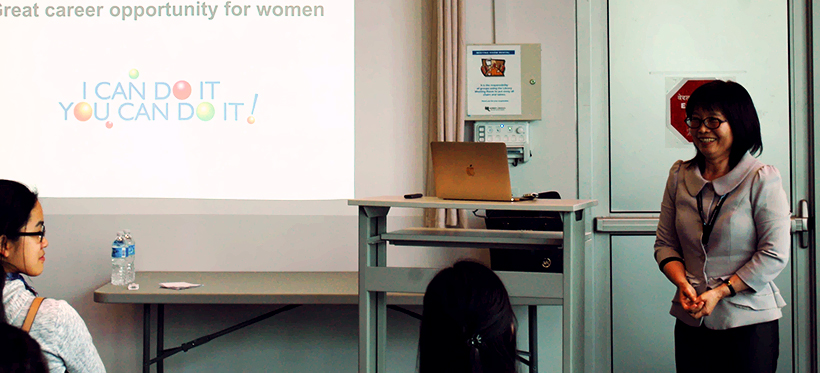
Growing up in a family of only daughters and attending an all-girls school run by nuns, Civil Engineering Professor Dr. Loretta Li never thought to differentiate activities between genders. A rarity in 1950s Hong Kong, her father emphasized the importance of education for girls, supporting his daughters’ academic aspirations despite bewilderment from extended family and friends. Professor Li has carried her father’s positive attitude forward, forging a professional career in engineering at a time when there were few women in the field. Last week, Dr. Li was able to share her experiences in Engineering with young women aspiring to enter STEM fields at the inaugural Young WISE (Women in Science and Engineering) Networking and Women’s Empowerment Event.
Young WISE is a UBC-based student-run organization seeking to help young women from high-school through post-secondary launch successful careers in STEM. They have implemented a variety of initiatives, such as a tutor mentoring program for young girls passionate about science and technology, and the Innovation Challenge, an interactive evening hosted in partnership with the Rick Hansen Foundation, UBC Patient and Community Voices, and the Neil Squire Society, where students worked to solve an access challenge for people with disabilities. For the Networking and Women’s Empowerment Event, they gathered female professionals from a variety of fields to talk about their career paths with high school students from around the Lower Mainland. Presenters included UBC faculty from Chemistry, Computer Science, Dentistry, Forestry, Public Health, and Civil Engineering.
As a civil engineer, Dr. Li worked as a junior structural engineer, a bridge engineer and then a project engineer, but her insatiable curiosity inevitably led her back to academia, where she has studied geotechnical engineering, geo-environmental engineering and soil science. During her upbringing she was surrounded by environments that celebrated girls’ abilities, but when she entered the workforce she was the first woman in two of the engineering firms where she was employed, and experienced the uphill battle against gender bias faced by many women in STEM industries. At the Young WISE event, Dr. Li shared the message that if “I can do it, you can do it!” encouraging participants to cultivate confidence and a positive attitude to help them pursue their futures. “History is history, and we need to look forward.”
Civil Engineering Professor Bernard Laval has been awarded a 2018 Killam Teaching Prize for the Faculty of Applied Science. Nominated by students, faculty and alumni, the Killam Teaching Prizes are the highest recognition of an exceptional teaching awarded to instructors by UBC. Dr. Laval’s commitment to graduate and undergraduate learning has been a positive impact on Civil Engineering students for many years. His continuous development of engaging teaching methods, integration of student feedback, and work outside of the classroom creating new educational opportunities have given students the tools they need to master the topics at hand and grow within their educational lives.
With a broad background in Engineering Physics, Physical Oceanography and Environmental Engineering, Dr. Laval teaches Fluid Mechanics, Environmental Hydraulics, Physical Limnology and Turbulent Fluid Dynamics. Student feedback has highlighted how his additions of student workbooks, in-class problem solving and skeleton notes to the traditional lecture format have enhanced their experience and engaged multiple learning styles. His interest in student development and mentorship has been appreciated by undergraduate and graduate students alike, and his student evaluation scores consistently exceed averages.
Outside of direct classroom teaching, Dr. Laval has made ongoing contributions to enhancing student growth. As the Associate Head for Undergraduate Students for the Department of Civil Engineering for four years, he oversaw the program from admissions to graduation. Among his many contributions in this role, he created a standardized structure for departmental support of student teams, enabling these extra-curricular clubs to provide important learning opportunities to advance student’s understanding beyond the classroom. Currently, he is developing new educational opportunities as the Co-director of the UNBC/UBC Environmental Engineering program, a collaboration between the two institutions that provides Western Canada’s only environmental engineering undergraduate degree. As a leader, administrator, and student advisor, Laval’s work with this program is creating new directions in which students can forge their careers. In the Department of Civil Engineering he supervises undergraduate students in summer placements, which provides them with the research experience alongside graduate students that helps them prepare for their futures.
His commitment to students has also recently been recognized by Civil Engineering undergraduates who awarded him the Undergraduate Teaching Award for Exceptional Commitment to Students. Professor Laval has been acknowledged through similar undergraduate appreciation awards in 2004, 2005, 2014, and 2015.
Dr. Laval will be recognized with the Killam Teaching Prize during convocation, on Wednesday, May 30th.
The UBC Steel Bridge team has taken 4th place in the 2018 Canadian National Steel Bridge Competition (CNSBC), held this year at the University of Waterloo. Managing to bring down their construction time from 12 minutes and 27 seconds at Regionals to 10 minutes 45 seconds, the UBC team improved their performance but still landed just shy of the coveted top three placements. Despite the intense competition, CNSBC provided a welcoming and friendly experience with teams cheering each other on. Participating in the competition was itself a learning opportunity, with UBC Steel Bridge members noting other team’s creative solutions to improve their assembly efficiency. Other teams introduced innovations like shoe supports that would allow them to hold the bridge while freeing their hands to fasten bolts, and the next challenge for the UBC team will be to see what new approaches they can bring to their future construction strategies. UBC Steel Bridge has one more competition to round out the season. Following up their regional Pacific Northwest 3rd place win in Oregon, they are heading to the University of Illinois at Urbana-Champaign this weekend, where they will compete in the nationals of the 2018 American Society of Civil Engineers (ASCE) student competition. Follow them on Facebook or at www.ubcsteelbridge.ca to keep up with their progress.
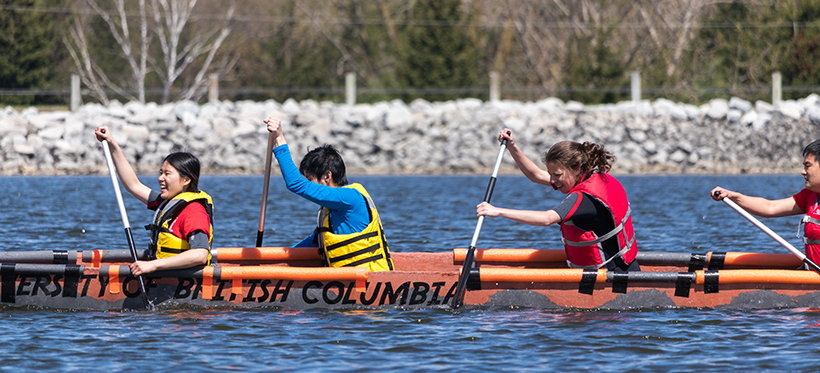
UBC’s Concrete Canoe team recently competed at the Canadian National Concrete Canoe Competition (CNCCC) at Waterloo University in Ontario. This three-day event brought together civil engineering students from all over the country from May 10th – 12th. The UBC team has been preparing for the better part of the year, designing and testing their material, designing their hull, constructing their canoe, and practicing their paddling to go up against the best of their peers Canada-wide. With the cheeky tagline “yes, it floats,” UBC concrete canoe was up to the test.
Preparing for Competition
Concrete Canoe competitions require a huge amount of preparation. The team started trial casting in the fall, experimenting with mix methods to develop a light but durable concrete well before they needed a final product for spring competitions. Besides the material development, they worked on their hull shape, using physics to ensure stable and fast floatation for four occupants. The team’s theme this year was “Volcanoe,”and they added the innovation of making two different colours of concrete, poured to resemble lava flowing down the boat. The team held race practices at the Jericho Sailing Centre to make sure their team was up to the athletic as well as technical challenges. Finally, their canoe, paddles and presentation materials were packed in a 1000 lb. crate and transported across the country via rail, while the 13 competing members flew out to meet it in Waterloo.
The Events in Waterloo
During the three day competition at CNCCC, four elements make up the teams’ final score: a design paper, an oral presentation, the workmanship of their canoe, and of course, the races.
Day one was product display: teams showed off their canoe at a booth prepared to showcase its design highlights. The second day featured a five minute oral presentation in front of a 120 person audience, after which they had to answer judges’ questions about their design paper. These two days allowed the judges to assess each team’s academic performance, workmanship, and ensure competition rules were followed – deducting points if they were not. With concrete being a difficult medium to work with, this is where the UBC Concrete Canoe’s months of material design, trial casting and their use of two colours came into play. Their hard work paid off, resulting in an extremely stable hull which more than doubled the minimum required capacity of four people, carrying up to 11 passengers.
The third day was race day. Paddlers competed in five races: in teams of two for women’s and men’s endurance and sprint, and then in a final four person co-ed sprint. While the scores were down to teams’ final times, other aspects of the canoes’ performance were also reviewed: they still had to float when filled with water and were inspected for damage.
The category scores UBC Concrete Canoe received this year were:
Design Paper: 4th Place
Final Product: 7th Place
Oral Presentation: 8th Place
7th Place Overall
The podium was dominated by Quebec teams, with École de technologie supérieure, Polytechnique Montréal and Université de Sherbrooke taking the top three places respectively. UBC’s 7th place result was solidly in the middle of the pack, beating out Waterloo, McGill, Western, Université de Moncton, Queens, Ryerson, Dalhousie, St. Clair and Université d’Ottawa.
UBC Assistant Captain, Ellen Chen described the CNCCC community as very supportive, with teams cheering for both their own members and others, citing the intense nature of the preparation as a bonding experience. There were joint socials and meals, such as an icebreaker party and award banquet, where competitors from different schools mingle and got to know each other, growing their civil engineering network across the country.
How to Join
While largely oriented towards civil engineering, the team is open to all students at UBC, and members also come from geological engineering, materials engineering, and chemical engineering. This year’s team was the largest yet, with over 40 members working on design, testing, and construction. Chen expressed how it’s a great place for first-year engineering students looking for a specialty to get to know civil engineering. At Concrete Canoe, they can get exposure to the hands-on lab work and design software featured in later studies, as well as the depth of experience not always available in a single term class. Now graduating, Chen described her experience joining right at the beginning of her time in civil engineering:
It’s definitely been a highlight for me in my undergrad. I’ve been a part of the team since second year, and the learning from people who have mentored me as well as working with these younger students now, I’ve enjoyed every moment of it.
UBC Civil Engineering Professor Emeritus Donald Mavinic spoke to the Star Vancouver about the need to update Canadian wastewater management standards. As the chair of a panel that spent six months reviewing water contaminants in Canadian cities, Mavinic discusses the need for treatment infrastructure to catch up with the new pollutants entering our water. The panel released their report and recommendations at the Blue Cities conference in Toronto early this May.
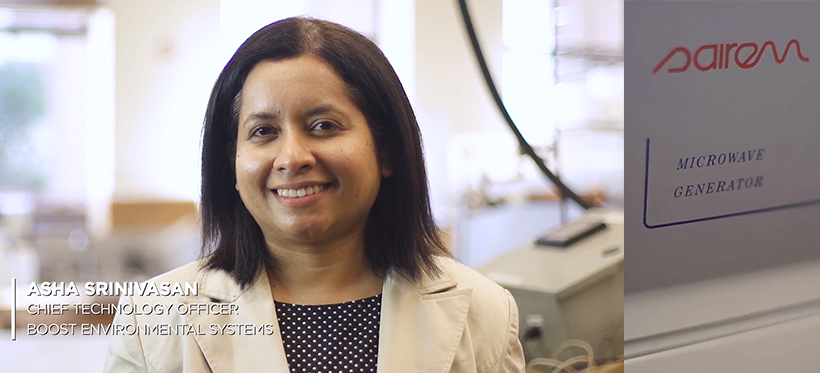
Dr. Asha Srinivasan listed among powerhouse Canadian environmentalists like Naomi Klein and David Suzuki for her work in waste reduction
To celebrate Earth Day, CBC released an article listing “13 Canadian environmentalists and innovators changing Earth for the better.” In addition to household names like David Suzuki and Naomi Klein, the list included a member of the UBC Civil Engineering faculty, Dr. Asha Srinivasan. The mention highlighted her work as Chief Technology Officer with Boost Environmental Systems, the company she co-founded to develop a new technology that reduces agricultural waste. Building on research by UBC Civil Engineering professor Dr. Victor Lo and Research Associate Dr. Ping Huang Liao, the IMPACT process solves a variety of waste management and environmental problems.
IMPACT reduces costs associated with processing sewage sludge and manure and helps divert excess nutrients that would otherwise pollute water systems into a product that farmers can sell. Scalable and modular, it can be implemented at the level of an individual dairy farm, or as part of a wastewater treatment plant that serves a community.
Journey at UBC
Joining the Civil Engineering department in 2012, Srinivasan started her journey at UBC as a Postdoctoral Researcher after graduating from her Ph.D. at the University of Regina. With an NSERC fellowship in Industrial Research and Development, and later a MITACS fellowship, she worked with Dr. Victor Lo’s research group and Opus DaytonKnight Consultants (now WSP Global) on the development of Dr. Lo’s Microwave Enhanced Advanced Oxidation Process (MW-AOP) technology, which has now been trademarked as the IMPACT process.
Continuing the research that Professor Lo and Dr. Liao had conducted since 2003, Srinivasan’s role was to set up and operate a fully working pilot system, transforming the technology from its second-generation stage in UBC’s McMillan Building, to a working on-site demonstration in Abbotsford’s James Wastewater Treatment Plant. This collaboration between the City of Abbotsford, Opus and Professor Lo’s research group allowed IMPACT’s “sludge busting” abilities to be tested on real wastewater.
Using microwave heat and hydrogen peroxide, the IMPACT process:
Reduces the volume of waste by 40-60%;
Changes the composition of the waste so it can be more easily processed;
Reduces nutrient runoff pollution from farmland into nearby waterways;
Enables the production of commercial-quality fertilizer for resale.
Revolutionizing Wastewater Treatment
By applying microwave heating and oxidation to sewage, IMPACT reduces the amount of solid waste, or “sludge” that a treatment plant has to process. Wastewater treatment facilities spend 50-60% of their budgets dealing with sludge treatment and disposal, and facing harsher restrictions on sludge disposal in landfills, treatment plants are in a sticky situation. IMPACT is considered a “zero sludge technology” (or a very low sludge yield), and by significantly reducing the amount of waste sludge that a treatment facility has to process, it instantly increases the facility’s capacity and efficiency. This has immediate implications for growing communities with limited space and resources, allowing them to become more sustainably prepared for the future with an investment that would only take two to four years to recoup in savings.
Finding Pollution Solution to a Dairy Dilemma
The other application for the IMPACT system is in dairy farming. The technology can be scaled to fit an average dairy farm where it would prevent the pollution caused by nutrient runoff. In a typical Fraser Valley dairy farm cow manure has been traditionally used as a fertilizer, but this can lead to soils becoming over-saturated with nutrients, which pollute nearby bodies of water when they wash away. Used by a farm, the IMPACT process not only reduces waste at the source, but when combined with a struvite crystallizer (like the one invented by UBC Civil Engineering Professor Donald Mavinic) it can extract the nutrients and convert them to commercial-quality fertilizer which can then be resold. The technology was successfully tested in an on-site demonstration at UBC’s Dairy Education Research Centre at Agassiz.
From Academy to Marketplace
Srinivasan and her collaborators are one demonstration project away from turning their research into a market-ready commercial solution. They will get the chance in June 2018 to set up a larger-scale pilot system in partnership with Metro Vancouver at the Annacis Research Centre, adapting their technology to serve a large urban centre. This project is an opportunity for them to do the year or two of development necessary to create a full system that is at least partially automated – the minimum viable product for commercialization.
With the market application on the horizon, Srinivasan and her collaborators formed the UBC spinoff company, Boost Environmental Systems, in order to eventually license their invention to industry consumers. As Chief Technology Officer of the new startup, Srinivasan asserts that there’s still a lot of research and development that needs to happen before IMPACT is ready for commercial release. Nonetheless, she said that the support available in the city to develop their new company has been very valuable:
Only after coming to Vancouver I got this exposure… I graduated from the University of Regina in Saskatchewan and until then I was in India, and I really had no idea how you market your technology – never even thought about it. But then when you come here you have such huge platforms. There’s a mechanism that’s going to help you, teach you – literally from infancy stage to toddler stage they really walk with you and teach you how to do everything. That mechanism is very impressive …the whole system is well built to support startups and incubate them.
They worked with a venture accelerator program offered through the BC Innovation Council (BCIC), as well as entrepreneurship@UBC, an on-campus resource with programs like Lean Launch Pad and Venture Builder, to understand the market they were entering. Based in the Robert H. Lee Alumni Centre, entrepreneurship@UBC is a venture accelerator that can help UBC students and faculty with the business expertise needed to transition their work from the academy to the marketplace.
Now a UBC Civil Engineering Research Associate, Srinivasan continues to work in the academic world, while the BOOST Environmental Systems’ business model is still being explored. Nonetheless, her path shows how university research can have a real-world impact, creating sustainable businesses that prepare environmental and economic solutions for British Columbia’s future.
With the spring term coming to a close, the 2018 class of Civil Engineering students are celebrating their graduation and transition into the engineering world outside of UBC. Amidst the celebrations, graduates affirm their commitment to engineering ethics, recognize the contributions of students to the UBC community and explore the field of civil engineering around the globe.
Iron Ring Ceremony & Civil Engineering Dinner
The iron ring is famous to the engineering profession. Gracing the pinky of the working hand, the iron ring is a symbol of the ethical obligations inherent to the industry, and is given to engineering students upon graduation. Developed in Canada by the Corporation of the Seven Wardens, the Ritual of the Calling of an Engineer is the ceremonial bequeathing of the iron ring which dates back to 1922, and was initiated by a civil engineer. Dr. Herbert Edward Terrick Haultain, a professor at the University of Toronto, first proposed the idea of a Canadian organization to foster ethics in engineering and connect new engineering graduates with established engineers, encouraging a culture of responsibility, pride and humility. When the original seven founders of The Corporation of the Seven Wardens (the organization that oversees the Iron Ring Ceremony across Canada) brought his idea to life with the creation of the iron ring tradition, Haultain wrote to poet Rudyard Kipling, who agreed to create the ceremony. While originally made of iron, most rings are now constructed of stainless steel.
This year’s Iron Ring Ceremony was at Vancouver’s iconic Queen Elizabeth Theatre, where Camp #5 of The Corporation of the Seven Wardens gave the ring to engineering graduates from across the lower mainland. After the official ceremony, the different engineering departments separated for their individual graduate dinners. The Civil Club hosted a three-course plated dinner for forty Civil Engineering graduates at the Rogue Convention Centre.
Iron Pin Ceremony
New undergraduates also had an opportunity to reflect on and affirm the ethical obligations of the engineering profession, with the Iron Pin Ceremony. This ritual encourages prospective engineers to approach their studies from the perspective of their public duty. UBC Engineering was the first to do an Iron Pin Ceremony, and it has since been adopted by other post-secondary institutions. While the main Iron Pin Ceremony for first year UBC students happens in the fall term, transfer students and others who were unable to attend the earlier ceremony were able to join their classmates in wearing the Iron Pin and pledging to uphold the Engineers and Geoscientists of BC (EGBC) code of ethics in a smaller ceremony at the Engineering Student Centre this spring.
Student Leadership Award Recipients
The Civil Club also recently recognized leaders within the civil engineering student body at their March Alumni Student Night. Congratulations are in order for Julia Dinglasan who was named Rookie of the Year, Jasmine Smith for receiving the Lifetime Commitment Award, and to Daniel Adria, Matthew Cheung, Megan Norwick, Yezi Zhang, Kevin Parrish and Maria Bitar who were recognized for their leadership and committed service to Civil Engineering clubs and teams.
Grad Trip to Havana
Graduating students who joined the annual Grad Trip had the opportunity to explore civil engineering outside of Vancouver, visiting sites in Havana, Cuba. Hosted by Technical University of Havana, Professor Bruno Clavelo and students took the UBC contingent on a tour of the Acueducto de Albear (Albears Waterway), one of the seven wonders of Cuban civil engineering. Built in the 1800’s, the waterway is entirely gravity-fed and takes water from the top of a natural spring ten kilometers to the city distribution centre, providing 16 percent of Havana’s water. They also toured the University’s facilities, including the hydro lab (pictured above). Professor Clavelo also showed UBC students the civil engineering sights of old Havana.
Every year, the Civil Club organizes a trip for graduating students, and previous years have visited sites like the Hoover Dam and Puerta Vallarta water treatment facilities. Students interested in getting involved as attendees or organizers should contact the Civil Club.
Convocation May 30th
Congratulations to those students who are convocating on May 30th! Deadlines for regalia and ticket reservations are fast approaching in May, so see the UBC graduation checklist for further information. Also, watch your emails for an invitation to the Department of Civil Engineering student graduation reception and celebrate your achievement with fellow graduates and faculty!
Friday, April 20, 2018 | By Amelia Pitt-Brooke Pitt-Brooke
After a vote by the undergraduate student body, the Civil Engineering Club has announced the recipients of this year’s Civil Undergraduate Teaching Awards:
Each award recognizes a professor who has demonstrated a commitment to fairness, communication, and quality teaching to students in his or her courses this past academic year. Furthermore, the Exceptional Commitment to Students Award was voted for by students across all years and it focussed on the professor’s attitude towards student development. Congratulations to all the winners and thank you for your outstanding contributions to undergraduate learning!
Civil Engineering Students Progress to ASCE Nationals in Illinois
The UBC Steel Bridge team won 3rd place in last week’s regional competition held by the American Society of Civil Engineers’ (ASCE). The 20 member team took their 17’ model bridge to the ASCE Pacific Northwest Conference in Klamath Falls, Oregon, to face off against 18 other teams and put their skills in bridge design and construction speed to the test. It was a heated competition, and the UBC 3rd place ranking was only 0.2% behind the second place team.
Founded at UBC in 1999, the Steel Bridge team is a place where Engineering students get to connect their in-class learning with hands-on experience in design. Students expand their knowledge of design programs AutoCAD, S-Frame, and SolidWork, and after the design stage they turn their plans into reality by fabricating the steel members of their bridge. Once all the components are made, the team practices their construction skills in order to take part in the competition, which not only scores the overall design, weight and loadbearing capacities of their structure, but how fast and efficiently it can be assembled. In the lead up to their Oregon trip, the team had been feverishly practicing their assembly in after classes and on weekends.
Steel Bridge Sponsorship Director, Melissa Luo described the competition process before the team left for Oregon:
“The team constructs under the time limit across an imaginary river and transportation zone, so we actually have to run, bring members, and construct. It’s a really fun experience for all of us!
One of the categories is actually construction efficiency, so it’s [the] number of builders [multiplied] by your time – so if you have 3 people building in 10 minutes that better than 4 people building in 9 minutes. This year we’re trying out three people and we’re expecting to build it in under 10 minutes.”
Check out the 2017 timelapse construction video (actual time: 8 minutes and 30 seconds):
Judges inspect every inch and bolt of the completed bridge, and measure the amount of deflection there is after a total load of 2500 lbs is placed on it. Where the load is placed is decided by a random throw of a die, forcing teams to design for six possible cases. Any small infraction of the contest rules results in penalized points. In Klamath Falls, the UBC Steel Bridge Team’s final 3rd place ranking was determined by a combination of their other scores. They received the following category placements:
1st in Construction Economy
3rd in Display
3rd in Lightness
2nd for their Technical Paper/Presentation
As one of the top three teams, they are able to progress to the ASCE Nationals, which will be held in Champaign, Illinois.
The team will also compete in the Canadian National Steel Bridge Competition (CNSBC) in May, travelling to the University of Waterloo to compete against Canadian post-secondary teams. Placing 2nd in 2016 and 3rd in 2017, UBC Steel Bridge has historically done well in the Canadian competition, but will again have to face the reigning champions for the last two years, Montreal’s École de Technologie Supérieure as well as the other Canadian teams.
UBC Concrete Canoe also went to Klamath Falls to compete at the ASCE Pacific Northwest Conference. They placed 4th overall, and received 1st place for Design Paper, and 3rd place for Final Product.
Find out more about UBC Steel Bridge and follow their competition progress by visiting them on their website or on Facebook.
Clockwise left to right: Dr. Banthia meets with representatives from DBT and DST, the location of Varanasi on the Ganges river, the river rejuvination scoping workshop held in Varanasi (Prime Minister Narendra Modi’s riding).
Organization led by UBC Civil Engineering Professor taps into National River Ganges Rejuvenation
The Ganges River is a lifeline for over 500 million people in the Indian sub-continent and revered by over 1 billion people in India and 16 million in the Indian diaspora worldwide. Over a million of them are Canadians, residing largely in British Columbia, Alberta and Ontario.
The river is the focus of a new collaboration between IC-IMPACTS and India’s Department of Science and Technology (DST) and Department of Biotechnology (DBT), in close association with highly respected Indian Institute of Technology (BHU), Varanasi. Working together, the three organizations have identified sites in the city of Varanasi where research and remediation will have maximum impact in cleaning the Ganges River at the best possible cost.
At more than 2,500 kilometers in length, the Ganges is the longest river in India, and one of the most polluted in the world. Water pollution affects humans and countless animal species, including the endangered susu, or Ganges River dolphin. The long-term impact of daily human activities and industrial waste dumping have created an ecological threat and presents a serious challenge to scientists worldwide to find a cost-efficient way to clean the river.
The UBC-hosted National Centre of Excellence IC-IMPACTS, or the India-Canada Centre for Innovative Multidisciplinary Partnerships to Accelerate Community Transformation and Sustainability, is one of the Pan-Canadian Centres of Excellence, and is dedicated to fostering research collaborations between India and Canada. Led by UBC Civil Engineering Professor Dr. Nemkumar Banthia, IC-IMPACTS brings together researchers, industry professionals and leadership from India and Canada to address infrastructure, water, and public health challenges facing both nations. Dr. Banthia is the Centre’s Scientific Director, bringing his extensive and award-winning expertise in concrete materials and structures to this bilateral research organization.
During Prime Minister Justin Trudeau’s visit to India in February 2018, Dr. Banthia met with the Honourable Navdeep Bains, Canada’s Minister of Innovation Science and Economic Development, in New Delhi, and also signed a work plan with the DBT and DST.
At the same time, IC-IMPACTS Chief Operating Officer Shapoor Marfatia was downstream at Varanasi, facilitating a workshop. Working with IIT (BHU) and DBT, IC-IMPACTS co-organized a two-day workshop to determine the scope of the Ganges rejuvenation project. The workshop brought together expertise from Canada and India and resulted in a forthcoming call for research proposals focused at a site in Varanasi.
Situated on the banks of the Ganges, the city of Varanasi is considered to be the cultural heart and spiritual capital of the country and is often referred to as the “Holy City of India.” Varanasi is also thought to be the oldest living city in the world and the location of the Buddha’s first sermon. The city is famous for its ghats, stone steps where bathers, worshipers and mourners seek access to heaven for their loved ones in the waters of the Ganges.
IC-IMPACTS’ call for proposals will identify cost and space-effective onsite solutions at Varanasi that are scalable and can then be applied to large bodies of water in India and Canada affected by extensive pollution. The research will also lead to reducing the boil water advisories that many First Nations communities in Canada face.
Varanasi was strategically chosen because it is located at the confluence of research, economic and political opportunity. Varanasi is also the parliamentary riding of Indian Prime Minister Narendra Modi, who has made cleaning the Ganges a national priority, investing more than $3 billion in a new strategy for this massive infrastructure challenge. Since IC-IMPACTS’ workshop in Varanasi, the city has garnered greater international attention. In March, French Prime Minister Emmanuel Macron visited Varanasi ghats with Prime Minister Modi, touring the Ganges and bolstering international recognition of the city and the river’s importance.
Cleaning a river like the Ganges is expensive, and no country has attempted it at India’s level of per capita GDP. As a point of reference, from 1970 to 1990, five of the six European countries that share the Rhine spent $50 billion on communal and industrial waste-water treatment plants. In 2007, China vowed to spend more than $14 billion on Lake Tai, its third-largest freshwater lake.
Shapoor explains, “IC-IMPACTS is opening a gateway to the heartland of India’s large and growing economy. Ganges Rejuvenation will be a tipping point and a testimony to Canadian technologies. The project brings together IC-IMPACTS’ three areas of focus—large-scale infrastructure, water management and public health—making the project a significant multidisciplinary and multi-sectoral opportunity for Canada and India partnerships.”
IC-IMPACTS also recently implemented other new collaborations that encourage scientific and economic cooperation between the two nations:
An agreement with IT giant Tata Consultancy Services will foster research opportunities for Canadian graduate students in India.
A partnership with SenseIndia will see high-tech sensors installed on aging bridges and other infrastructure across the country.
A collaboration with major infrastructure provider Starmass, and the Government of Telengana will develop construction codes and regulatory bodies for the newly formed state in South India.
A joint call for research proposals with India’s Department of Science and Technology will pursue improved building fire safety through structural engineering, materials science and cyber-physical interfaces.
A collaboration between IC-IMPACTS, the Rick Hansen Foundation and the India Spinal Injuries Centre that will address unmet needs in spinal cord injury care.
IC-IMPACTS will also play a facilitating role in the recent agreement between UBC and a giant incubator, T-Hub, who will work together to create a “market access bridge” for startups in both countries.
“From its humble beginnings in 2012-13, IC-IMPACTS is now recognized as a very successful model for international research collaborations, innovative HQP training, respectful community engagement and creation of technologies that promote international trade.” — Dr. Nemkumar (Nemy) Banthia, CEO and Scientific Director, IC-IMPACTS
More information about IC-IMPACTS projects can be found at ic-impacts.com, including information about the forthcoming call for proposals for the Ganges River rejuvenation at Varanasi.
Peter Taylor and Michael Jacobs to be honoured at 2018 Applied Science Celebration
Peter Taylor and Michael Jacobs will be recognized on Thursday, April 12th for their contributions to civil engineering in BC and to the Department at UBC. Starting in 2015, the Dean’s Medal of Distinction was created to celebrate the 100 year history of the University of British Columbia, and the Faculty of Applied Science.
Peter Taylor received a Master of Applied Science from UBC’s Department of Civil Engineering in 1962, and went on to complete a PhD at the University of Bristol. Since then, he has been active in bridge safety, design and efficiency, contributing to the construction of bridges in Montreal, the United Kingdom, Hong Kong, China, Greece, Charleston, and San Francisco, as well as Vancouver’s Alex Fraser Bridge. He and business partner Peter Buckland received the Order of Canada, and Taylor has also earned numerous medals from the UK, Canada and the US as well an Honorary Doctor of Engineering from the University of Bristol. Co-founding Buckland & Taylor Ltd. over forty years ago, he and Peter Buckland have hired Civil Engineering graduates and worked with the Department as industry instructors, as well as contributing to the building of the Civil Design Studio.
Graduating from UBC’s Civil Engineering Department with a BASc in 1985, Michael Jacobs has since gone on to be a longstanding contributor to residential construction and road building in Kelowna and the BC Interior. After receiving his Master’s Degree in Construction Management in 1988 from Stanford University, he went on to work for Emil Anderson Construction (EAC). First a Project Manager for their Kelowna residential development, Dilworth Mountain Estates, he then founded EAC subsidiary, Dilworth Quality Homes. Now, he is the EAC CEO and Chairman of The Board, after holding the positions of General Manager of Land Development, Vice President, and President. EAC has worked on countless other BC construction projects including the bobsleigh, luge and ski jump venues for the 2010 Winter Olympics, as well as bridge, overpass, road and rail work in Kelowna, Prince Rupert, the Fraser Canyon and the Fraser Valley. He has contributed to the community as a UBC supporter, founding Member and former President of the Kelowna Chapter of the Urban Development Institute, and former Chair of the BC Roadbuilders. He received the 2014 Business Leader of the Year award from the Kelowna Chamber of Commerce.
To celebrate these and other Applied Science Dean’s Medal of Distinction winners on April 12th, RSVP here for the ceremony and cocktail reception at Jack Pool Hall, in the Robert H. Lee Alumni Centre.
Civil Engineering professor Dr. Nemkumar (Nemy) Banthia was interviewed by Global National about the March 15th pedestrian bridge collapse in South Florida that killed six people, and the safety of Accelerated Bridge Construction techniques.
Dr. Sheryl Staub-French recognized in the magazine’s list of influential women in STEM
Civil Engineering Professor Sheryl Staub-French was recently acknowledged in BC Business Magazine’sB.C.’s Most Influential Women 2018: Stem Stars, a list that included six faculty members from UBC Applied Science, and several students and alumni. This year’s edition highlights influential women who are industry leaders and innovators in STEM (science, technology, engineering and math), recognizing the gender gap that remains in these fields and the need for female representation. The list recognized Staub-French for her research at UBC, which includes directing the BIM TOPiCS Lab (Building Information Modelling from the perspectives of Technology Organization Process in Context and across Stages).
Dr. Staub-French’s research is focused on understanding and improving best practices for the delivery of sustainable building construction projects through effective and collaborative use of building information modeling (BIM). She has over 15 years of consulting and research experience studying the technological and organizational issues of BIM implementation within different types of AEC organizations and across different types of building projects. She has contributed more than 75 papers in leading journals and conferences on BIM and related topics, and has contributed to the development of guidelines and best practices for BIM adoption and implementation. She is actively engaged with industry to advance BIM adoption, currently serving on the Education Committee for BuildingSMART Canada.
As well as an innovative UBC researcher and professor, Dr. Staub-French is also an active advocate for gender parity in engineering fields. She was recently appointed Advisor to the Dean on Equity, Diversity and Inclusion (EDI) for the Faculty of Applied Science and is also the inaugural holder for the Goldcorp Professor for Women in Engineering at UBC. She is Director of the eng•cite program, which aims to engage girls and young women in engineering topics and increase female UBC Engineering enrolment from the current national average of 20% to 50% by 2020.
Dr. Staub-French is committed to encouraging gender equality in STEM by providing role models for aspiring female engineers. In a recent article on her EDI role at APSC, she noted, “Equity is really my life’s passion, a fundamental value that I have, and I want to continue the amazing work that’s been done at APSC and make gender parity and greater representation of minority and marginalized groups a reality here.” Her recognition in BC Business is one more step towards that goal.
Rajat Jain, a civil engineering MASc student, claimed the second place prize in the 3MT@UBC competition. Tasked with the challenge of presenting their thesis research in a condensed but engaging three minute talk, competitors in the Three Minute Thesis (3MT) came from a variety of departments across campus. On March 15th, these graduate students went head to head to see whose presentation skills resonated with an audience at Jack Poole Hall. While viewers got a taste of the innovative research happening across UBC and voted on a people’s choice title, a panel of judges selected the winners. Jain won a $500 prize and the opportunity to speak at several UBC events in the upcoming weeks for a presentation on his work under Professor Pierre Bérubé, providing effective and cost-efficient potable water solutions to Indigenous communities.
Anna Smith, MSc in Forestry, won Honorable Mention for a talk on the influence of heavy metals on juvenile coho olfaction and behaviour. First Place and People’s Choice winner Andrew Robertson, PhD candidate in physics, will continue on to the Western Regional 3MT Competition at the University of Regina, for the chance to represent UBC with his presentation on Enabling Targeted Alpha Therapy for Treatment of Advanced Cancers. View the presentations of all three 2018 3MT UBC finalists here.
At last Sunday’s Academy Awards, Lee Unkrich, the director of the animated film Coco, concluded his acceptance speech by reminding viewers that “representation matters.” The story of a Mexican boy’s journey through the Land of the Dead, Coco features an almost all-Latino voice cast and was inspired by Mexico’s rich culture and traditions.
Another hit film, Black Panther, is notable not only for being the first Marvel movie to feature a predominantly black cast and strong African cultural elements, but also for including characters and story points that may inspire young people — particularly young girls and women of colour — to explore STEM disciplines. For instance, Shuri, Black Panther’s younger sister, is a tech prodigy who uses her intellect, inner strength and leadership skills to help her nation overcome adversity.
When people see themselves in positive onscreen role models, they may be encouraged to pursue goals that they might previously have considered out of reach, or to choose a life path they may otherwise not have considered at all. But it isn’t just movie characters that can have this effect. In a university context, a program whose faculty and student populations are gender-equal and highly diverse may be more welcoming to prospective students and professors, as well as an environment where people from all backgrounds are more likely to thrive.
It is an environment like this that Sheryl Staub-French, PEng, a UBC professor of civil engineering and APSC’s newly appointed Equity, Diversity and Inclusion Advisor, is working to establish here.
“The ultimate goal is for engineering and other professions to reflect the society we live in,” says Staub-French, who is also the director of the eng-cite program and Goldcorp Professor of Women in Engineering at UBC. “What kind of innovations are we missing out on by not having a more diverse group of people working on important questions in the STEM fields? And, more generally, how many people aren’t fulfilling their ambitions or achieving their full potential because of gendered cultural barriers?”
Over the last several years, APSC has taken significant strides forward on the diversity front. Initiatives have increased female enrolment in first-year undergraduate engineering programs by 60% between 2010 and 2014, and extraordinary female leaders never fail to emerge within UBC’s engineering community, which is more tightly knit than most. But in her new role, Staub-French intends to bring the diversity issue “more into focus as a guiding principle — to put it front and centre as a key priority in the faculty.”
Like many women, Staub-French has experienced first-hand what the absence of appropriate role models can do to a young woman trying to find her place in male-dominated educational programs and professions like engineering. Looking back at her student days at Santa Clara and Stanford and her many years in the private sector, she sees how easily a gender-imbalanced environment can limit a person’s ideas about what they are capable of, what is right for them, where they belong.
“Equity is really my life’s passion, a fundamental value that I have, and I want to continue the amazing work that’s been done at APSC and make gender parity and greater representation of minority and marginalized groups a reality here,” she says.
Staub-French’s appointment was announced on the same day that UBC revealed it would be searching for a new Senior Advisor to the Provost on Racialized Faculty. Together with other groups at UBC, the role “will support [UBC’s] institutional commitment to advancing equity and inclusion in the scholarly and leadership environment for faculty at UBC.”
Civil Engineering Assistant Professor Alex Bigazzi and his students are using the data from these pedal and solar powered rental vehicles to look at how alternate forms of transportation change the way we move. Working with the Veemo pilot project happening across the UBC campus, Dr. Bigazzi wants to see if the app-activated electric-assisted tricycles will have an effect on reducing established transportation patterns, particularly car use. For the full interview with Dr. Bigazzi and more about the Veemo beta test, check out the article on the CBC.
Civil Engineering Graduate Students won second place in the World’s Challenge Challenge at UBC for their work on a clean drinking water technology that could have applications in First Nations and small remote communities without access to potable water. The World’s Challenge Challenge is a competition hosted by the UBC Global Lounge encouraging students to form teams of three and tackle global issues. The interdisciplinary team of Civil MASc student Rajat Jain, Civil MEng student Jatin Maheshwary, and computer science student Karan Grover each took home a $1000 prize for their plan to commercialize the gravity-powered, bacteria-supported drinking water filtration system developed by UBC Civil Engineering Professor Pierre Bérubé. The team is also a contender for the prestigious Hult Prize, where they have advanced from the Canada-West round and are heading to the Regional Finals in San Francisco in March. This year’s UBC World’s Challenge Challenge winners, Allison Gacad, Renhao Wang and Rachel Cheang will be taking their response to issues of food security to the Global Final at Western University for a chance to win $30,000 towards developing their global solution.
An interdisciplinary team of UBC students is ready to take their drinking water technology case one step closer to the $1 million Hult Prize. Rajat Jain, Jatin Maheshwary, and Karan Grover have joined forces to create a business case for the drinking water technology developed under the supervision of Civil Engineering professor Pierre Bérubé. Their entry to the Canada-West round of the competition was the winner selected from fifteen other teams of BC university students.
The Hult Prize launched in 2009 as a way to encourage social enterprise as a solution to some of the world’s most pressing problems. It is awarded to innovative, promising start-ups emerging from universities, as a means of launching them into business and helping them scale. The Hult Prize has been referred to as “the Nobel Prize for students.”
For their entry into the competition, Rajat, Jatin, and Karan have created a business case for a clean drinking water technology developed at UBC Civil Engineering under the supervision of Professor Pierre Bérubé. The team has designed a plan to commercialize gravity-powered, bacteria-supported drinking water filtration, designed as a low-cost, low-maintenance solution for smaller and rural communities who lack safe, clean drinking water.
Rajat, a second-year MASc student working under Professor Bérubé, wanted to put together a team that bridged disciplines for the best possible outcome of the project. He recruited a fellow Civil Engineering student, Jatin Maheshwary, from the Project and Construction Management group, and Karan Grover, a computer science student with knowledge in business plans, marketing, and implementation. The three complementary skill sets brought the group to success in the Canada-West round of the Hult Prize. As the successful team in the Canada-West round of the competition, Rajat, Jatin, and Karan will be travelling to San Francisco from March 9 to 11 to compete in the Regional Finals, one of approximately fifteen such competitions taking place worldwide. The winner from that competition will go on to the third round, which consists of a two-month immersive experience taking place in the United Kingdom this summer. The winner of the United Kingdom round, finally, will compete in the world finals with the ultimate goal being to win the $1 million seed fund with which to launch their business.
The initiative shown by Rajat, Jatin, and Karan is a demonstration of what is possible when students connect with each other beyond their disciplines at UBC. They recognized the importance of collaborating across disciplines to achieve the best possible outcome, and they put that awareness into action to explore the social enterprise potential of UBC Civil Engineering research. Their advancement to the regional finals is a major success in itself, and an exciting step closer to the $1 million Hult Prize.
Graduate students from the Department of Civil Engineering competed in a 3MT @UBC heat on Friday, February 9th, putting their communication skills to the test. Started by the University of Queensland, the 3MT, or Three Minute Thesis, is a way for students to practice presenting their research in a concise but effective manner to an audience unfamiliar with their field.
Participants get a chance to hone their speaking skills, and are allowed only a single, static power point slide. No other media or props are allowed, and points are revoked for going over the titular three minute mark. A panel of guest judges select the first and second place winners, and the audience votes for a “People’s Choice” title.
The competition began in Australia in 2008, and UBC has been holding 3MT events spanning all disciplines since 2011. Each participating department in the university holds a “heat”, and the winners go on to compete in the campus-wide semi-final, before continuing on to the finals. Graduate students from Civil Engineering had two opportunities to enter the competition – either in their departmental event, or in the heat for the Faculty of Applied Sciences, held on Friday, February 16th for students who could otherwise not compete in their departmental heats. Winners from both events will go on to the UBC semi-final.
This year’s Civil Engineering heat was organized by the Civil Engineering Graduate Student Society. CEGSS President Rajat Jain spoke about the positive organizing experience, which began in December with support from the Civil Engineering Department and the cross-campus 3MT team. He mentioned that the greatest difficulty was reaching students who were at the right stage of their graduate studies to compete in the heat. Competitors must be enrolled in research-based courses and have honed their thesis to a cohesive stage. This year, seven competitors stepped up to the challenge, and there is room for even more in next year’s event. The benefits to students who participate in 3MT include the opportunity to showcase their research, win cash prizes, and practice the communication skills that will benefit their future work, all for a very minimal time investment.
The first place winner for the Civil Engineering event was Mohamed Essa, a Transportation Engineering PhD candidate, while James Roberts, a MASc student in Environmental Engineering, claimed the second prize. Geotechnical Engineering MASc student, James Adinata won the People’s Choice Award. Essa and Roberts will advance in the campus-wide competition.
At the UBC semi-final on March 13 (1:00-4:30 pm at the Thea Koerner House), the first place winner will receive a $250 prize, while a $150 prize goes to second place. The final is even higher stakes, as the second place finalist wins $500 and the student who wins first place takes home $1000 and a trip to Regina to compete in the Western Canadian regional 3MT competition.
You can watch the 3MT @UBC Final on March 15, from 12:30-2:30 pm at Jack Poole Hall in the Robert H. Lee Alumni Centre (6163 University Boulevard) by visiting the “Schedule” page at 3mt.grad.ubc.ca to register as an audience member.
UBC holds a 3MT competition every February. Graduate students can participate by getting in touch with the Civil Engineering Graduate Student Society by visiting their webpage cegss.civil.ubc.ca in January 2019.
UBC Civil Engineering research associate Kent Johansen, with the Earthquake Engineering Research Facility, spoke to CBC following the recent earthquake and tsunami warning in coastal British Columbia. The segment starts at 6:54.
Kent Johansen, a research associate with the earthquake engineering research facility, spoke to CBC about earthquake warning systems.
He said traditional SMS text messaging wouldn’t reach everyone fast enough, and that we need dedicated earthquake warning devices. The story also appeared on Yahoo.
L-R: team members Brad Jenks, Kit Caufield, Jenikka Javison, Tim Burton; Tom Kunetz (WEF vice president). Not pictured: team members Antonio Castro and Gregory Vettese.
The UBC Student Chapter of the BC Water and Waste Association placed second in the Student Wastewater Design Competition at WEFTEC 2017, the Water Environment Federation’s annual Technical Exhibition & Conference. The competition drew student teams from a record 17 universities to tackle a design problem related to wastewater or the water environment. The UBC team designed an upgrade for the existing wastewater treatment plant belonging to the Tsawout First Nation on Vancouver Island. Their selected upgrade was a moving-bed biofilm reactor (MBBR) which was designed to be robust, simple to operate, and easy to maintain. The team paid special attention to the social impacts of the upgrades, with the goal of re-establishing the traditional shellfish harvest which had previously been closed in part due to high coliform counts caused by the existing wastewater treatment plant. Congratulations to the team on a strong showing!
Ostara Nutrient Recovery Technologies has been recognized, along with four other APSC-affiliated companies, in a Business in Vancouver magazine feature called 50 BC Innovations to Watch.
Professor Don Mavinic invented the nutrient recovery technology that takes phosphorus, in the form of struvite, from wastwater treatment systems and turns it into a valuable, environmentally friendly fertilizer. This technology has been licensed to Ostara and in now in use across North America and Europe.
A new earthquake resistant, fibre-reinforced composite material developed by Civil researchers has been taken out of the lab and into the real world for a trial application at a Vancouver elementary school.
Older buildings in cities like Victoria, Vancouver, and Portland, especially unreinforced masonry buildings, are at risk for structural damage or collapse in a major earthquake event. Unreinforced masonry walls, such as those built from bricks or hollow blocks, are prone to collapse when shaken, which can cause dangerous bursts of debris and significant loss of life. In Vancouver, many schools are housed in seismically vulnerable heritage buildings with walls like this, and the Ministry of Education has made retrofitting these buildings a priority.
In the ongoing search for new effective, low-cost techniques for seismic retrofits, UBC civil engineers have come up with a promising solution. Under the supervision of Professor Nemy Banthia, graduate students in the SIERA Group have developed a high ductile and bendable concrete material called eco-friendly ductile cementitious composite, or EDCC; and PhD candidate Salman Soleimani Dashtaki has demonstrated the efficacy of spraying a thin layer of EDCC on unreinforced masonry in significantly enhancing its resistance to earthquakes. EDCC is a concrete-like material made of a special blend of fibres and cement mortar that can be applied in thin layers as a reinforcement to masonry walls. Its unique composition means it can bend without breaking, allowing it to hold blocks and bricks in place and prevent collapse under violent shaking. EDCC also offers an environmental advantage. The production of cement, used in concrete, is responsible for a significant volume of greenhouse gas emissions. In the formula for EDCC, much of the cement used in typical concrete has been replaced with flyash, an industrial byproduct which is produced in excess of 500 MT annually around the world.
This innovative material has been shown in the UBC Civil laboratories to be effective – test walls with ten millimetre layers of EDCC applied stood up to simulated earthquakes, when the same walls without EDCC, subject to the same intensity of shaking, did not. To try out this promising new material in a real-world setting, the Civil researchers have applied EDCC to a wall at Dr. Annie B. Jamieson Elementary School in Vancouver.
This innovation has received extensive media coverage – selected stories are linked below.
Dharma Wijewickreme, PEng, Professor of Civil Engineering and Co-Director of the Pipeline Integrity Institute, will be made Fellow of the Engineering Institute of Canada.The Engineering Institute of Canada (EIC) is a federation of twelve Canadian engineering societies that develops, serves, and advocates for engineering in Canada. The EIC elects up to 20 new Fellows annually, on the basis of excellence in engineering and service to the profession and to society. The induction ceremony will take place in April 2018, in Gatineau-Ottawa.Professor Wijewickreme joins faculty colleagues Jonathan Fannin, Michael Isaacson, Don Mavinic, Tarek Sayed and Carlos Ventura, who are all previously inducted Fellows of EIC.
Thanks to two $1-million contributions from UBC alumni Greg Peet and Glenn Walsh, UBC ventures now have access to additional early-stage seed capital to help build their businesses. Walsh, a Civil Engineering alumnus and founder of mining construction company, the Tercon Group, and Peet, a Sauder School of Business alumnus, each gave a $1-million donation to a seed fund run by entrepreneurship@UBC (e@UBC).
Prof. Sheryl Staub-French brings outreach expertise to Engendering Success in STEM (ESS), a new partnership working to advance gender equity in science, technology, engineering and math. This important initiative is a collaboration between scholars, experts in computer science and engineering, and educational and industry partners who aim to close the gender gap and improve experiences and outcomes in STEM.
Civil undergraduate student Zhuo Nan Chen has been selected to receive the 2017 S-FRAME Software Inc. Prize in Structural Engineering, a $1,000 award offered to the student with the highest academic standing in CIVL 228 Introduction to Structural Engineering. The donor, S-FRAME Software Inc., is a company headquartered in Richmond, BC, that produces a suite of structural analysis and design software. The company was founded in 1981 by George Casoli, an alumnus of UBC’s Civil Department (BASc 1980), and has been a major supporter of the department in recent years: donating software licenses for educational use by civil students, sponsoring engineering student design teams, and sponsoring this prize. The Department congratulates Zhuo Nan Chen on receiving the S-FRAME Prize!
Sheryl Staub-French, Goldcorp Professor in Women in Engineering, spoke with CBC about the ongoing efforts to promote engineering as a career choice for young women, the imposter syndrome students sometimes face, and potential ways to deal with it. The Goldcorp Professorship in Women in Engineering focuses on promoting engineering as a creative and rewarding career. Learn more.
A wastewater treatment research project led by Professor Emeritus Victor Lo has received a $300,000 Ignite Award from the BC Innovation Council, to support the continued efforts to bring Prof. Lo’s “sludge-busting” solution to market.
The technology, which uses microwave radiation to pre-treat solid sewage, helps reduce the volume of biosolids resulting from the treatment process. It also increases the amount of biogas produced, which is valuable because it can be captured and used to generate heat and power for the treatment plant’s operations. A pilot project to test the new technology is currently taking place at the JAMES wastewater treatment plant in Abbotsford, BC.
Ignite Awards aim to drive BC innovation by providing funding for industry-driven academic research that solves real-world problems and leads to commercialization. The awards go to consortiums of academic researchers and companies, who are required to secure matching funds from other sources at a ration of 2:1. Prof. Lo is working with UBC Civil Engineering research associate Sergey Lobanov, who is the president of Boost Environmental Systems, Inc.; Opus International Consultants (Canada) Ltd.; and the JAMES Wastewater Treatment Plant in Abbotsford, BC on this exciting project.
UBC Civil Engineering successfully hosted the 1st China-Canada Symposium on Structural and Earthquake Engineering (CCSSEE) from August 20 to 24, welcoming students, researchers and industry professionals to the Vancouver campus.
Beginning in 2008, UBC and Tongji University have enjoyed a strong, collaborative research alliance, and have jointly held the biennial Tongj-UBC Symposium to share their latest findings in earthquake engineering. The Symposium has grown to involve over ten Canadian and Chinese universities, and thus was renamed, this year, to the 1st China-Canada Symposium on Structural and Earthquake Engineering.
Chaired by Professor Carlos Ventura (UBC), Professor Tony Yang (UBC) and Professor Haibei Xiong (Tongji University), this year’s Symposium attracted over 100 participants to UBC for four days of knowledge exchange and network-building. Attendees enjoyed a number of technical presentations, a Three-Minutes Thesis competition, and a memorable evening celebration. The Symposium served well to strengthen the research ties between Canadian and Chinese universities doing work in the important area of earthquake engineering, and participants look forward to continuing their collaboration in the years to come.
Even a single urban tree can help moderate wind speeds and keep pedestrians comfortable as they walk down the street, according to a new University of British Columbia study that also found losing a single tree can increase wind pressure on nearby buildings and drive up heating costs.
The researchers used remote-sensing laser technology to create a highly detailed computer model of a Vancouver neighbourhood down to every tree, plant and building. They then used computer simulation to determine how different scenarios—no trees, bare trees, and trees in full leaf—affect airflow and heat patterns around individual streets and houses.
“We found that removing all trees can increase wind speed by a factor of two, which would make a noticeable difference to someone walking down the street. For example, a 15 km/h wind speed is pleasant, whereas walking in 30 km/h wind is more challenging,” said lead author Marco Giometto, who wrote the paper as a postdoctoral fellow in civil engineering at UBC.
Marco Giometto
Trees also moderated the impact of wind pressure on buildings, particularly when it goes through small gaps in and between buildings.
“Wind pressure is responsible for as much as a third of a building’s energy consumption. Using our model, we found that removing all the trees around buildings drove up the building’s energy consumption by as much as 10 per cent in winter and 15 per cent in summer,” said Giometto.
The researchers compared the simulated scenarios against a decade of measured wind data from a 30-metre-tall research tower operated by UBC in the same Vancouver neighbourhood. They discovered that even bare trees in the winter months can moderate airflow and wind pressure, contributing to a more comfortable environment.
“Even bare branches play a role. Deciduous trees, which shed their leaves every year, reduce pressure loading on buildings throughout the year–it’s not only evergreens that are important in the city,” said Marc Parlange, who supervised the work while a professor of civil engineering at UBC.
The model, piloted last year, is the first to simulate a real urban neighbourhood in extreme detail, added study co-author and UBC geography professor Andreas Christen.
“Information from such models can improve weather forecasts in order to predict the effects of a storm on a building and pedestrian level,” said Christen. “It could also help city planners in designing buildings, streets, and city blocks to maximize people’s comfort and limit wind speed to reduce energy loss.”
“Effects of trees on mean wind, turbulence and momentum exchange within and above a real urban environment” was published today in Advances in Water Resources. Nicholas Coops, a professor of forestry and Canada Research Chair in Remote Sensing at UBC, also contributed to the study.
Click here to view a Flickr album showing the monitored neighbourhood. Watch wind simulation video here.
Water and Environment Student Talks (WEST) had its fourth annual conference from June 11-13, 2017 at the AMS Student NEST with great success. Over 60 students, professors, and young professionals from seven countries gathered to share research, knowledge and interest in water-related fields.
The conference began with an environmental and cultural tour of UBC, allowing attendees to mingle prior to educational presentations. This year’s amazing crop of student presenters was complemented by a keynote address from Jeff Carmichael (Metro Vancouver), a panel discussion, and international academics from the Water MAGIC program. An audience favourite was the Pecha Kucha session, featuring fast-paced and succinct content.
At the poster session wine and cheese, students and young professionals shared posters, socialized, and enjoyed live music. Emily Froese won the Jim Atwater Poster Prize, as well as the poster scavenger hunt competition. WEST closed at Nuba restaurant in Kitsilano where presentation prizes were awarded to Shona Robinson and Tessora Young (Canadian Association on Water Quality awards) and Luis Galindo (People’s Choice award).
If you’re a grad student who would like to get involved in planning next year’s conference, please contact info.WEST 2017@gmail.com.
west-conference.ubc.ca
Story contributed by Sylvia Woolley, WEST Conference Chair
The Georgia Straight quoted two UBC professors in an article that recommends a reading list for Premier John Horgan’s NDP cabinet.
Civil professor Perry Adebar is quoted in the book Full Rip 9.0: The Next Big Earthquake in the Pacific Northwest, by science reporter Sandi Doughton, about earthquake preparation in the region. On page 191, Prof. Adebar says “You’ve got people with million-dollar condos who have no idea the building they live in is very susceptible to being damaged or potentially collapsing in an earthquake.”
Research by Ciivl Professor Nemy Banthia was featured on Business News Network. Prof. Banthia’s team worked to develop a stronger and cleaner type of concrete by using recycled tire fibre.
Journal of Commerce mentioned a wastewater system that was developed at UBC. Professor Don Mavinic’s research led to the spin-off company Ostara, which employs his nutrient recovery technology to extract valuable phosphorous and nitrogen from wastewater, creating a revenue stream for treatment plants while protecting waterways. The article discusses the industry trend toward viewing wastewater treatment plants as resource recovery centres, rather than just costly pollution control centres as they have been viewed traditionally.
A UBC Civil Engineering graduate has received the Emerging Environmental Professional Award from the Environmental Managers Association of BC. Alice Kruchten, who accepted the award at a gala at the Royal Vancouver Yacht Club earlier this month, was recognized for her “professional achievement, innovation, experience and leadership, along with community involvement.”
On May 31, 2017, following the graduation ceremony for Civil Engineering students, a Graduation Celebration for the Class of 2017 took place at Sage Bistro. Graduating students from undergraduate and graduate programs attended with their friends and family members to celebrate the occasion.
Several graduating students were honoured for their achievements during their time at UBC. Undergraduate Academic Achievement Awards went to: Gerald Epp, who had the top grades for fourth year; and Mandy Tam and Kimberly Subianto who had the first and second-highest average grades over four years, respectively.
Awards were also given out to student project groups: Team 5 (Adam Abdelkhalek, David Gingrich Riekman, Kunal Sethi, Sebastian Silva Madrigal, Tijana Sljivic, and Manvir Dhillon), Team 16 (Nathan Chan, Jeffrey Chun, Jessica Francis, Nishchhal Gautam, Ryan Li and Zicheng Wen), and Team 24 (Mona Dahir, Jasninder Gill, Danny Hsieh, Rachel Jackson, Michael Louws, and Christopher Vibe) were honoured with Undergraduate Design Awards for their outstanding academic group projects.
Congratulations to the award winners, and to all the graduates in the Civil Engineering Class of 2017!
News 1130 reported on concrete material that was developed by UBC researchers using recycled fibres from used tires.
Nemkumar Banthia, a UBC civil engineering professor who supervised the research project, said this project could also help reduce the global carbon footprint.
The Pipeline Integrity Institute (PII), co-directed by Civil professor Dharma Wijewickreme, is maintaining research momentum with a fresh injection of funding to further knowledge and seek new developments in soil-pipe interaction, corrosion, and pipeline materials. The main goals of the PII are to contribute to the pipeline sector through conducting research to enhance the safety and integrity of pipelines, disseminating impartial, factual information related to the field, and teaching and training future engineers.
While significant research has been underway to study the performance of buried pipelines in commonly encountered soils, there is more to be accomplished with respect to the understanding of the way the pipelines interact with naturally occurring muskeg soils. Muskeg covers over 1.5 million square kilometres of the Canadian landscape, including regions such as northern Alberta and BC, which are sites for much pipeline activity. Muskeg material is soft in terms of stiffness and weak in strength, and due to a number of physical reasons, pipelines buried in muskeg soils can be subject to potential movements relative to the surrounding soil. In turn, engineers need to pay increased attention to the design of pipelines located in those soils. The PII has commenced work on this topic with the aim of understanding how muskeg soil-pipe interactions occur under these conditions, and in turn, allowing engineers to arrive at optimal design and maintenance actions. “The high-level idea,” Professor Wijewickreme says, “is to protect the pipelines and minimize the risk of damage to buried pipelines from ground movement.”
The Institute has also launched research programs to advance pipeline materials technology through a program aimed at performance improvements of field joint coatings and internal coatings. Furthermore, new methods to assess and quantify external coating performance are being developed.
PII receives support from the pipeline sector, which is further augmented by the matching funding of over seven hundred thousand recently awarded by the Natural Sciences and Engineering Research Council (NSERC), Canada’s national government research agency. The NSERC funds will be used in direct support of the work undertaken for the two research topics described above. The Institute is interested in proactively addressing other engineering challenges related to the sector by engaging in future collaborations with industry, government, and the public as appropriate.
Photo: Soil-Pipeline Physical Modeling at the UBC ASPIReTM Facility
Two key research initiatives helmed by members of the environmental engineering group at UBC Civil Engineering are set to receive an unprecedented amount of funding to scale up their investigations at three facilities, with the aim of eventually implementing their new technology as a package to improve wastewater treatment processes in Metro Vancouver and beyond.
Professors Don Mavinic and Victor Lo have been working for twelve years in their respective fields of expertise to develop two new types of technology that are now seeing a significant boost in public investment, thanks to the promise their innovations show in helping recover resources, save money for municipalities, and protect the environment.
Both technologies work together as a package to address two major problems facing the wastewater treatment sector: struvite, a mineral left behind in pipes and equipment after wastewater treatment processes, and sludge – the semi-solid by-product left behind after water has been treated. Struvite and sludge are problems for wastewater treatment facilities because they hamper the functioning of equipment, are costly to dispose of, and are hazardous to the environment. In fact, some municipalities spend tens of thousands of dollars per year simply to transport sludge for disposal. Professors Mavinic and Lo have developed solutions that not only address these problems, but offer valuable benefits to wastewater treatment operations.
To tackle sludge, Professor Lo has developed a microwave “sludge-busting” technology. The sludge is treated, in part, with microwave radiation that reduces the volume of solids by up to 80 per cent. The organic material in the sludge gets converted into fatty acids, which are digested by bacteria. The bacteria then emits methane gas, which wastewater treatment plants can capture to use as fuel for their operations. The sludge-busting technology works in tandem with Professor Mavinic’s phosphorus recovery process. Phosphorus is an essential nutrient – natural ecosystems cannot survive without it. But it’s dwindling in the natural environment, and Professor Mavinic’s technology allows for the recovery of the much-needed mineral, which is found in abundance in agricultural waste. Phosphorus can also be found in the form of the mineral struvite, which is a problem for wastewater treatment operations because it clogs pipes. The process for taking the problem of struvite and converting it into a phosphorus-rich high quality fertilizer has already been commercialized, and is sold as Crystal Green.
This innovation package has attracted the interest of local municipalities, agricultural organizations, and partners at UBC, who have agreed to provide funding for the systems to be expanded at the UBC Dairy Education and Research Centre in Agassiz, the Annacis Island Wastewater Treatment Plant, and the JAMES Wastewater Treatment Plant in Abbotsford. The professors hope to leverage that funding into an additional $500,000 from the federal government via NSERC. In total, they anticipate up to $3-million in funding over the next few years to scale up this important research, train highly qualified personnel, and prepare the technology to be implemented for regular use in wastewater treatment plants in BC and beyond.
The technology is also attracting attention worldwide. Professors Lo and Mavinic recently returned from a national speaking tour of New Zealand, focusing on this integrated, waste treatment approach for both domestic and dairy wastes. The tour was sponsored by Opus International, a New Zealand based consulting firm with a major office in Vancouver, and has resulted in substantial feedback and interest in establishing pilot plants in New Zealand.
Photo: Profs. Victor Lo and Don Mavinic at the JAMES Wastewater Treatment Plant in Abbotsford, BC, in front of shipping container which houses the MW-AOP system.
UBC engineers have developed a more resilient type of concrete using recycled tires that could be used for concrete structures like buildings, roads, dams and bridges while reducing landfill waste.
The researchers experimented with different proportions of recycled tire fibres and other materials used in concrete—cement, sand and water—before finding the ideal mix, which includes 0.35 per cent tire fibres, according to researcher Obinna Onuaguluchi, a postdoctoral fellow in civil engineering at UBC.
Recycled-rubber roads are not new; asphalt roads that incorporate rubber “crumbs” from shredded tires exist in the U.S., Germany, Spain, Brazil and China. But using the polymer fibres from tires has the unique benefit of potentially improving the resilience of concrete and extending its lifespan.
“Our lab tests showed that fibre-reinforced concrete reduces crack formation by more than 90 per cent compared to regular concrete,” said Onuaguluchi. “Concrete structures tend to develop cracks over time, but the polymer fibres are bridging the cracks as they form, helping protect the structure and making it last longer.”
UBC civil engineering professor Nemkumar Banthia, who supervised the work, says the environmental and industrial impact of the research is crucial. Up to three billion tires are produced around the world every year, generating close to three billion kilograms of fibre when recycled.
“Most scrap tires are destined for landfill. Adding the fibre to concrete could shrink the tire industry’s carbon footprint and also reduce the construction industry’s emissions, since cement is a major source of greenhouse gases,” said Banthia, who also is scientific director of UBC-hosted Canada-India Research Center of Excellence (IC-IMPACTS), a centre that develops research collaborations between Canada and India.
“We use almost six billion cubic metres of concrete every year,” added Banthia. “This fibre can be in every cubic metre of that concrete.”
The new concrete was used to resurface the steps in front of the McMillan building on UBC’s campus in May. Banthia’s team is tracking its performance using sensors embedded in the concrete, looking at development of strain, cracking and other factors. So far, the results support laboratory testing that showed it can significantly reduce cracking.
The research, described in Materials and Structures, has received support from IC-IMPACTS; Tire Stewardship B.C., the nonprofit that manages British Columbia’s tire recycling program; Atlantis Holdings Inc.; and recycler Western Rubber Products Ltd, which processed the fibres.
Professor Perry Adebar has been named a Fellow of the Canadian Academy of Engineering. Election to the CAE, one of the highest professional honours accorded an engineer, is based on a nominee’s “distinguished achievements and career-long service to the engineering profession.” Fellows are nominated and elected by their peers, and the CAE welcomed 50 new fellows and two new international fellows this year. Inductees were honoured at the Induction of New Fellows ceremony, in conjunction with the AGM, on June 26 in Ottawa.
The CAE citation reads as follows:
Professor Perry Adebar has made important contributions to the profession and practice of engineering in Canada. An award winning educator, he is known for presenting a strong connection between theory and engineering practice, and his views are highly respected by industry. He is Head of UBC Civil Engineering, and was previously Associate Dean of Applied Science at UBC. His research has had direct impact on the seismic design of high-rise concrete buildings in Canada. Dr. Adebar has provided engineering advice to consulting engineering firms, is a director of the Structural Engineers of BC, and a member of Canada TF-1 HUSAR Team.