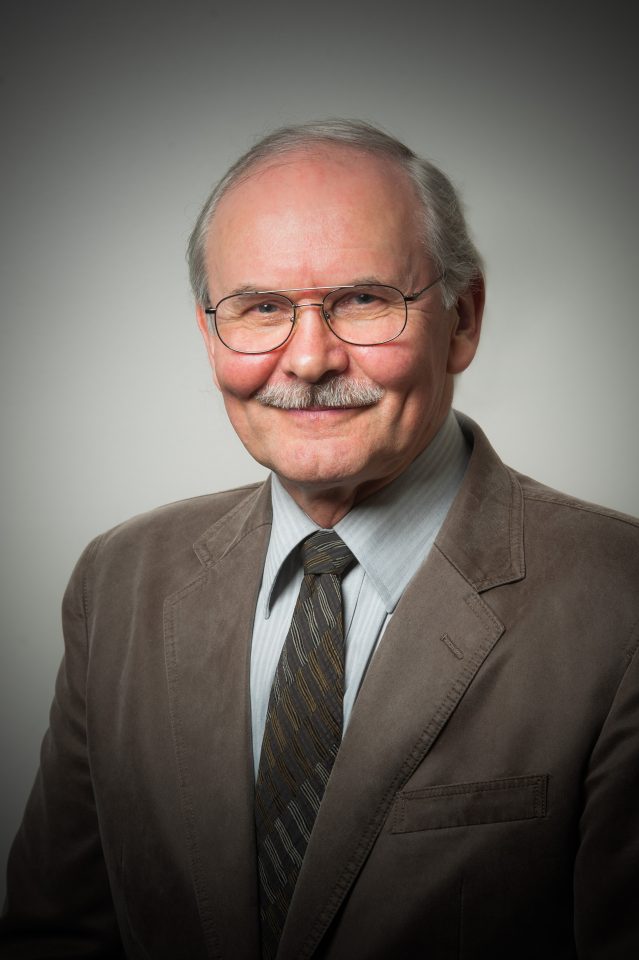
Professor Emeritus Ricardo Foschi was quoted in the Globe and Mail for a story on oil tankers in Vancouver.
Prof. Foschi examined the risk analysis Trans Mountain submitted and questioned the idea that the “return period” for any spill from project-related tankers would be one in 237 years.
“The real question should be (which is not answered by the proponents) ‘What is the chance that a spill of any volume may occur at any time within the operational life of the project?’” he asked. “Mathematically, if the return period is 237 years, then the chance (or probability) of a spill of any size occurring in 50 years (the life of the project) is 19 per cent. Is this safe? Certainly not.”
Professor and Head Perry Adebar spoke with the Ubyssey about the use of wood in hybrid, mass timber structures like the new Brock Commons Tall Wood student residence building. “I’d love to see timber used more, but I’d hate to see it done for political reasons — I’d like to see it done for the right reasons.”
The UBC Canadian Society for Civil Engineering (CSCE) Student Chapter toured two Vancouver steel manufacturing facilities to celebrate International Steel Day on September 16. Pacific Bolt Manufacturing Ltd. and George Third & Son both opened the doors of their shops to help students understand the benefits and challenges of supplying structural steel for some of Vancouver’s largest projects.
The Student Chapter’s first stop was at Pacific Bolt, where they enjoyed a smoked BBQ lunch followed by a tour of the shop. “We were shown the process of heating, forming, and threading various high capacity bolts for highways, bridges, and other large projects,” notes Tyler Ezzy, UBC CSCE co-president.
At George Third & Son, the Student Chapter learned about some of the unique projects the company has taken on in the past, including the production of the 60 foot tall decorative steel trees at 57th Avenue and Granville Street and the riveting of a 6 inch diameter steel shackle pin for a US Navy aircraft carrier. In the shop, they were shown some of the completed beams for an ongoing project to manufacture the structural steel beams for a custom home in Burnaby.
The UBC CSCE Student Chapter was grateful for the opportunity to visit the two facilities in honour of International Steel Day. On behalf of the Student Chapter, Tyler says: “We thank Pacific Bolt and George Third & Son for welcoming us into their shops and teaching us about the work they do!”
For the second year in a row, UBC Civil Engineering welcomed an international group of university students for four weeks of learning and exploration at UBC-Vancouver as part of the Vancouver Summer Program. The program, designed to give students from UBC partner universities the opportunity to study at a world-renowned university while improving their English skills and learning about Canadian society, attracted hundreds of students to UBC-Vancouver to take academic courses in subjects ranging from law and business to medicine and arts.
The Civil Engineering program, under the leadership of Professor Nemy Banthia, included two intensive courses on the topic of civil engineering materials. The students came from a range of engineering and science backgrounds; and for many, these courses were a first exposure to a civil engineering topic. Nevertheless, this energetic group worked hard to master the challenging academic material while enjoying an exciting social and activity program outside study time.
The program concluded with a poster session wherein the students showcased their group course-work, and a mini-grad celebration. The students were delighted with their accomplishment and their overall experience. One commented “After studying at UBC, I have realized that it is much better (than I) expected…professors are so experienced and always friendly…I feel it is a really good department overall, and even the atmosphere is great.” UBC Civil Engineering looks forward to welcoming future cohorts of students via the Vancouver Summer Program in the years to come.
UBC Civil Engineering welcomed 142 second year students to the Civil Engineering Program on Imagine Day. The new Civil students enjoyed a full-day program that began with introductions to Department leaders and a review of the Undergraduate Handbook, followed by Mission ImposCIVIL – a scavenger hunt designed to promote teamwork while orienting the students to Department facilities. The students then received an introductory technical lecture on Structural and Earthquake Engineering, which was followed by the main event: the Earthquake Engineering Design Project. Students worked in their teams to design and build a three foot tall structure made of balsa wood and cardboard that would hold up a 5-lb brick while subjected to high-intensity earthquake motions. The structures were tested on the Multiple Axis Shake Table (MAST) in the EERF. Congratulations to “Team Banthia,” whose combined Mission ImposCIVIL and structure performance scores placed them at the top!
Civil Engineering was proud to inspire and engage incoming second year students on the first day of term, and looks forward to an amazing year.
Video: Incoming second year students watch their team-built structures get tested on the EERF Multi-Axis Shake Table during 2016 Imagine UBC at Civil Engineering. Skip to 9:20 for the big “earthquake!”
New and returning Civil undergrad students are encouraged to join a Civil Student Group. With half a dozen Civil-specific competition teams and student chapters running, there’s bound to be something for everyone! Learn more about Civil Student Groups.
Students who have an idea for a new Civil Student Group are encouraged to form one. UBC Civil Engineering is seeking applications from new student groups who would like official departmental affiliation. Fill out and submit the form below by September 15.
Thirty-six university students from the Dominican Republic spent the month of July at UBC-Vancouver this summer, immersed in advanced training for earthquake engineers. The Training Program for Earthquake Engineers from the Dominican Republic, hosted at UBC by Professor Carlos Ventura, gave the students the opportunity to learn about experimental methods and techniques commonly used by earthquake engineering researchers at UBC. This program was part of the International Master’s program on Earthquake Engineering (IMEE), funded by the Ministry of Science and Technology of Dominican Republic (MESCYT). Dr. Rafael Blazquez and Prof. Maria Hausen, both of Universidad Politécnica de Cartagena, directed and coordinated the program, respectively.
Professor and Head of Civil Engineering Perry Adebar spoke to Roundhouse Radio about how new condos may be uninhabitable after a major earthquake. “The most serious threat after a significant earthquake is that a large part of our city won’t be habitable,” said Prof. Adebar, noting that the risk is heightened with striking, “irregular” new buildings. Prof. Adebar added that in California where earthquakes occur every 10 to 15 years, building designs are more regular.
Professor Perry Adebar spoke with The Globe and Mail about the risks of irregularly designed condo buildings when it comes to earthquakes: “The more exciting and interesting your building is, the more likely you won’t be able to use it after a significant earthquake.”
Professor Don Mavinic has been named a Fellow of the Water Environment Federation (WEF). WEF is a technical and educational organization dedicated to improving the quality of water, boasting a membership of 33,000 water professionals and 75 affiliated Member Associations around the world (including the BC Water & Waste Association). The WEF Fellows Program is designed to recognize the “professional achievements, stature, and contributions of WEF members to the preservation and enhancement of the global water environment.” WEF selects a maximum of 12 new Fellows annually, from a pool of 400 – 500 nominees. Professor Mavinic, a first-time nominee, was the only Canadian to be honoured this year. His induction ceremony will be held in New Orleans in September, during WEFTEC, WEF’s annual technical exhibition and conference, which is the largest of its kind.
Ostara, the clean-technology startup that began as a research project led by Professor Don Mavinic, was featured in the Vancouver Sun. The article quotes adjunct professor Troy Vassos, who said that Ostara’s technology has “the ability to generate (phosphorous) crystals perhaps more economically than competitors.”
Professor Alex Bigazzi discusses the upward trend in U.S. driving with the Vancouver Sun, in an article about the recent increase in the volume of U.S. visitors to B.C.
Professor Loretta Li discusses her new investigation on corrosion in the Whistler water distribution system, to be undertaken with the Resort Municipality of Whistler and Kerr Wood Leidal Associates Ltd., with Pique Newsmagazine.
Prof. Froese pictured (right) at CSCE 2016 Awards Gala, with CSCE President Tony Bégin.
Professor Thomas Froese has received the 2016 Walter Shanly Award from the Canadian Society for Civil Engineering (CSCE). This award is the pre-eminent award of CSCE’s construction division, given in recognition of outstanding contributions to construction engineering research or practice in Canada.
Visit CSCE online to read more about CSCE honours and fellowships, and to view all of the award winners for 2016.
Professor Thomas Tannert is quoted in The Province, discussing the benefits of using wood in the construction of towers, like UBC’s new 18-storey Brock Commons student residence building.
Professor Tarek Sayed is quoted in the Globe and Mail, discussing the increase in traffic collisions since BC raised the speed limits in certain highway areas.
CKNW reported on the upcoming expansion of school earthquake detection systems, and quoted Carlos Ventura, the head of UBC’s Earthquake Engineering Research Facility.
UBC Civil Engineering is pleased to announce the launch of a new graduate-level course, Transportation Emissions and Air Quality, starting in term 2 of the Winter 2016/2017 academic year.
The transport sector is a huge contributor to local and global air pollution. This new course will address the generation, control, regulation and analysis of traffic-related air pollution, including greenhouse gases. Students will get hands-on experience with emissions models and learn about relevant policies for transportation projects.
This course is now available for online registration. If the course is not on the list of approved electives for their program, students should check with their Specialty Advisor or Research Supervisor before enrolling.
On May 26 at the Engineers Canada Awards Gala in Charlottetown, Professor Don Mavinic was honoured by the engineering profession alongside several of Canada’s most outstanding engineers.
Watch the Engineers Canada profile of Professor Mavinic, the 2016 Gold Medal recipient (six minute video):
Back row, L-R: Siobhan Robinson (Kerr Wood Leidal Associates Ltd.), Perry Adebar (UBC Civil Engineering). Front row, L-R: Michael Day (Resort Minicipality of Whistler), Loretta Li (UBC Civil Engineering), Chris Johnston (Kerr Wood Leidal Associates Ltd.)
In 2014, the Resort Municipality of Whistler (RMoW) saw a risk for internal corrosion in its water distribution system. Now, the RMoW is partnering with Civil Engineering professor Loretta Li and Kerr Wood Leidal Associates Ltd. (KWL) to take a closer look at this corrosion, and what they find will have the potential to benefit municipalities across the country.
Signs of internal corrosion, such as high water loss, green staining, and fitting failures had been observed in the RMoW. The Municipality also recognized that many of its fifteen water sources have low pH and alkalinity levels, another risk factor for corrosion. The RMoW initially hired Kerr Wood Leidal Associates Ltd. (KWL) to look at the internal corrosion risk, and evaluate potential mitigation strategies. KWL eventually recommended a pilot for a chemical injection system, in an isolated area of Whistler’s water network, to see if water corrosivity could be reduced that way. However, baseline corrosion measurements conducted before the pilot only raised more questions.
Seeing an opportunity to advance the field of corrosion science while improving the understanding of corrosion in the RMoW’s distribution system, RMoW and KWL approached Professor Loretta Li, of UBC’s Civil Engineering Department, about working together to deepen their investigation. Now, after months of planning (and with financial support from MITACS and NSERC), they are set to kick off a corrosion research project. The findings are expected to enhance the understanding of how internal corrosion impacts municipal water systems, and to improve existing corrosion models. Ultimately, this could help reduce pipe and fitting failures and increase the lifespan of water distribution infrastructure in municipalities across Canada.
Professor Don Mavinic’s 2016 Engineers Canada Gold Medal Award was highlighted by Jonathan Wilkinson, Member of Parliament for North Vancouver, in the House of Commons last week. Professor Mavinic has been selected for the award due to his exceptional achievements in the Canadian engineering community; work-related achievements, service to the profession, and service to the community are all taken into account. He will be honoured at a ceremony for award recipients on May 26th in Charlottetown. Visit Engineers Canada online to read more about the annual Engineers Canada Awards, and to view past winners.
Watch Jonathan Wilkinson’s statement in the House of Commons (60 second video):
Professor Don Mavinic is quoted in a recent opinion piece for the Times Colonist, by Jonathan Wilkinson, MP for North Vancouver and parliamentary secretary to the Minister of Environment and Climate Change. Mr. Wilkinson discusses the implementation of effective sewage treatment in the Capital Regional District in BC.
Professor Alex Bigazzi discusses urban cyclists’ exposure to toxicants while cycling on busy streets, and the advantage of choosing lower-traffic routes.
Jessica LeNoble retrieving sampling equipment in Lost Lagoon. Photo by Shona Robinson.
Civil MASc student Jessica LeNoble and supervisor Professor Jim Atwater are looking at wetland DNA as a possible tool to evaluate storm water treatment.
Engineered wetlands, like the one next to Vancouver’s Lost Lagoon in Stanley Park, are designed to remove pollutants from storm water runoff before they enter sensitive ecosystems. It’s difficult to tell how well engineered wetlands perform this task, because methods currently used to monitor them are expensive and challenging to optimize thanks to varying rainfall conditions. Civil professor Jim Atwater and graduate student Jessica LeNoble have joined forces with Kerr Wood Leidal Associates, the Stanley Park Ecological Society, and Genome BC to find a better way to monitor the performance of the Lost Lagoon wetland as an engineered water treatment system. By looking at the wetland on a microbial level, they aim to develop a DNA-based tool for monitoring the treatment of storm water, which could help improve management and design practices for engineered wetlands in BC and elsewhere. “This is proof of concept research, student driven and exceedingly exciting,” notes Professor Atwater.
UBC Civil Engineering is delighted to announce that Civil graduate student Jörg Winter has been selected as a recipient of a 2015/2016 Killam Graduate Teaching Assistant Award. Killam Graduate Teaching Assistant Awards are given in recognition of outstanding contributions by teaching assistants, which have led to a “high level of respect from undergraduate students and academic or course supervisors.”
Jörg has been involved in teaching courses on a variety of technical topics, including fluid mechanics and water and wastewater treatment, from the first to fourth year levels. He has also been involved in the development and teaching of courses related to engineering and sustainability. As a PhD candidate, he is a member of the filtration technology research group, where he works on water management issues.
Read more about Killam Awards and Fellowships and view previous winners:
In a report for ICBC, Prof. Tarek Sayed and postdoc Emanuele Sacchi find that road improvement projects in BC have reduced severe crashes by an average of 24%.
UBC Applied Science is seeking original photos that bring ENGAGE 2020 (strategicplan.apsc.ubc.ca) to life.
Show us what you love about Civil Engineering and help us highlight our people, research, learning and community. Share it with us, tell us why it’s special and be eligible to win!
CASH PRIZES: $200, $100, $50 (prizes for each of four categories)
ELIGIBILITY: Contest is open to everyone in the UBC Applied Science community, including friends.
DEADLINE: Contest closes on May 16, 2016 at 4:00pm.
PEOPLE’S CHOICE AWARD: Help us choose the People’s Choice by voting for your favourite on Facebook. We will add photos as we receive them. Voting will close on May 20, 2016.
Edward McBean (BASc ’68 CIVL) was the recipient of a Lifetime Achievement Award at the UBC Faculty of Applied Science 2016 Engineering Excellence Alumni Awards.
The graduate students of the Geotechnical Research Group are hosting the next Northwest Graduate Student Symposium in Geotechnical Engineering (NGSSGE) from May 5th to 7th, 2016 in Vancouver, B.C. This two-day symposium will discuss current research activities, common regional research interests, similarities and differences of geotechnical graduate programs and cooperation possibilities for universities in the Pacific Northwest. It is an opportunity for future geo-professionals to share knowledge, explore opportunities for collaboration and make connections. More info coming soon!
Professor Don Mavinic has been selected by Engineers Canada to receive the 2016 Gold Medal Award. This award is given in recognition of exceptional achievements by outstanding engineers; work-related achievements, service to the profession, and service to the community are all taken into account. Professor Mavinic will be honoured at a ceremony for award recipients on May 26th in Charlottetown.
Visit Engineers Canada online to read more about the annual Engineers Canada Awards, and to view past award winners.
QS World University Rankings has ranked UBC Civil Engineering No. 1 in Canada and 27th in the world for 2016. Regarded as one of the three most influential and widely observed university measures, the rankings by British company Quacquarelli Symonds (QS) are based on four measures: QS’s global surveys of academics and employers, designed to assess the international reputation of a university by subject; research citations per paper; and h-index (a measurement of the productivity and impact of publications).
On The Coast highlighted concerns that the new site for St. Paul’s Hospital in Vancouver could liquefy during an earthquake.
Carlos Ventura, director of UBC’s earthquake engineering research facility, told CBC that while the concern is real, technology and engineering have improved in the past few decades and engineers have come up with structures that will “perform very well” in the event of an earthquake.
The risks can be minimized by doing proper treatment of the soil and providing proper foundations, said Ventura.
UBC Concrete Canoe has successfully cast their 2015/2016 vessel! Over 35 team members came together over Reading Week to bring this year’s design to life – a process that required mixing over 350lb of lightweight concrete, then carefully forming it by hand in a specially designed foam mould. Casting Day was the culmination of a solid weekend’s worth of preparation, not to mention months of planning and experimenting to get the design just right. This year’s canoe boasts many new design features, including new materials and a more streamlined hull shape. With these innovations, the team hopes to blow last year’s third place result out of the water to set a new record for UBC Concrete Canoe!
The canoe must now set for four weeks before it’s ready to be taken out of the mould and can hit the water. In the meantime, team members will be busy preparing for the first competition of the year, the ASCE Concrete Canoe Competition in Moscow, Idaho, coming up in April. The countdown is on!
UBC Concrete Toboggan achieved second place overall at this year’s Great Northern Concrete Toboggan Race (GNCTR) – their best result in over a decade.
Twenty five engineering students made up team UBC Icy Unit, which travelled to the University of Ottawa for the competition in late January. The team’s combined achievements in the areas of toboggan design, presentation, performance on race day, and team spirit resulted in their outstanding second place overall finish. Sam McIlwain, Concrete Toboggan team captain, notes the significance of this year’s results: “We had goals of placing in the top five this year, which seemed lofty considering previous years’ results… the second place finish was absolutely amazing and made all the work pay off!”
Participating in UBC Concrete Toboggan not only gives students the opportunity to practice important engineering skills, such as concrete and steel design, construction safety, teamwork, and organization; it also serves as a major highlight of their UBC experience. Sam notes: “Being able to attend a national competition with almost all of the top schools in Canada is a great experience, and will be one of the top memories that students will look back on once they graduate.” The team is thankful for the support from industry sponsors and UBC, in particular the Civil Engineering workshop staff who contributed extensive support to the team as they prepared for competition.
The conclusion of GNCTR marks the end of the competition season for UBC Concrete Toboggan; now, the team is working on making the leadership transition for next year and considering ways to place even higher at the 2017 event. “First place is now something within our grasp, and something we will aim for,” says Sam. “Winning the King of the Hill competition (the final race day tournament) next year would also be great!”
Professor Loretta Li is mentioned in a recent UBC Media release about research being conducted on Kisameet clay, long used by the Heiltsuk First Nation for its healing potential.
The Applied Technology Council (ATC) and the Structural Engineering Institute (SEI) of the American Society of Civil Engineers selected the BC Schools Retrofit Program, developed by UBC Civil Engineering’s Earthquake Engineering Research Facility (EERF) in conjunction with APEGBC, to receive a Champions of Earthquake Resilience Award in the category of “Extraordinary Innovation in Seismic Protection of Buildings.” Dr. Armin Bebamzadeh, Civil Engineering Research Associate, represented the EERF team at the awards dinner during the ATC-SEI conference last month in San Francisco.
This award recognizes a program demonstrating “outstanding recent applications of the principles and practice of innovative seismic resistant solutions and technologies” in the design of new or retrofit of existing large buildings. Each in the Champions of Earthquake Resilience series of awards, honours a program or project that has (or will have) significant impact on public safety.
Since 2004, guidelines developed under the BC Schools Retrofit Program have been applied to the seismic assessment and retrofit of schools across BC. Dr. Carlos Ventura, Civil Engineering professor and Director of the EERF, notes that this latest award “is a great reflection of the impact that our earthquake engineering research program has not only nationally but also internationally.”
Amir Shoolestani and Behzad Shoolestani are two of seven aspiring entrepreneurs and Applied Science PhD candidates who have won full entry into the new Applied Science Entrepreneurial PhD (e-PhD) Program, an initiative which aims to equip participants with the necessary business, analytical and entrepreneurship skills to take inventive research ideas from the lab to the market. Starting January 2016, the winners will join the program and have access to various APSC Professional Program Master’s and PhD professional-development workshops and courses, and opportunities to participate in select entrepreneurship @ UBC (e @ UBC) projects.
Still image above shows data transmitted by the system’s seismometers during the M4.8 earthquake. Watch the entire event unfold.
Civil engineering experts provided expert commentary in various media outlets on the magnitude 4.3 earthquake that shook Metro Vancouver late on Dec. 29.
Kent Johansen, a researcher working with UBC’s Earthquake Engineering Research Facility, said an early earthquake warning system developed at UBC gave a few seconds’ warning before the earthquake struck. Even such a short warning can reduce the number of casualties from an earthquake by half, Johansen told media. (CBC News, CBC On the Coast, Global News, Globe and Mail, Huffington Post)
The earthquake is a reminder that people need to be ready for the massive earthquake that’s expected to hit the region sometime in the future, according to Carlos Ventura, director of the Earthquake Engineering Research Facility at UBC. The UBC warning system, currently set up to alert Vancouver-area Catholic schools, could be extended to other schools, to hospitals and the Skytrain. He also noted that many hospitals and fire stations urgently need a retrofit to make them quake-ready. (CBC News, Georgia Straight, Vancouver Sun, Ottawa Citizen, The Province)
The numbers associated with traffic accidents worldwide are staggering: 1.3 million fatalities every year, and up to 50 million injuries. They’re also the leading cause of death among 15- to 29-year-olds. But thanks to the work of UBC Civil Engineering professor Tarek Sayed, those numbers could go down.
Sayed, who received the Prince Michael International Road Safety Award Dec. 8, uses automated video analysis techniques to study near misses and propose improvements to intersections and roads to prevent collisions.
How big an issue is road safety?
There are about 1.3 million people killed every year in road collisions worldwide, and for each one of these fatalities there are about 10 injuries. Engineers have always assumed that it’s not our problem; we feel that we are following standards in designing good roads, and any accidents or fatalities are the road user’s fault. Now we know that we can make changes to the system that can prevent driver error.
It’s more cost-effective to address driver error through road improvements than to have a fatality. Can you imagine a mechanical engineer designing a tool that cuts people’s fingers, and saying it’s not a problem with the machine, but with how people are using it?
How do you track and address accidents and collisions?
Our work has been focusing on proactive road safety management, where we make changes to the road to reduce the consequences of a collision and prevent collisions from occurring in the first place. For many years this was done by examining data on traffic collisions, which is a reactive approach. We had to wait two or three years to observe enough collisions before we could analyze and address them. Now, instead of relying on collision data, we rely on data on near misses.
Over the last 10 years we have developed a technique at UBC that does automated road-safety analysis using computer vision techniques at different locations, intersections or highway segments. We see how people move in space and time, and we calculate near misses. It’s very efficient and we get very detailed information that allows us to gain a better understanding of how these near misses and potential collisions occur. Instead of waiting for years of collision data, we can address potential issues quickly and prevent accidents before they occur.
Civil professor Nemy Banthia, CEO and Scientific Director of IC-IMPACTS, and Civil Professor Pierre Bérubé, UBC Co-director of Environmental Engineering, were in Thondebavi, India to unveil an innovative new road built using advanced, UBC-developed pavement technologies. The new road utilizes super-thin pavements and innovative fibers designed to increase its lifespan by 15 years, and is also integrated with water recovery systems, providing additional water resources to communities. This project addresses the Thondebavi community’s desperate need for improved road infrastructure, and the unique technologies used therein may be widely adopted into thousands of other community pavement projects across India and Canada.
Professor Nemy Banthia was given the inaugural Drishti Foundation’s Award in Leadership in Science and Technology for “his contributions to developing international research programs aimed at global development.”
UBC Civil Engineering’s Automated Computer Vision Road Safety Analysis System, led by Dr. Tarek Sayed, was selected to receive a Prince Michael International Road Safety Award.
The novel automated road safety analysis techniques developed by Dr. Sayed and his UBC research team offer a solution that can revolutionize how traffic safety is managed. Until now, safety professionals have needed collision data to reliably analyse and improve the safety of roadways, leading to the dilemma that there must be a trade of lives lost for lives saved. Dr. Sayed’s Automated Computer Vision Road Safety Analysis System allows for the detection of collision risks without the need for collisions to occur, by using advanced econometric methodologies and video technology to analyze traffic conflicts and near misses. This proactive approach is designed to offer a better understanding of vehicle collision failure mechanisms, particularly the collision-avoidance behaviour of drivers; which should help safety professionals diagnose safety problems and select the best countermeasures.
His Royal Highness Prince Michael of Kent is Patron of the Commission for Global Road Safety, and his Awards aim to give public recognition to “the most outstanding examples of international road safety initiatives.” The award was given by HRH Prince Michael of Kent to Dr. Sayed at a special ceremony in London on December 8th.
Dr. Carlos Ventura, Civil professor and director of the EERF, spoke with University Affairs about the earthquake early warning system. Read the full story.
Professor Susan Nesbit has been appointed as Senior Teaching Fellow 2015-2016 of the UBC Sustainability Initiative. The UBC Sustainability Initiative was established in 2010 to carry out the University’s commitment to the integration of its operational and academic efforts in sustainability. Sustainability Fellowships are awarded to UBC faculty members who are “leading the development of sustainability curriculum within their department or faculty.” In her role as Senior Fellow, Dr. Nesbit is working with other UBC sustainability fellows to support the development of sustainability learning pathways. She is also assisting the USI Teaching Learning and Research office to develop and expand its academic publication strategy, and she is leading an evaluation of the USI Fellowship Program.
UBC partnered with the Vancouver Public Library (VPL) and the City of Vancouver to bring Earthquake Day to downtown Vancouver on October 15. Held as part of the University’s Centennial celebrations, Earthquake Day was conceived as a free public event to coincide with ShakeOut BC Day, with the aim of increasing earthquake awareness and resilience in the community and showcasing UBC’s research in the area of earthquake engineering. A series of informative mainstage events and interactive outreach activities attracted members of the public to the VPL Promenade, where they could also visit booths hosted by over twenty organizations, including industry associations and engineering companies, each with a message to share about earthquake preparedness and mitigation. The program kicked off with a series of guest speakers, including Gregor Roberston, Mayor of Vancouver; followed by the “Great British Columbia ShakeOut” drop, cover and hold on drill at 10:15am sharp. Other program highlights included a public lecture given by Professor Perry Adebar, Head of UBC Civil Engineering, and Professor Carlos Ventura’s overview of the BC Schools Earthquake Early Warning Network. Children from the community enjoyed the opportunity to build model structures as part of the EERI UBC Chapter’s Interactive Outreach activity, and viewers enjoyed the premiere screening of Earthquake Engineering at UBC (link), a new documentary on earthquake engineering research at UBC Civil Engineering. The program concluded with the ShakeDown Design Competition, a friendly contest between teams of engineers from industry who were challenged to build a cost-effective, earthquake resistant structure in a limited time frame. Structure designs were judged on shake table-simulated earthquake performance vs. construction cost, as well as on innovation. Dorian Tung, Civil Engineering PhD Candidate and founder of Earthquake Day, called the event a great success, noting that “there has been no event of this kind in the past. We have created a platform to tell the public what UBC has achieved. We look forward to continue the conversation in order to achieve the ultimate earthquake resilience. ”
Professor Wijewickreme of UBC Civil Engineering has been named President-Elect of the Canadian Geotechnical Society. This appointment will commence in January 2016, and will be followed by a two-year term as President, beginning January 2017.
With a membership base exceeding 1,200 across Canada and globally, the Canadian Geotechnical Society is “the premier organization for geotechnical engineers and geoscientists in Canada and is dedicated to advancing knowledge and creating opportunities for the sharing of information by practitioners in a broad range of geotechnical disciplines.”
Professor Wijewickreme has been an active member of the Society for over fifteen years. He has held a number of Chairs, directorships, and committee memberships across the organization, and currently serves as Vice President Finance.
As incoming President-Elect, Professor Wijewickreme sees an exciting opportunity to empower the general membership to take action in support of the Society’s objectives, and to recognize and reward members for their grassroots-level efforts toward achieving them. He notes, in particular, the need to “better involve young professionals” in the Society’s efforts relating to outreach, academic and practitioner collaboration, policy and regulatory development, and more. He says of this honour: “The Canadian Geotechnical Society has established an international reputation that is second to none. I am honoured to have been chosen by the Nominating Committee of the Canadian Geotechnical Society as the Society’s President-Elect in 2016, and I look forward to serving the CGS as President.”
October 15 is officially ShakeOut BC Day, and more than 750,000 British Columbians are expected to participate in this year’s drill. In this Q&A, UBC earthquake safety expert Carlos Ventura talks about the nature of earthquakes and what’s being done to ensure that the buildings where we live, study and work are earthquake-ready.
There’s a lot of talk about B.C. being overdue for the Big One: an earthquake of 9.0 magnitude or greater. Is the province ready for a major quake?
It’s important to understand that it’s not only the magnitude of the earthquake that determines its impact. Smaller earthquakes, if they occur near urban areas, can cause significant damage. That said, the province is more prepared for an earthquake in the sense that government, scientists, educators, and the news media have been actively spreading safety awareness. Everyone should know the drill by heart: drop, cover and hold on. Recognize quickly that it is an earthquake and don’t panic. Hide under a sturdy table or desk, or crouch near an inside corner of the building. Stay there until the shaking stops. Many earthquake-related injuries in North America are due to falling objects, not buildings collapsing. Once the shaking has stopped, leave your house or building if you can do so safely, and grab your emergency kit if you have one.
Fred Koch, Civil Engineering Research Associate in the area of pollution control and waste management, passed away on September 15th, 2015. Fred was a very important member of UBC Civil Engineering, and was highly regarded and well-liked by faculty, staff, and students. Over the almost forty years that Fred was in the Department, he had a great impact on the lives of many people, including many graduate students who benefitted from working closely with him. He also leaves behind a legacy of important research contributions, including his work on struvite recovery, which led to the establishment of Ostara Nutrient Recovery Technologies Inc. Fred was also a musician and was co-founder and president of Bullfrog Studios in Vancouver. He will be remembered for his enthusiasm and positive energy, and will be deeply missed as a colleague and friend.