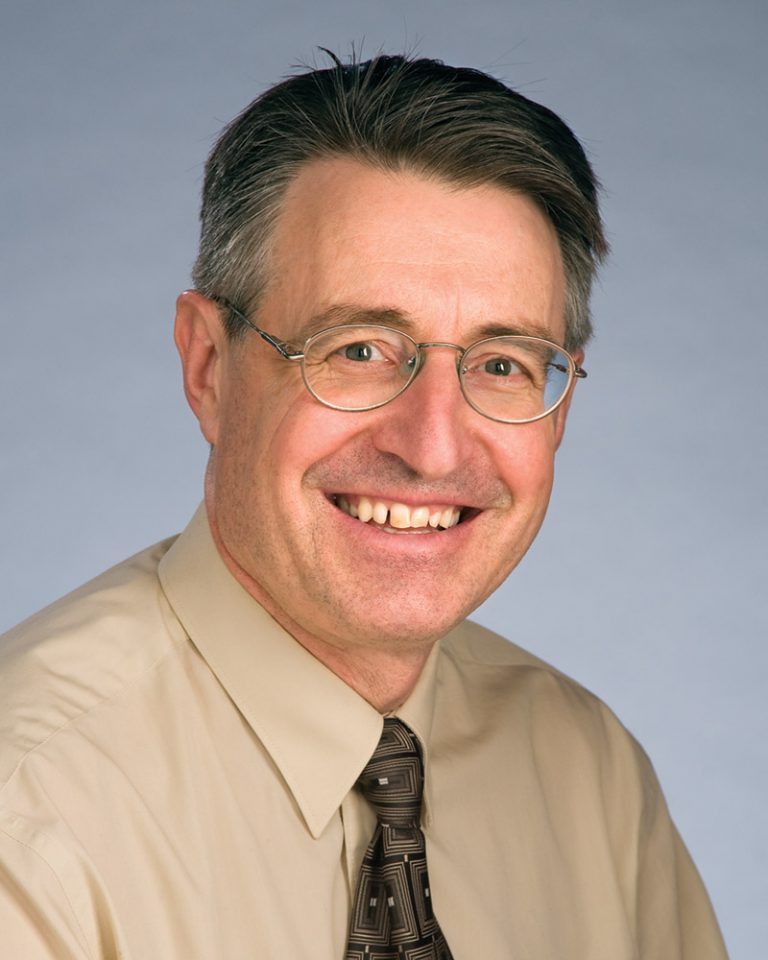
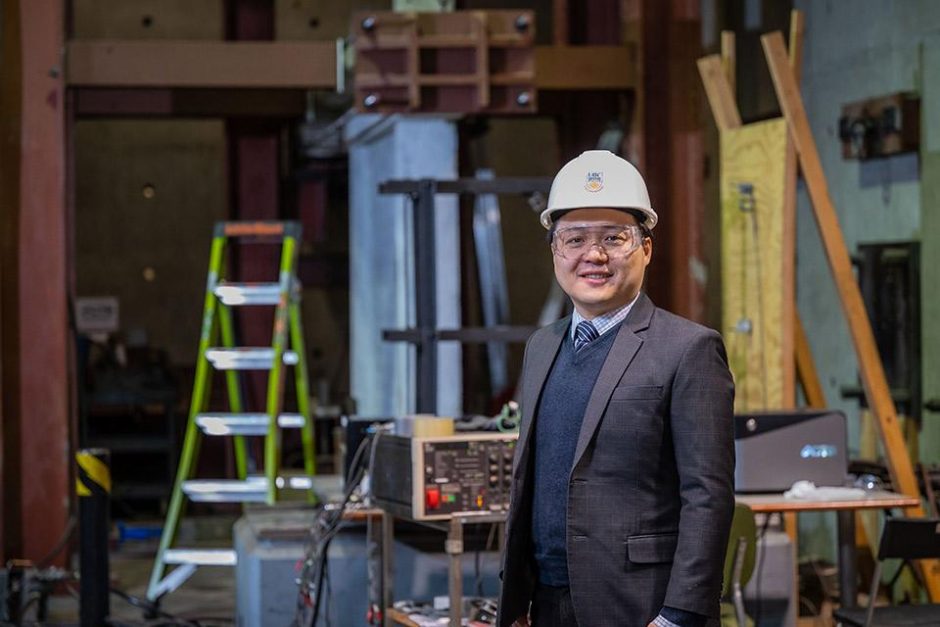
Dr. Sheryl Staub-French has been appointed as Head, pro tem, Department of Civil Engineering for a one-year term while Dr. Bernard Laval is taking a well-deserved administrative leave following the completion of his first term as Department Head.
Dr. Staub-French, a professor of civil engineering, has been serving as the Associate Dean, Equity, Diversity and Inclusion (EDI.I) in the Faculty of Applied Science since March 2019.
The process to consider Dr. Laval for an appointment extension as Department Head is underway and should he be extended, his second term will begin July 1, 2025.
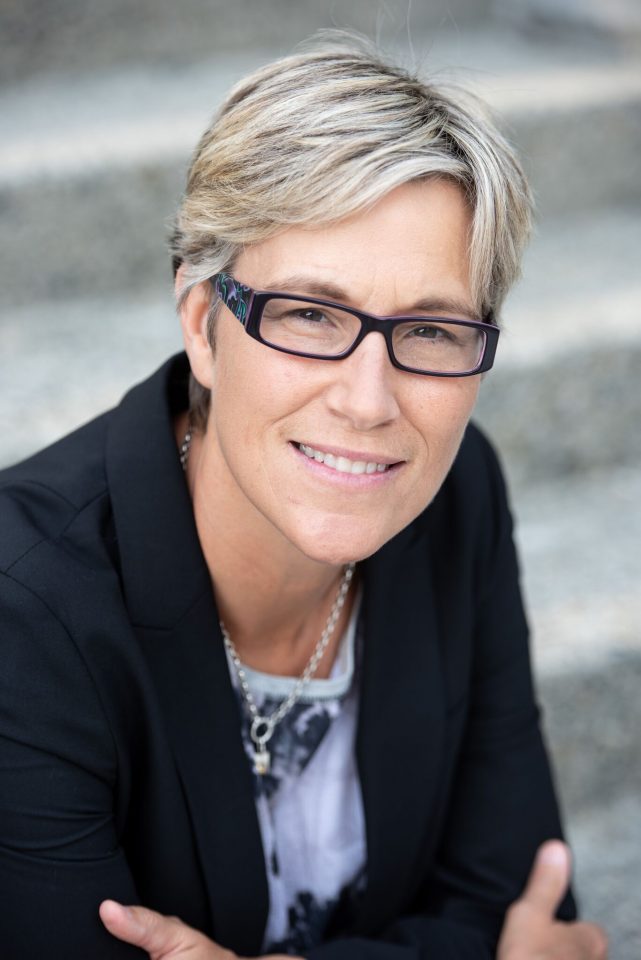
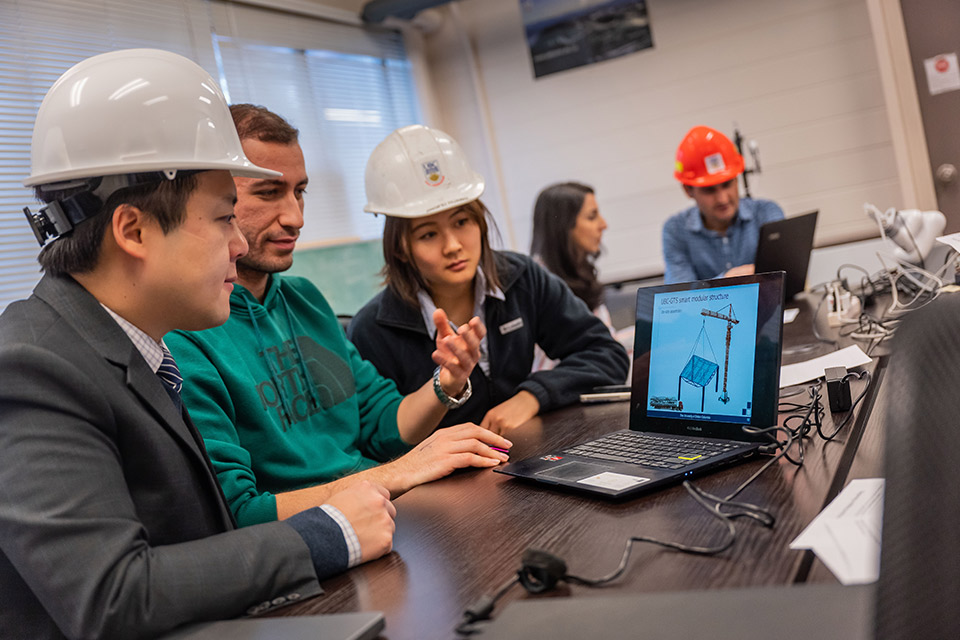
We are pleased to announce the promotion of Dr. Amy Kim to Professor and Dr. Omar Swei, Dr. Jasmin Jelovica, and Dr. Carlos Molina-Hutt to the rank of Associate Professor within the UBC Civil Engineering Department. This well-deserved recognition highlights their exceptional contributions to research, teaching, and service.
Dr. Amy Kim
Dr. Amy Kim has made significant strides in transportation engineering, focusing on the operations of multimodal networks, and supporting resource allocation strategies across long-distance systems. She aims to better inform the planning of transportation systems that are more adaptable and resilient to a changing world, collaborating with researchers across disciplines in contexts such as strategic planning for wildfire evacuation, transportation infrastructure decisions under climate change impacts, and integrated analysis of air and ground transportation.
In recognition of her outstanding research potential, Dr. Kim received the UBC Killam Accelerator Research Fellowship. Awarded to only 6 individuals annually, the Fellowship provides scholars with teaching release and funding to advance their research.
Dr. Omar Swei
Dr. Omar Swei’s research broadly centers on the development and implementation of operations research methods to improve the design and maintenance of infrastructure systems. This work emphasizes the development of optimal infrastructure management policies under uncertainty and improving the economic performance and environmental sustainability of existing infrastructure assets.
Since joining the department in 2018, Dr. Swei has developed curricula that consider the diverse backgrounds, interests, and career objectives of students—for both undergraduate and graduate students. As a result, he has been recently recognized with the 2023/2024 Killam Teaching Prize. This award is nominated by students, colleagues, and alumni and recognizes exceptional contributions through teaching
Dr. Jasmin Jelovica
Dr. Jasmin Jelovica joined UBC in 2017 with a joint appointment in the Department of Civil Engineering and the Department of Mechanical Engineering. His research focuses on development and application of computational methods for structural analysis and optimization, applied to primarily lightweight structural forms while investigating their mechanical response.
With his expertise and knowledge in structural engineering and naval architect, Dr. Jelovica and his colleagues are developing an artificial intelligence (AI)-based framework to rapidly analyze the fluid interactions and dynamics behind the chronic ship noise. They’re hoping to eventually provide marine engineers with a new suite of tools to design and manufacture quieter propellers.
Dr. Carlos Molina-Hutt
Dr. Carlos Molina-Hutt‘s research in structural engineering and earthquake resilience has significantly advanced our understanding of how buildings and infrastructure can withstand seismic events. He leads the Engineering for Seismic Resilience Laboratory (ESR Lab) at UBC. Their work focuses on the development of methodological approaches to assess seismic risk in buildings and its implications on urban resilience, and on the translation of this knowledge into tools and information for use by practicing engineers, seismic planners and policy makers.
Dr. Molina-Hutt also co-leads The UBC Disaster Resilience Research Network (DRRN), which aims to foster transdisciplinary connections and delineate shared research objectives. The network aspires to inform disaster risk reduction policies and decision-making processes at both community and governance levels.
In 2023, the UBC Disaster Resilience Research Network formed an academic advisory panel to provide the Province with expert input, as the B.C. Ministry of Emergency Management and Climate Readiness embarks on provincial disaster and climate risk and resilience assessments.
UBC Civil Engineering is proud to have such distinguished faculty members who are dedicated to advancing knowledge, fostering innovation, and shaping the next generation of engineers. Please join us in congratulating them on this milestone and in celebrating their continued contributions to the field of civil engineering.
Dr. Omar Swei from UBC Civil Engineering has been recognized with the 2023/2024 Killam Teaching Prize. This award is nominated by students, colleagues, and alumni and recognizes exceptional contributions through teaching.
Since joining the department in 2018, Dr. Swei has developed curricula that consider the diverse backgrounds, interests, and career objectives of students—for both undergraduate and graduate students.
His graduate class CIVL 519: Risk and Decision Analysis for Infrastructure Management typically brings together 20 graduate students that are completing programs in environmental systems, transportation, hydrotechnical engineering, geotechnical engineering, project management, and urban systems.
“I address this diversity in the classroom by working with students individually throughout the semester to craft a rigorous term project that directly ties to their interests,” said Dr. Swei.
Dr. Swei also actively promotes equity, diversity, and inclusion competencies for civil engineers within his course offerings and directly ties them to practice. In CIVL 300 I highlight ways to engage with diverse actors and communities to successfully deliver infrastructure work projects. He annually hosts a guest lecture in CIVL 300, where executives charged with delivering important infrastructure projects in BC such as Broadway Extension and Patullo Bridge, discuss with our students the importance of collaborating with local communities, including Indigenous partnership the early stages of construction projects.
When UBC courses transitioned online in 2020, Dr. Swei recognized a need to adapt to meet student needs and course learning objectives. Drawing from his personal startup funds, he purchased the equipment needed to construct a lightboard. Using an Ikea standing desk and some creative repurposing of file folders as blackout blinds, he created a home studio to record short videos that distill the theory underlying their subjects. This technology enabled him to produce visually appealing, self-paced learning materials that students could review asynchronously, allowing him to devote in-class time to problem solving and application exercises in small breakout groups.
His effort to build an effective online learning environment continues with the creation of the YouTube channel, RiskByNumbers. This channel shares educational resources on probability, statistics, optimization methods, algorithms, and programming, presented in an easy-to-understand format. The channel has been well received, attracting viewers from all over the world who appreciate the accessible and high-quality content.
For his efforts, Dr. Swei consistently receives positive feedback from students and achieves high ratings on teaching and course evaluations.
In addition to teaching, Dr. Swei is also the specialty adviser for the department’s graduate program in project and construction management, the faculty adviser for 3 different student design teams and chapters: Smart City Design team, Concrete Canoe design team and American Society of Civil Engineering Student Chapter and a member of our department’s program improvement committee.
“These experiences have allowed me to build strong connections with our students, and many of them see me as an advocate for their academic and professional success,” said Dr. Swei.
Dr. Omar Swei hosted an end-of-term soccer event for undergraduate students
Beyond his academic and advisory roles, Dr. Swei hosts events like Chill Hours every other Friday for students to play board games and soccer. These informal gatherings provide a relaxed environment for students to socialize, discuss their experiences, and build a sense of community. By organizing such events, Dr. Swei fosters a supportive and engaging atmosphere that extends beyond the traditional educational setting.
Dr. Swei is one of 24 Killam Teaching Prize recipients from across the campus and one of two in Applied Science. Dr. Davide Elmo from the Department of Mining Engineering is also recognized. We congratulate Dr. Swei and all other recipients on this prestigious recognition and for their incredible contributions to student learning over the years.
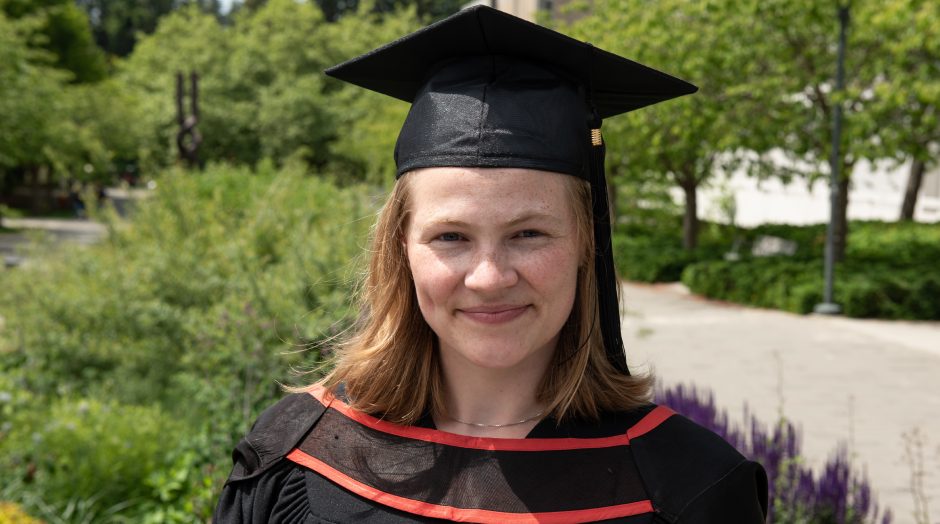
From receiving my UBC acceptance letter in late April 2019 to congratulating the graduating class as the student speaker in May 2024, I am reminiscent of my time at the University of British Columbia but am also excited to continue growing as a leader and lifelong learner. My fond memories of attending CNSBC and SSBC design team competitions, working with faculty and staff, and laughing over shared coursework struggles with friends will accompany me throughout my career as a structural engineer.
People can impact your life in the best ways and open up opportunities you would have never imagined.
It’s fascinating how seemingly insignificant choices can pave the way for significant opportunities in the future. Looking back, I remember joining the UBC Steel Bridge design team on a whim during my second year, lending a hand with UBC laboratory work that summer, and attending office hours out of sheer curiosity in my third year. Little did I know, these experiences would play a crucial role in shaping my path forward.
These experiences led to more opportunities and experiences. Namely, they assisted me in securing opportunities to CO-OP in my desired specialization, co-author a publication, present at the 103rd Transportation Research Board Annual Meeting, become a teaching assistant for a fourth-year course, be selected as the graduating student speaker, land a post-graduate job, and be invited to attend graduate school at Stanford University. I believe I am where I am today thanks to the mentors who went above and beyond to support me and peers whose collaboration challenged and inspired me.
To those who are hesitant to take a trivial opportunity or attend an office hour, seize it. You will never know what blessings await you. “No one knows what the future holds, that’s why its potential is infinite” (Steins; Gate).
What has made your time at UBC memorable?
Despite all the late nights, time crunch midterms, and overly confusing assignments, the lasting bonds forged with faculty, staff, and friends made my time at UBC memorable. I recall my first design team and CO-OP interviews, the 11:59 pm assignment submissions during group calls, shared loss of sanity after stressful exams, daily UBC Steel Bridge design team practices in the CEME lobby during competition season, and last-minute model runs and manuscript edits during my research assistantship with Professor Omar Swei. It is no stranger that relationships formed during struggles are the most memorable.
In particular, I would like to thank the Steel Bridge family (Hana, Samson, Homer, Trisha, Rod … and many more) for providing an event-filled, fun, and goal-oriented environment. Looking back, I am grateful to be involved in extracurriculars because the more you commit, the more you receive.
Why did you choose to go into your field of study at UBC?
Coming from an architecture, civil planning, and engineering family background, I’ve been inherently drawn to the aesthetics and structural integrity of buildings and bridges. What’s more, Civil Engineering’s profound emphasis on positive societal impact, its tangibility, and the opportunity it offers to leave a legacy for generations to come are unparalleled. Although it is one of the most extensive engineering degrees in terms of credit requirements, Civil Engineering at UBC provides a breadth of knowledge and community like no other.
What are your immediate plans for the future?
Following my passion for structural engineering and in preparation for the anticipated magnitude 9 earthquake (“The Big One”), I am eager to pursue industry experience in seismic design during my post-graduate work term. This opportunity will serve as a crucial stepping stone before I embark on my journey to Stanford University, where I aim to deepen my knowledge and skills in all aspects of structural engineering. In the near future, I aspire to perform research with esteemed faculty from Stanford and UBC on seismic functional recovery and post-disaster actions. I would like to contribute to improving the resilience of our built communities, integrating economic and essential service constraints into structural design.
What advice would you give a student entering your degree program?
Academics are not everything. In Civil Engineering, a discipline very reliant on experience, your greatest asset lies in the accumulation of extracurricular design team involvement, forging meaningful industry connections, and leaving a lasting impression on faculty and staff. While these pursuits may initially appear superficial, they hold immense value and will become genuine if you are willing to put in the effort. Value the people around you.
But above all else, enjoy every day. Undergraduate life only comes once in a lifetime.
The Department of Civil Engineering is pleased to extend a warm welcome to a new world-class researcher and educator.
Dr. Enda Murphy joins the Department as an Assistant Professor in Coastal Engineering. He has 17 years of applied research and consultancy experience involving application of numerical and physical modeling techniques to address coastal engineering and coastal zone management challenges. His research and teaching interests are towards an improved understanding and more sustainable management of coastal hazard risk through trans‐disciplinary, whole systems approaches and nature‐based solutions.
Dr. Murphy was most recently a senior research engineer with the National Research Council of Canada’s Ocean, Coastal and River Engineering Research Centre, while completing a Doctorate at the University of Ottawa.
Dr. Murphy obtained his undergraduate degree in civil and environmental engineering at University College Cork. He went on to pursue his master’s degree at Massachusetts Institute of Technology and has been working in the coastal zone management industry since graduation. He is just now completing his PhD at the University of Ottawa.
“The UBC Department of Civil Engineering is excited that Dr. Murphy, a talented researcher and educator, has chosen to join our team. We look forward to seeing what your future with us hold,” said Dr. Bernard Laval, Department Head.
A version of this article originally appeared on UBC News.
Electric bicycle rebates have exploded in popularity in North America as transportation planners try to get people out of their cars and into healthier, more climate-friendly alternatives. However, there is limited understanding of the full impacts of these incentives.
Are new cycling habits sustainable? Who benefits most from these incentives? And are they worth the cost?
Researchers at UBC’s Research on Active Transportation (REACT) Lab have some answers. They surveyed participants in an e-bike incentive program offered by the District of Saanich, B.C. and found that most new e-bike users continued to regularly use their bikes as a substitute for car travel, even a year after purchase. Low-income households reduced their car trips and decreased carbon emissions the most. And incentives are a cost-effective way of reducing carbon emissions.
Reduced car travel
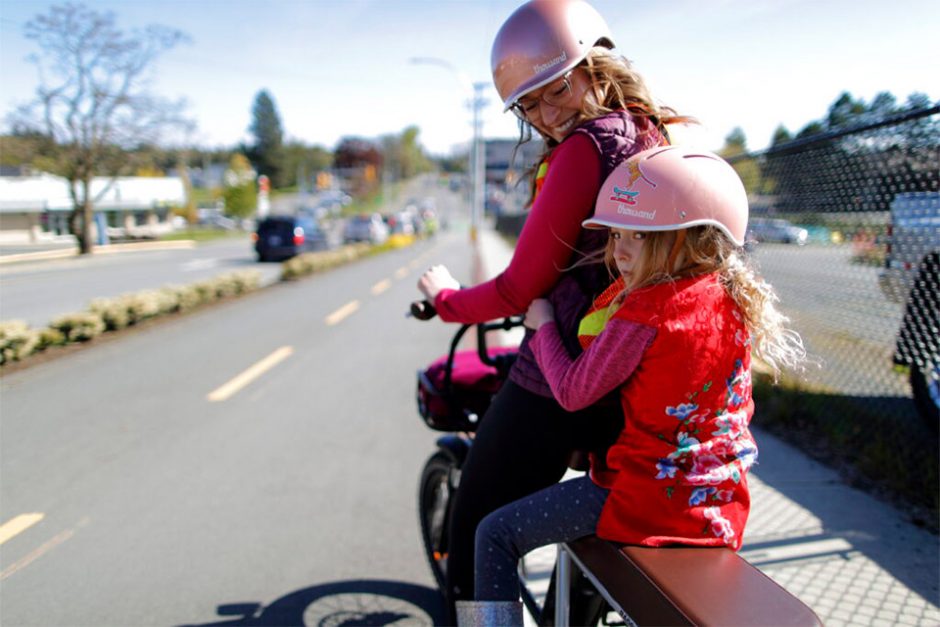
Saanich e-bike incentive program participants said the e-bike opened up a new way to explore Saanich and other communities. (Credit: District of Saanich)
The Saanich program, available in 2021 and 2022, offered three different rebates to offset the cost of new e-bikes, depending on one’s income. The basic rebate amounted to $350, while the lowest-income households could receive up to $1,600.
Results showed a significant surge in e-bike adoption, with 93 per cent of users being new to e-bikes, and 60 per cent new to cycling altogether.
One year after purchase, users continued to be satisfied with their e-bikes, integrating them into their routines for three to four days a week. They reduced weekly car travel by an average of 48 kilometres per week, a reduction of 30 to 40 per cent.
“The incentive not only encouraged people to switch to e-bikes, it also resulted in remarkable changes in travel behaviour that persisted long after the purchase,” said Dr. Alex Bigazzi, principal investigator and associate professor of civil engineering at UBC who leads REACT.
The incentives had the greatest impact on lower-income groups. Among those who received the $1,600 incentive, eight out of 10 would not have purchased an e-bike without it, compared to just two out of 10 who received the $350 incentive.
Lower carbon emissions
With less driving, users reduced their travel-related greenhouse gas (GHG) emissions by an average of 16 kilograms of CO2 per week, one year after buying their e-bikes. Notably, those who received the biggest incentives reduced car use and carbon emissions the most.
“The larger incentives aimed at lower-income families did a great job getting new riders in the saddle and gave them a lower-cost alternative to using their cars,” Dr. Bigazzi said.
More cost-effective than EV rebates
A common criticism of e-bike incentives is their high cost relative to their climate benefits, but the Saanich program was competitive with other transportation subsidies in Canada at a cost of approximately $190 to $720 per tonne of GHG emissions.
“This suggests that e-bike incentives are more cost-effective in reducing emissions compared to electric car incentives, and that’s without including a range of cycling-related benefits such as increased physical activity, reduced local air pollutants and decreased travel costs,” Dr. Bigazzi said.
“We truly value these opportunities to collaborate with researchers who provide us with the most current information to inform our decision-making,” said Saanich Mayor Dean Murdock. “We’re thrilled with the results of this study, which reaffirm the benefits of providing more incentives for people to use e-bikes in their daily lives. The easier and more affordable we can make this process for people, the more interest and uptake we will likely see in these sustainable, equitable and efficient modes of transport.”
The REACT Lab has partnered with the Province of B.C. and other researchers to study the province-wide e-bike incentive program. The broader scope will allow researchers to look at factors including variations in climate and terrain and the availability of safe cycling routes, to better understand their influences.
UBC Seismic recently competed in the prestigious EERI Seismic Design Competition held in Seattle. This year, amidst stiff competition from 40 universities spanning the globe, UBC Seismic stood tall, both figuratively and literally, as they demonstrated their ingenuity and skill in seismic design.
The team’s 5-ft tall balsa wood tower withstood the rigorous tests of ground motions with flying colors. Among the distinguished gathering of competitors, UBC Seismic secured an impressive 8th place overall. In addition, UBC Seismic excelled in specific categories, winning the 3rd spot in Architecture and 6th place in Performance Predictions.
Such triumphs wouldn’t have been possible without the immense support of industry sponsors and faculty advisors. UBC Seismic extends heartfelt gratitude to these invaluable partners whose guidance and backing supported their participation in this competition: “We would like to thank our industry sponsors and faculty advisors who made it possible for us to participate in this year’s competition. We appreciate their ongoing support and look forward to working with many of them next year.”
On Design and Innovation Day, the project titled “The Boston Bar Landfill Closure and Site Renewal” by Team 19 from CIVL 446 was selected as the winner of the project poster category among several amazing projects by civil engineering students.
This project, undertaken in collaboration with Dr. Iqbal Bhuiyan, P.Eng. of Sperling Hansen Associates (SHA), addresses the critical need to rehabilitate the Old Boston Bar Landfill, which has lacked a proper closure system since the 1980s, posing risks to public health, safety, and the environment
Team 19, consisting of Matthew Gunn, Jack Fraser, Arshad Delawar, Lisa Strang, Zoë Robertson, Issa Mikkawi, and Queenie Le, came up with an innovative approach involves applying a layered lift system inspired by dam design principles. This not only ensures effective closure of the landfill but also optimizes revenue generation to cover construction, operational, and maintenance costs while offsetting carbon impacts and generating community profits.
Challenges arose from the unique topology of the project site, including steep grades, geological hazards, and regulatory constraints. However, these obstacles spurred innovation and necessitated a multidisciplinary approach to engineering and environmental design.
The project’s scope excited the team, offering an opportunity to leverage a diverse range of engineering disciplines—from hydrotechnical and geotechnical to transportation, construction, structural, and environmental engineering. Collaborative efforts also involved expertise in community consultation, regulatory compliance, indigenous engagement, and professional practice.
Through the project, the team gained insights into the specialized field of landfill design, conducting extensive research into non-conventional sources and exploring new frontiers within their discipline.
Reflecting on the project’s complexities, the team shared, “The most interesting thing we learned was just how incredibly specialized and niche the field of landfill design truly is. Developing our engineered landfill systems required significant research into non-conventional sources, including undigitized records, web archives, and transferred knowledge from other engineering fields such as geotechnical and municipal design. It was very interesting to explore an entirely new topic within our studied discipline.”
The winning team’s idea does not cease at Design & Innovation Day. In alignment with Sperling Hansen Associates’ commitment to education, training, and research and development, the “Boston Bar Landfill Closure and Site Renewal” project will further enhance SHA’s initiative.
“The team members of this project will be able to contribute their ideas and knowledge gained from this milestone project to the industry in the future,” said Dr. Bhuiyan.
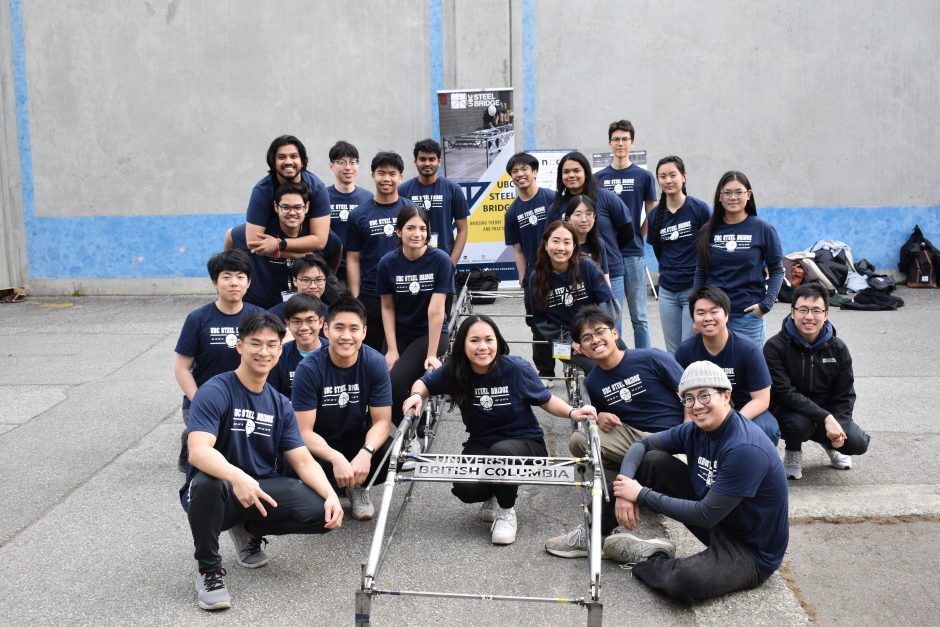
The American Society of Civil Engineering chapter of UBC (UBC ASCE Student Chapter) has successfully hosted the 2024 ASCE Pacific Northwest symposium. The two-day event took place on April 6th and 7th. Over 350 participants, judges, and volunteers from the United States and Canada competed in four competitions: Steel Bridge, Concrete Canoe, Sustainable Solutions and Mead Paper
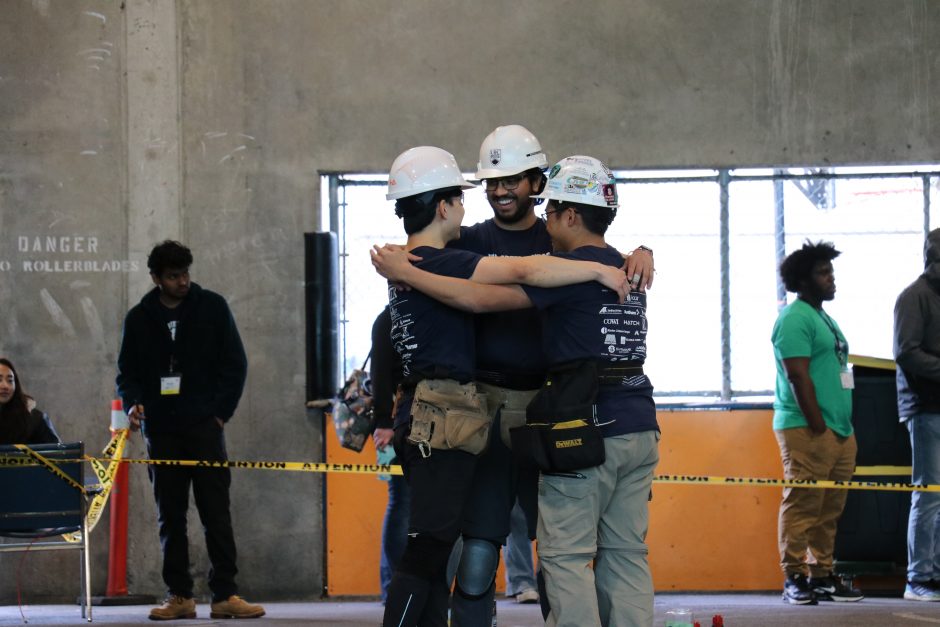
UBC Steel Bridge has secured their ticket to the 2024 Student Steel Bridge Competition Nationals after achieving remarkable success at the regional qualifiers hosted at UBC. Placing second overall, the UBC Steel Bridge team showcased exceptional skill and precision in various categories. Notably, they won first place in Construction Economy, second in Lightness, and third in Construction Speed and Cost Estimation. This achievement marks the team’s third consecutive year earning a spot at the Nationals. Competing against universities across the Pacific Northwest division, the UBC Steel Bridge team has gained invaluable experience and is eager to showcase their talents at Nationals held at Louisiana Tech University.
UBC Steel Bridge
“UBC Steel Bridge’s success in the Steel Bridge Competition is attributed to the commitment and active participation of all its members. Building a 20-foot-long steel bridge is no easy task to balance with a full engineering course load,” said Rod Betonio, UBC Steel Bridge’s co-captain. “Thanks to all team members’ hard work over the past 8 months and to team members: An Vo, Jessi Nguyen, and Takahiro Mori for assisting in the planning and execution of the competition! A special thank you to all the sponsors that have supported the team for the past 25 years!”
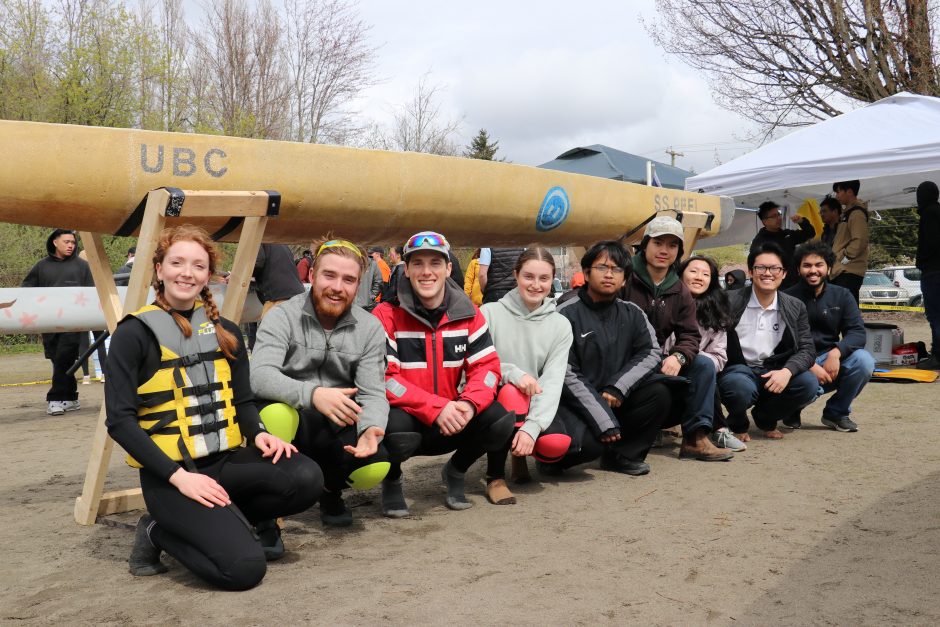
Meanwhile, UBC Concrete Canoe team has garnered attention for their innovative sustainability approach by incorporating aerogel particles into their lightweight concrete. Their research focused on advancing performance and eco-friendliness. Last week, they secured second place in multiple categories, including Project Proposal, Technical Presentation, and Final Product. The team’s paddlers achieved notable success in various race categories, with top finishes in Men’s Sprints, Men’s Slalom, and Coed Sprints, as well as second-place finishes in Women’s Slalom and Women’s Sprints, culminating in an overall second-place team finish.
“We extend our heartfelt gratitude to Shen Wang and Obinna Onuaguluchi of the Civil Materials Lab, whose consistent mentorship and assistance during weekly tests have been invaluable to our team’s success. Additionally, we appreciate Doug Hudniuk for efficiently handling our deliveries and generously lending his tools. Special thanks to the Civil Finance Team for their diligent management of our reimbursements. Lastly, we sincerely appreciate our faculty advisor, Omar Swei, for his unwavering support and guidance that exceeded our expectations,” expressed Mathew Tse, the team captain.
UBC Concrete Canoe
The UBC Civil’s design teams eagerly anticipates their representation on the national stage. The upcoming national events will not only provide an opportunity for the teams to shine but also to learn from and connect with peers from across the country.
Reflecting on the Symposium and the achievements that our design teams brought home, the UBC ASCE team echoes a sense of pride and anticipation for the future. “The UBC ASCE team is proud to represent our school and Civil Engineering department, and is excited to see our team grow in the years to come after the accomplishments from this year,” encapsulates their collective spirit and aspirations.
Dr. Nemkumar (Nemy) Banthia is a University Killam Professor, Distinguished University Scholar and a Sr. Canada Research Chair at UBC Civil Engineering, renowned for his pioneering work in sustainable concrete infrastructure.
His extensive portfolio includes over 475 refereed papers, 9 patents, and leadership roles in transformative initiatives like the Canada-India Research Center of Excellent, IC-IMPACTS.
In this exclusive interview, Dr. Banthia discusses the motivations behind his research, the unique properties of UHPC, and its implications for sustainable urban development.
1. What motivated you to write a book specifically on Ultra-High Performance Concrete (UHPC)?
The motivation behind writing this book stemmed from the profound shifts occurring in the construction industry. Concrete remains the most used construction material today and on a volumetric basis, concrete use is only second to the use of water by mankind. In the last 5 years, UHPC has emerged as a leading material globally with an unparalleled strength and ductility, and has the potential to become the primary material for resilient infrastructure. The goal was to compile critical insights and research findings into a comprehensive resource that addresses UHPC’s design, performance, and practical applications.
Over two years, I and my coauthors meticulously crafted different sections of the book, striving for consistency in language and content. Through 7 to 8 iterations, we aimed to deliver a definitive guide that goes beyond simply cataloging information, but offering deep insights into research needs, mechanisms, and real-world applications.
2. Could you provide a brief overview of what UHPC is and why it has garnered such widespread interest in the field of construction engineering?
UHPC is a revolutionary material known for its exceptional strength, up to 200 MPa—roughly 30 times stronger than regular concrete. This immense strength allows for significantly thinner structural elements, reducing material usage and enabling architects to create sleek, innovative designs. UHPC also carries fiber reinforcement which provides enormous enhancements in ductility, fracture toughness, blast and impact resistance and fatigue endurance.
What’s more, UHPC’s environmental benefits are substantial. By using alternative cementitious materials or byproducts instead of traditional cement, we can drastically reduce carbon emissions associated with concrete production. This aligns with the urgent need to mitigate CO2 emissions in the construction sector, where concrete contributes nearly 13% to global emissions. We now have UHPC formulations that are entirely cement-free.
3. How does the use of UHPC contribute to addressing common challenges in civil engineering and construction projects?
UHPC addresses several key challenges faced in civil engineering and construction. Its exceptional strength and durability result in longer-lasting structures, reducing maintenance needs and life-cycle costs. The material’s high ductility and deformability makes it the perfect material for structures that are subject to blast and impact and extreme loads such as during earthquakes. In some formulation, this material requires less cement than regular concrete, which could help emission from concrete production as 1 ton of cement creates 1 ton of CO2. UBC research has developed UHPC formulations that are entirely cement-free.
4. In terms of practical implementation, what are some key considerations for contractors and engineers when working with UHPC in construction projects?
Practical implementation of UHPC demands meticulous attention to detail. Quality control during production is crucial, as this material does not tolerate errors well. Contractors and engineers should also be well-versed in the use of additives and specialized processing techniques tailored to UHPC. The book provides essential guidance to avoid common pitfalls and ensure successful project outcomes.
5. As UHPC continues to gain interest worldwide, what do you see as the future direction of research and development in this field?
Looking ahead, research and development in UHPC will focus on pushing performance boundaries even further. We anticipate achieving strengths of up to 600 MPa and simplifying guidelines to make UHPC more accessible for general applications. Moreover, integrating UHPC into mainstream construction practices, beyond specialized projects, will be a significant area of exploration.
In Canada, where UHPC research is thriving—especially at institutions like UBC—we foresee broader applications ranging from 3D printing to sewage infrastructure. The goal is to establish UHPC as the material of the future, offering unparalleled durability, sustainability, and versatility in construction.
What extracurricular activities are you currently involved in?
I am currently the co-president of the ASCE (American Society of Civil Engineering) Student Chapter of UBC, where I am involved in leading our team through various projects. This year, our team has undertaken significant efforts, including organizing the ASCE x WIN (Women’s Infrastructure Network) Discussion Panel, focused on engineering careers for women in construction. Additionally, we’ve been diligently preparing for the 2024 Pacific Northwest Student Symposium, where 300 students from across West Coast will fly into UBC to participate in different competitions such as Concrete Canoe, Steel Bridge, Daniel W. Mead Paper, and Sustainable Solutions.
What are key steps you took that helped you land your co-op roles and achieve your goals?
Key steps that played a pivotal role in landing my co-op roles revolved around strategic networking and a genuine eagerness for learning and gaining industry experience. Initially, I prioritized expanding my professional network, actively engaging with industry professionals and peers at networking events. Additionally, maintaining strong connections with students and professors at UBC provided valuable insights for me. Throughout my involvement in student teams such as UBC Concrete Canoe, where I served as the Senior Project Management lead, I proactively reached out to sponsors and fostered positive relationships with companies, ultimately securing sponsorships to maintain a positive cash flow for the team. By remaining actively involved with industry members and continuously seeking opportunities for growth and development, I was able to pave the way for my career advancement.
What is your biggest tip for networking?
My biggest tip for networking is being authentic. People appreciate genuineness, so allow your personality to shine through. Ask thoughtful questions listen to fosters meaningful connections. Confidence is key; but understand balance between confidence and overconfidence. Lastly, remember, making connections is just the beginning; the real challenge lies in maintaining those valuable connections over time, so prioritize genuine engagement and follow-up. Ensuring an up-to-date LinkedIn profile with a professional headshot can greatly enhance networking opportunities, whether engaging with UBC channels like the UBC Engineering Career Fair, Industry Night, and ASCE Lunch and Learn, or through external avenues such as the West Coast Career Fair and Women’s in Infrastructure Network discussion panels.
How do you balance being a student and your club involvements?
Balancing my responsibilities as a full-time student and being in clubs includes several key strategies. Firstly, I organize my tasks by setting a schedule using iCal, ensuring I allocate specific times and location for all commitments. Each week, I conduct a thorough review of my calendar to reflect on timings and make any necessary adjustments to avoid conflicts. Establishing and sticking to a routine has helped me maintain balance and effectively manage my time between academia and extracurriculars.
What has been the most memorable learning experience from your extracurricular involvements thus far?
One of the most memorable learning experiences from my extracurricular involvements thus far was as a candidate attendee at the ASCE Construction Institute Student Days. During this event, we were tasked with working on a bid proposal for an airport expansion project. With a strict deadline, we had just 48 hours to compile all necessary components, including cost estimates, crew allocation, and scheduling, for submission. Although it was challenging, I gained valuable insights into working effectively within a team under high-pressure circumstances. It taught me the importance of collaboration, adaptability, and resilience in navigating challenging environments.
What are your plans after you graduate this year?
After graduating this year, I am thrilled to begin my professional journey at Bird Construction as a Project Coordinator, where I did my last co-op with. Looking ahead, I will be returning to school after gaining a few years of work experience to pursue my MBA.
Do you have any advice for current and future students?
My advice for current and future students is to embrace and enjoy every moment of your academic journey. Take advantage of the opportunities available to you, including joining as many clubs and extracurricular activities as possible. Additionally, seek out mentors in your field of interest and leverage their expertise. Guidance from an industry professional can provide valuable insights and help ease your transition into the professional world. Last but not least, take any opportunity you can to travel. Traveling not only helps with relaxation, but it opens your mind about the world and different perspectives. Remember to stay curious, proactive, and open-minded, as each experience is an opportunity for growth and learning.
What extracurricular activities are you currently involved in?
Currently, I am involved in the Concrete Toboggan Engineering Design Team as the Ski Design Subteam Lead, the Civil Engineering Undergraduate Society (Civil Club) as Co-President, and I work part-time with Industra Construction Corp as a Project Coordinator. Throughout my undergraduate degree, I have also been involved with the Varsity Outdoor Club, the Engineering Undergraduate Society, the Scholar’s Advisory Council, and intramural soccer and futsal.
How do you balance between being a student and your club involvements?
Balancing my academics with club involvements can be challenging, but I’ve found that effective time management and prioritization are key. I am very passionate about all of the work I do and for the success of the teams I’m involved with, which helps to keep me motivated when the work is plentiful and there seems to not be enough hours in a day. I also strongly value the connections and friends I’ve made thus, I’ve become comfortable asking for help and delegating responsibilities to help distribute the workload and promote engagement and community amongst the groups.
What motivated you to take on leadership roles within your community?
My motivation to take on leadership roles within the civil engineering community stems from a desire to make a positive impact and contribute to the growth and development of my friends. With an extensive background of extracurricular involvements before attending UBC, I have learned to grow confidence in my leadership, communication, and organization skills. Then as I gained experience working with a team, I grew excited with possibilities and opportunities that I could imagine and strived to develop these ideas into reality. I believe that by taking on leadership positions, I can help foster a supportive and inclusive environment for others to learn, collaborate, and succeed.
What impact would you like to make on the UBC Civil community after you graduate?
After I graduate, I hope to leave a lasting impact on the UBC Civil community by inspiring future generations of students to pursue their passions and become actively involved in extracurricular activities. I hope to be an example that others can learn from as someone who is positive, hardworking, and resilient.
Can you share a particular instance or project within your extracurricular involvements that has left a lasting impact on you personally?
One project that has left a lasting impact on me personally was when I was Team Captain of the Concrete Toboggan team. The process of designing, constructing, and competing the toboggan challenged me greatly as I was required to not only apply my engineering knowledge in a practical and hands-on way, but also my leadership and organizational skills far beyond what I could have imagined. As a result of the team’s hard work and dedication, we placed 2nd overall and won various other awards, achieving the team’s best performance in recent history. It also provided me with valuable teamwork and leadership experiences that have helped shape my personal and professional development.
Do you have any advice for current students who want to become more involved in their community?
My advice for current students who want to become more involved in their community is to step out of their comfort zones and take advantage of opportunities to participate in extracurricular activities that align with their interests and goals. Even if application deadlines are missed, there is a high chance that a variety of teams and clubs would be extremely excited for your participation regardless of your overall schedule. Something people tend to miss when becoming more involved with their communities is that professional/technical development is one aspect, though any group can be an incredible way to meet new people, develop your skills, and make a positive impact. Leadership roles do come with responsibilities that should be taken seriously though they are also opportunities to challenge yourself, grow, and learn from your experiences.
Current Area of Work: Federico is licensed as a Professional Engineer (P.Eng.) by Engineers and Geoscientists British Columbia and certified as a Professional Traffic Operations Engineer (PTOE) by the Transportation Professional Certification Board. At WSP, he works as a Senior Transportation Planning Engineer on traffic modelling and analysis, conceptual road design, transportation planning, road safety assessments, and project management.
What has been your favourite project you’ve worked on so far, and why?
I have done many transportation studies in my career, but my most rewarding project was the Lansdowne Downtown District Transportation Master Plan, from my time at Bunt & Associates. When built, this new development will help redefine transportation in Richmond City Centre and bring new housing and commercial opportunities within a transit-oriented community. I started working on this project right after graduation, and it took five years to complete. I can look back at the many deliverables throughout the project and see how my role has evolved. From being on technical support to project manager, and being able to sign and seal the final documents upon getting my certification as a Professional Engineer, this project represents career progression during my first years in Vancouver through commitment and hard work.
Are there specific skills or knowledge from your education/work experience that have been particularly valuable in this project?
During my time at UBC, I worked as a researcher on topics such as road safety and active transportation. This experience has enhanced my critical thinking skills, encouraged me to become more open minded, and instilled confidence in my ability to tackle challenges, all of which have greatly contributed to my professional growth. When analyzing traffic and developing solutions for this Transportation Master Plan, I made sure to use the skills and knowledge developed throughout my education. I believe my time at UBC played a key role in helping me become the professional I am today.
What was the biggest challenge you faced during this project and what did you learn from it?
The biggest challenge was putting all the pieces together. I see engineering projects like a puzzle that needs to be put together piece by piece. Seeing how every engineering discipline interacts with one another and slowly converges into a cohesive product is a fascinating process to be a part of. The project required to accurately estimate how thousands of site residents, employees, and visitors would travel to and from the proposed development, and how travel patterns in Richmond City Centre would change once the proposed upgrades to the road network are implemented. When working with long-term traffic forecasts, even the tiniest of assumptions can have material impacts on our calculations. Thus, making sure my assumptions and methodology were solid was one of the biggest challenges with this project.
What motivated you to pursue a Master’s Degree in Transportation Engineering?
I started getting interested in road safety during the later years of my undergraduate degree. My professors inspired me to see road safety as more than another statistic or metric. Every road safety casualty is someone’s family or friend that could have been prevented. When designing infrastructure, engineers must keep road safety as the highest of priorities. After graduation, I wanted to keep studying road safety and specialize in it. A friend at the time suggested I apply for graduate programs in Canada, and I was lucky enough to get accepted. I am truly grateful for having had the opportunity to continue my studies at UBC with a renowned road safety research program, faculty staff, and fellow students.
Is your current career path as you originally intended?
Not at all. I got into civil engineering thinking it would be like architecture but with more math. I couldn’t have been more wrong. Life is full of surprises! It took me a few years to discover my passion for transportation engineering and a few years more to realize I wanted to continue my education at a superior institution like UBC. You can only plan your career path so much. Many things can happen along the way, and we need to be flexible and resilient to handle whatever life throws at us, at both personal and professional levels. Even if my career path is not what I envisioned when I was younger, I am very happy with how things turned out. I have had amazing experiences and made a lot of great friends along the way.
In your early years after graduation, what were some of the key steps you took that greatly helped you move your career forward?
1) Push yourself outside of your comfort zone and keep finding ways to be challenged by your work.
2) Get involved with the professional industry. There are many great institutions out there to stay in touch with other professionals and help advance the profession.
3) Networking is everything. In such a small industry like transportation engineering, building relationships with other industry members is fundamental (and fun, too).
What advice would you give to current students or recent graduates who are considering pursuing a Master’s in Transportation Engineering or starting a career in the field?
Getting a master’s degree can be very rewarding and a fantastic way to expand your knowledge on something you are truly passionate about. Even if it takes additional time and effort to get it, it can help you get ahead in your career and be another step toward becoming an expert in a specific discipline. Without a doubt, doing my master’s at UBC changed my life, and I think of it as one of the most important times of my professional career. For anyone considering pursuing a Master’s in Transportation Engineering, I strongly recommend you do so. However, keep in mind that degrees and certifications alone do not define us as professionals. Everybody has their path to follow, and what works for some doesn’t have to work for all.
United Nations Sustainable Development Goal 6 outlines the need for universal and equitable access to safe and affordable drinking water, sanitation, and hygiene for all by 2030. However, drinking water sources worldwide are heavily contaminated and wastewater is often untreated before discharge into the environment, contributing to the spread of disease. Dr. Sara Beck, an assistant professor at UBC Civil Engineering, is advancing research aimed at removing microbial and chemical contaminants from water and wastewater in decentralized settings.
Dr. Beck is receiving funding from the Canada Foundation for Innovation (CFI) and the British Columbia Knowledge Development Fund (BCKDF) to advance her group’s work on decentralized water and sanitation systems
Decentralized water treatment systems, which treat water at the point of collection or point of use, differ significantly from centralized ones in their scale, operation, maintenance, and cost. In decentralized settings, there is a lack of municipal engineering infrastructure, necessitating alternative approaches tailored to local contexts where conventional approaches are not feasible. Dr. Beck emphasizes the importance of advocating for water treatment systems at smaller scales, ensuring that communities have access to clean water for both drinking and irrigation.
“The pressing question that prompts this research is how do you achieve the same efficacy of water treatment at smaller scales with limited resources,” said Dr. Beck.
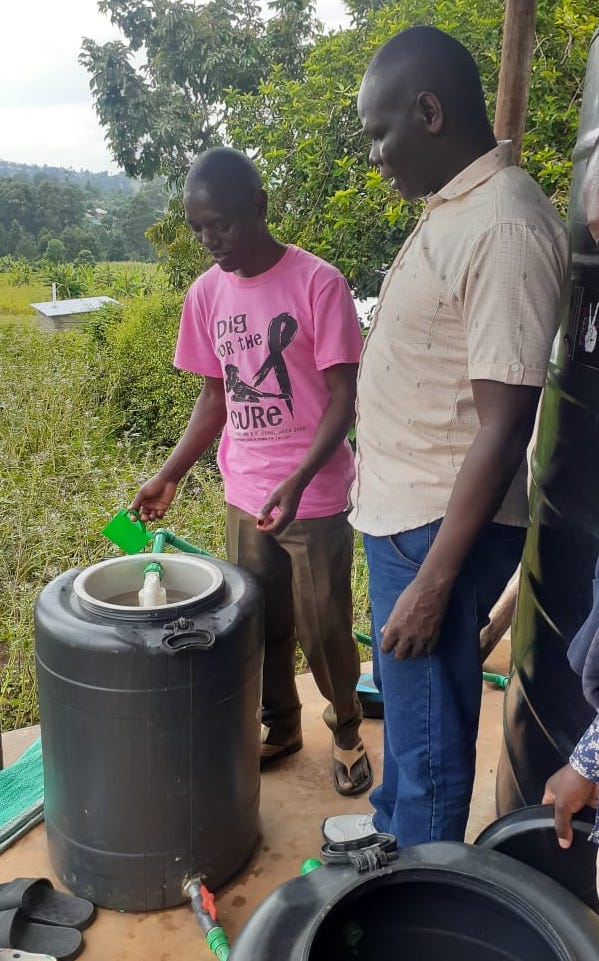
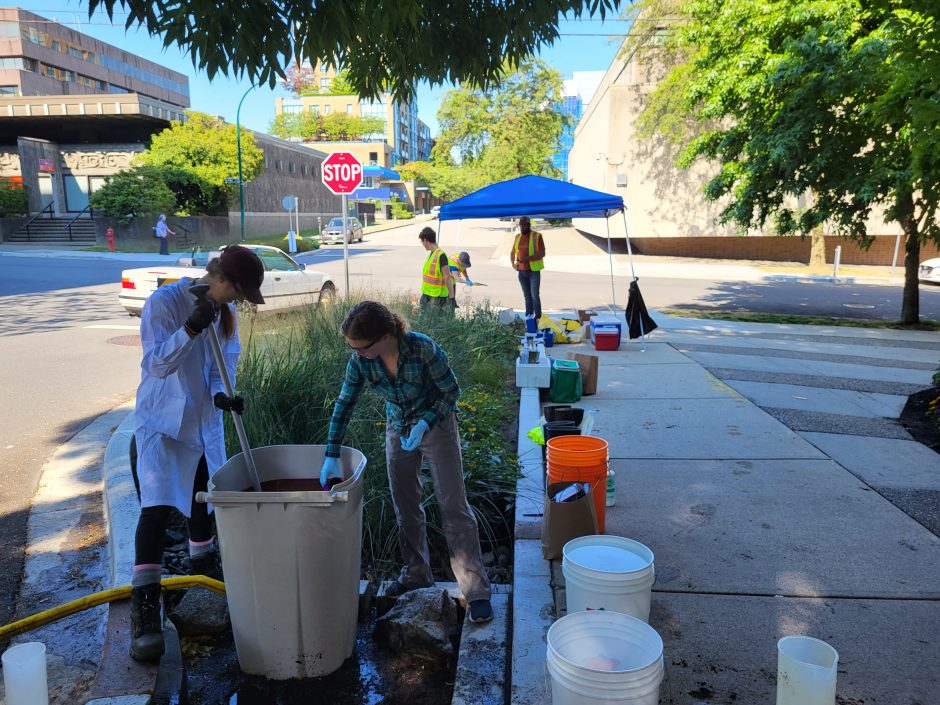
Postdoctoral fellow, Dr. Paul Onkundi Nyangaresi (left), testing water from a rainwater harvesting and treatment system
The foundation of Dr. Beck’s work lies in the pressing need to address water quality issues in communities lacking centralized treatment infrastructure. Her motivation stems from personal experiences, notably through involvement with Engineers Without Borders-USA working in rural communities in Uganda, El Salvador and Nicaragua, where they encountered the stark reality of communities relying on untreated water sources.
Implementing decentralized systems comes with its challenges. Dr. Beck highlights the need for sustainable and cost-effective technologies that can reliably remove contaminants. Moreover, operational and maintenance considerations are crucial to ensure the longevity and effectiveness of these systems.
Securing funding from prestigious institutions like the CFI and BCKDF is instrumental in advancing this research. Central to her research is the acquisition of equipment for a microbiology lab, which will enable Dr. Beck and her research team to identify bacterial, viral and microplastic contaminants of concern in surface water, groundwater, and cisterns, and also to enable the investigation of simplified filtration and disinfection methods for removing, inactivating, or degrading the contaminants.
The impact of this research extends beyond the laboratory, with the potential to improve water quality in regions with limited access to centralized treatment facilities, such as smaller rural communities in East Africa. Implementing decentralized treatment systems in households or community-scale systems, such as schools, could safeguard public health and enhance overall well-being.
Dr. Beck envisions scalability and sustainability as essential aspects of her research. She is exploring collaborations with other researchers to expand her solutions beyond her current focus areas, including regions in British Columbia, demonstrating the feasibility of widespread implementation.
The University of British Columbia (UBC) has announced its support for 45 research excellence clusters through the Research Excellence Clusters initiative for the year 2024/25. Among these, two standout clusters led by UBC Civil Engineering faculty are set to redefine the landscape of disaster resilience and infrastructure development.
One of these pioneering clusters, the UBC Disaster Resilience Research Network (DRRN), under the expert co-leadership of Dr. Carlos Molina Hutt and Dr. Sara Shneiderman, aims to foster transdisciplinary connections and delineate shared research objectives. The network aspires to inform disaster risk reduction policies and decision-making processes at both community and governance levels.
In 2023, the UBC Disaster Resilience Research Network formed an academic advisory panel to provide the Province with expert input, as the B.C. Ministry of Emergency Management and Climate Readiness embarks on provincial disaster and climate risk and resilience assessments.
“At UBC we have an incredible group of world-leading experts across the natural, applied and social sciences working to improve our understanding of disaster risk and build resilience,” Dr. Molina-Hutt
With a focus on British Columbia while incorporating valuable international perspectives, the cluster seeks to advance multi-hazard assessment and mitigation strategies. Moreover, it endeavors to promote an inclusive and equitable development framework for disaster risk management.
As a novel addition to the Research Excellence Clusters, The Smart Infrastructure and Construction Research Cluster (SICRC) led by Dr. Tony Yang, embodies UBC’s commitment to innovation and advancement in civil engineering and construction technology. Bringing together a diverse team of experts from material and structural engineering, robotics, computer science, construction management, and infrastructure planning, this multidisciplinary cluster aims to address a myriad of pressing challenges facing the infrastructure and construction sectors. From tackling the housing crisis and labor shortages to mitigating the impacts of global warming on civil infrastructure, this cluster is committed to driving positive change on both regional and global scales.
By fostering collaboration across disciplines and leveraging diverse expertise, these initiatives promise to drive positive change and contribute significantly to addressing some of the most pressing challenges of our time. As the world looks towards academia for innovative solutions, UBC Civil stands at the forefront, leading the charge towards a more resilient and sustainable future.
Current Company: Urban Systems-multi disciplinary company based out of Kamloops, with many offices across Canada. The company is a networked organization where the structure is non-traditional. The structure allows for employees to have internal and external clients while working under the company umbrella. What this results in is a flat structure where an engineer can have different roles on different projects, rather than one specific role on every project.
Current Area of Work: Civil Engineering: underground utilities (water, sewer, telecom, and gas), roads, lot grading. My role varies, ranging from being a project manager to focusing on technical work.
What has been your favourite project you’ve worked on so far, and why?
I have worked on a number of really cool projects, including institutions, a gondola, and the subway. Probably the biggest one of note is the Broadway Subway, but others, such as New St Paul’s Hospital, and Burnaby Hospital are also of note. The reason it has been so interesting to work on the subway is because of the enormous amount of coordination that has been needed between all of the engineers, architects, construction companies, and government entities to ensure that all the stakeholder needs are met.
Are there specific skills or knowledge from your education/work experience that have been particularly valuable in this project?
What has been valuable from my education is to always go back to first principles when trying to solve a problem I haven’t encountered before. One example on this project was to determine how to hang existing utilities underneath the traffic deck during construction of the subway stations. We had to be creative with the solutions to do this work without disrupting utility services to existing businesses along the Broadway corridor. This was particularly important because it’s a multi-year project which can impact the continuous existence of these businesses. I still use a couple of fluid mechanics textbooks from UBC.
In your opinion, what are the most critical skills for success in the field of civil engineering today?
I think that a lot of people focus on project management and fail to develop their technical skills very well. It’s important to have a very good technical background rather than just an understanding of bylaws and building codes. Being technical, in addition to having good people skills is a recipe for success because it allows you to solve problems quickly and creatively on non-standard projects.
In the early years after graduation, what were some of the key steps you took that greatly helped you to move your career forward?
I was willing to do work that others weren’t. This helped me get my foot in the door and gain really sound technical knowledge. I think that I’ve been quite lucky to have so many mentors who passed knowledge onto me and encouraged me. In particular, I created a portfolio of relevant work and school projects that I had completed which I used in my job applications and interviews. I specifically applied to smaller companies, further out of Vancouver that may receive less applicants because there were very few jobs available when I first graduated. Once I gained some experience and met more people in the industry, I applied to a larger, more well-known firm that I was very interested in working for.
Looking back on your career thus far, is there anything that you wish you had done differently?
I wish I took more time off between jobs and took advantage of vacation in the first years. The more responsibility you take on, the harder gets to step away from work and just relax.
Were there any mentors or notable people in UBC who helped guide you along the way? How did their influence impact or shape your career?
Professor Bernard Laval’s course brought me to love fluids and changed my mind about structural engineering in my final years.
Do you have any advice for current and/or graduating students at UBC Civil?
Often, when students graduate, students just want a job, but a hiring manager is looking for someone who will stay with the company for a long time. As a result, it’s important to be specific about what field you’re interested in when applying for job opportunities upon graduation. It’s also important to be able to explain what you have learned that would be applicable to the field (do your research ahead of the interview!). Enthusiasm and willingness to do a good job in a particular field go a long way.
1. Can you tell us a little bit about yourself and the program that you are in?
My name is Brody Granger and I completed my M.A.Sc. in Civil Engineering in the discipline of Environmental Fluid Mechanics with Dr. Bernard Laval in 2020. Since then I’ve been working for Dr. Laval as a research assistant, continuing with the project that began in 2014 while working in his lab as an undergraduate research assistant.
2. Can you provide an overview of your research project on Quesnel Lake?
The latest round of research on Quesnel Lake began on the 4th of August, 2014, while I was working for Dr. Bernard Laval as an undergraduate research assistant. I came to work that day to find the news headlines filled with an unfolding environmental disaster near my hometown of Williams Lake, in the interior of BC. A copper and gold mine by the name of Mount Polley was spilling its guts into the surrounding watershed, following the failure of their earth-fill tailings dam, an event which still holds the record for the largest spill of mine waste into a lake. The topic of my M.A.Sc thesis, which I completed in November 2020, was figuring out where the finest sediment from that spill went in the Quesnel Lake and River system. Since then, my focus has shifted from the effects of the spill to ongoing pollution from mine effluent discharge into Quesnel Lake.
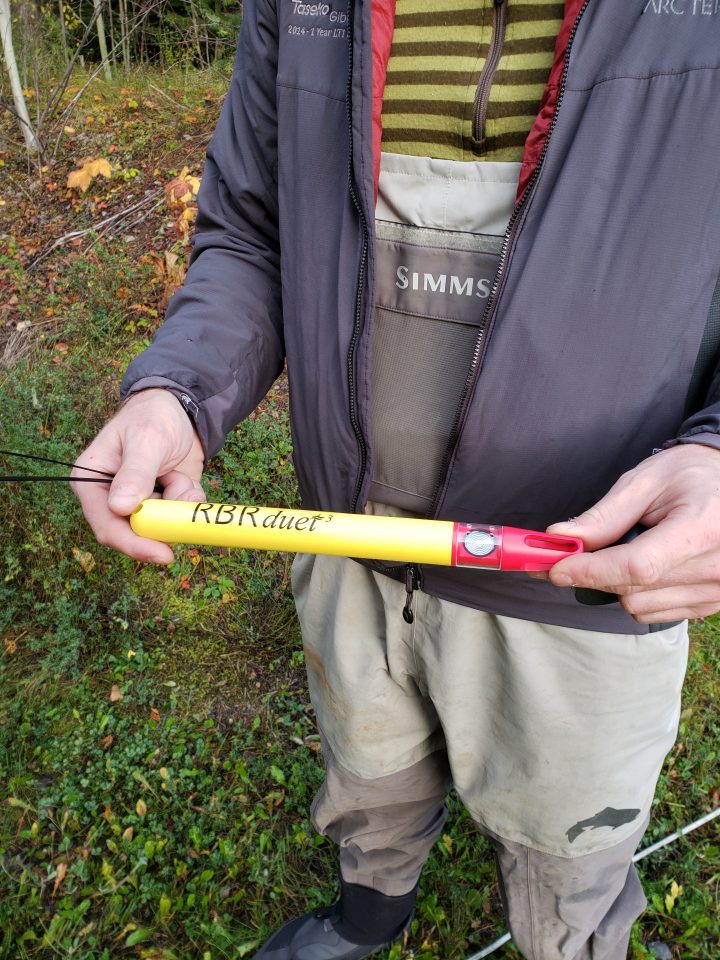
Cre: Brody Granger
3. What were the primary objectives and research questions that guided your study in this specific context?
For my M.A.Sc. thesis I wanted to set the record straight about how much fine sediment remained in suspension in Quesnel Lake during the months and years following the spill, as well as to make some prediction about how long the system would take to substantially flush out this suspended sediment. Rather than relying on a complicated, computationally intensive, numerical model, I found a way to interpret observational data using an analytical model that was as simple as possible, but no simpler.
4. Could you describe the methodology and techniques you employed to assess the ecological and fisheries impacts following the tailings spill?
The first step in my assessment of the spill’s impacts was to relate the observational data which I had available to me – in this case, turbidity, which is a measurement of the cloudiness of the water – to an estimate of concentration (mass of suspended sediment per volume of water). This I did in the lab, measuring the turbidity of varying concentrations of tailings from the spill using the same turbidity sensors as our research group uses in Quesnel Lake. Once I had related turbidity to mass concentration, I compared observational data to the predictions of time-tested analytical models well known to environmental engineers: continuously stirred tank reactors (CSTRs).
5. Were there any unexpected challenges or obstacles you encountered during your research, and how did you address them?
Something that is inherent in the nature of unprecedented disasters is that by the time the research catches up with what is going on, and what data is important to collect, the opportunity to collect that data has already passed. In some cases this can be just plain bad luck, as with my first, post-spill trip to Quesnel Lake, when the instrument we were using to get vital, early-stage data stopped functioning due to an electrical short circuit. Luckily, because of a data sharing agreement between UBC and Mount Polley Mining Corporation that Dr. Laval arranged with representatives of the mine, I was able to use data from a similar instrument which mine personnel had used to measure the physical properties of the lake water following the spill – data which eventually became a small but important part of my analysis.
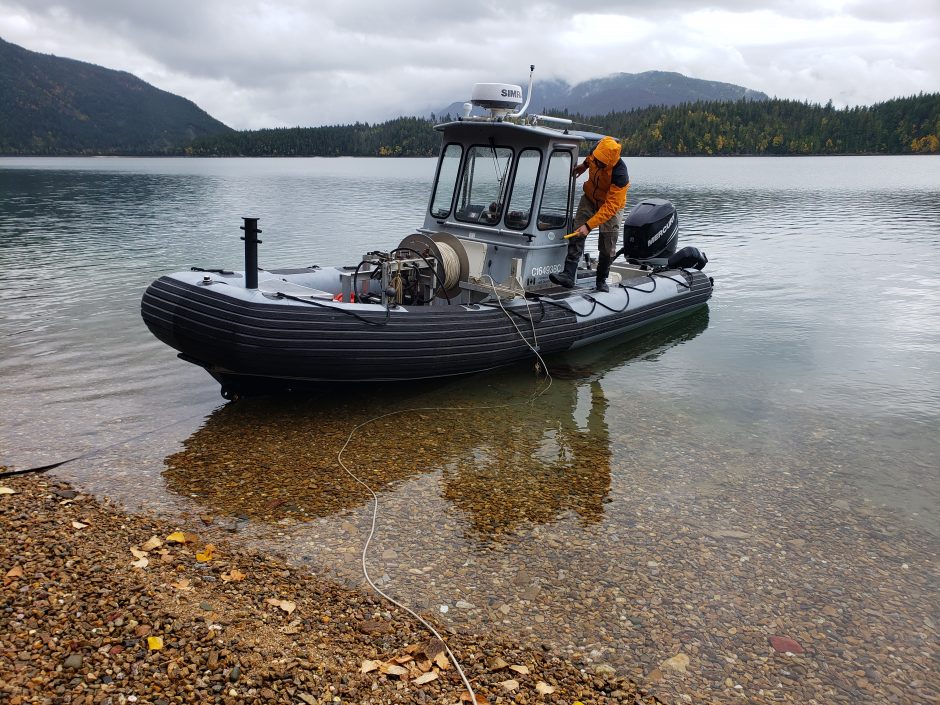
Cre: Brody Granger
6. Can you discuss the measures, if any, that were taken to mitigate or remediate the environmental damage in the aftermath of the tailings spill, and their effectiveness?
Within Quesnel Lake itself there have been no measures taken to mitigate or remediate the damage from the tailings spill, for the simple reason that disturbing the tailings deposit at the bottom of the lake would almost certainly do more harm than good. By far the most significant remediation work that Mount Polley Mining Corporation has done in the years since the spill has been in the flooded area around Hazeltine Creek, the channel which conveyed the tailings slurry into Quesnel Lake during the spill. Our research group continues to see elevated copper concentrations during some times of year in water and sediment samples that we collect from Hazeltine Creek, which indicates to us that this channel remains a source of pollution in Quesnel Lake.
7. In what ways do you believe your research can be extended or adapted to other regions facing similar environmental challenges?
Mining is big business all around the world, and anywhere there are mines, there are tailings. While most of the hard lessons learned by the mining industry following the Mount Polley disaster had nothing to do with my research (for example, lessons about proper management and monitoring of earth-fill tailings dams), there are some that my research can inform. For one, in the unfortunate event that another large tailings spill goes into a lake, my research could help to inform what data collection should begin immediately, and how that data might be used to assess the long-term impact of the spill. More broadly, my research can serve as a reminder that simple, analytical models are a valid tool for assessing observational data following such a disaster, and that they should always be consulted first before employing more complicated numerical models.
8. Any future plans after this project?
I plan to move to New Zealand in March to continue pursuing a career in water resources and to play the accordion in a folk band.
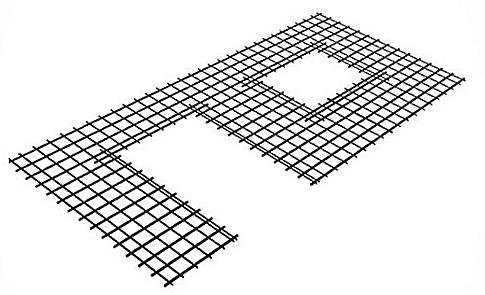
Rapid population growth in major cities worldwide has created immense challenges when seeking affordable housing. However, excess construction costs can be reduced by employing concrete elements such as slabs, panels, and beams that are reinforced with welded wire mesh (WWM). This material consists of electrically welded rods to form a uniformly continuous mesh which has been widely adopted in the industry as it has immense production efficiency, speed, and durability while also reducing project costs.
Dr. Tony Yang, a Professor at UBC Civil Engineering, the lead researcher at UBC Smart Structures, and one of the world’s leading experts in structural and earthquake engineering, spearheaded a project that will examine the seismic performance of concrete components that implement heat-treated and epoxy-coated WWM. Dr. Yang is dedicated to his research to improving solutions for the reinforcement of concrete construction with the use of WWM as a replacement of the rebar in both precast and cast-in-place concrete construction.
Sample configuration of WWM to be produced by the industry partner
In support of his project, Dr. Yang is awarded a $1.26 million joint grant from NSERC-Mitacs. This grant will support 9 graduate students, 1 senior research associate, and part-time technicians at the University of British Columbia for 4 years.
Dr. Yang is collaborating with SACKS Industrial Corporation, which is one of the largest private WWM producers in Canada. SACKS Industrial Corporation will lead the research in the heat treatment process of the WWM at its facility. They will also work closely with UBC Smart Structures which will lead the advanced simulation and testing for the use of WWM. These partnerships will bring a vertical integration of expertise from structural engineering, earthquake engineering, and construction management which is essential for achieving innovations in the whole life cycle of high-performance precast building projects.
This project has three components across its life course, consisting of projects A, B, and C. Project A will be dedicated to investigating the behaviour of precast RC slabs reinforced with WWM under gravity load. Project B will be dedicated to investigating the behaviour of precast RC beams reinforced with WWM under gravity and cyclic loads. Lastly, project C will be dedicated to investigating the behaviour of cast-in-place RC walls reinforced with WWM under static and cyclic loads.
Finally, this project will develop a design guideline for the novel structural components with enhanced WWM. This will enable engineers to use the newly developed structural system, and it will make the Canadian construction industry more efficient and competitive, resulting in more affordable housing constructions within Canada.
UBC Engineering hosted a technical seminar on October 13 to share expert insights and lessons learned on earthquake preparedness, response and recovery, following a visit to Türkiye after the region was struck by devastating earthquakes this year.
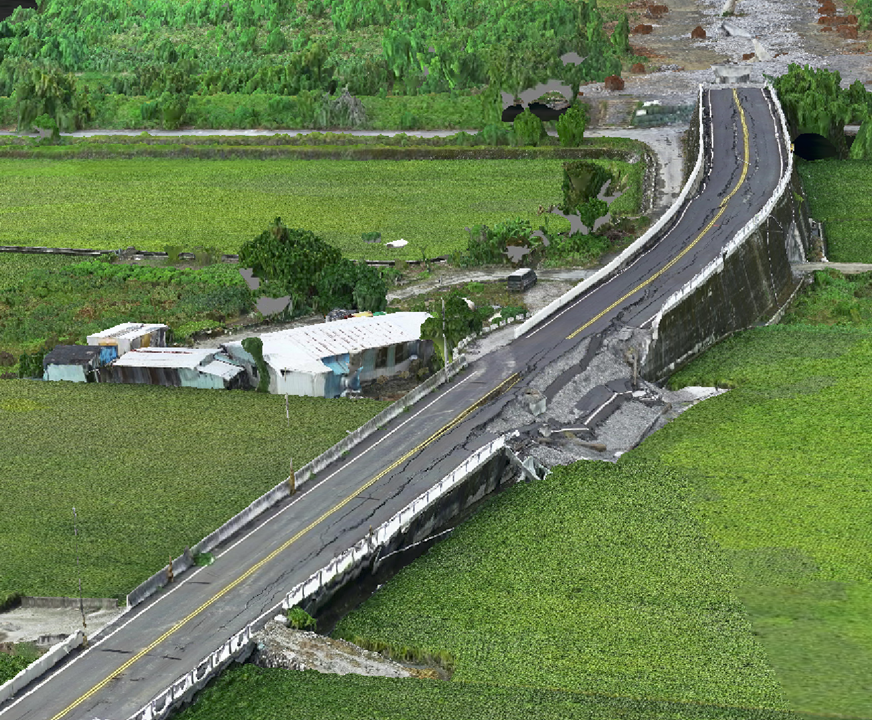
The deadly earthquakes that struck Türkiye and Syria in February 2023 resulted in a catastrophic loss of life, injured many more, and left 1.5 million people homeless as buildings collapsed or became unsafe to use.
UBC Civil Engineering led a team of researchers, technical and industry experts on a visit to Türkiye in June to inspect damaged infrastructure and learn about the resilience of different buildings. The team shared insights from their visit at a technical seminar last week, with the goal of better informing BC’s earthquake preparedness, response and recovery practices.
Comparing seismology and building codes in Türkiye and BC
Located in one of the world’s most seismically active regions, Türkiye has long prepared for destructive earthquakes. Of this year’s quakes, Dr. Alemdar Bayraktar, a visiting professor at UBC’s Department of Civil Engineering said, “The long duration of ground shaking and underestimation of the seismic demands during the construction and design process contributed to the extensive damage and collapse of multiple buildings.”
Liquefaction-induced ground and structural failures were also widespread in some coastal and lakeside cities, noted Dr. Keshab Sharma, a geotechnical engineer at BGC Engineering. “Several locations in Western Canada, including Vancouver, have all the parameters that trigger liquefaction,” he warned.
Dr. Tony Yang, a UBC civil engineering professor and the the lead researcher at UBC Smart Structures, spoke about Türkiye’s experiences with earthquakes every 15 to 20 years and how the country regularly updates its building code. He noted that buildings that failed in February’s quakes were mostly designed to older building codes. The most recent code (2018) is, however, “really robust,” shares many similarities with Canada’s national building code, and even goes a step farther in some areas (such as procedures to assess and retrofit existing buildings).
“I am very proud of my Turkish colleagues. They are not afraid of using novel technology such as base isolation dampers. All hospitals in high-seismic zones are required to be base-isolated,” said Yang.
Residential buildings, schools and hospitals in earthquakes
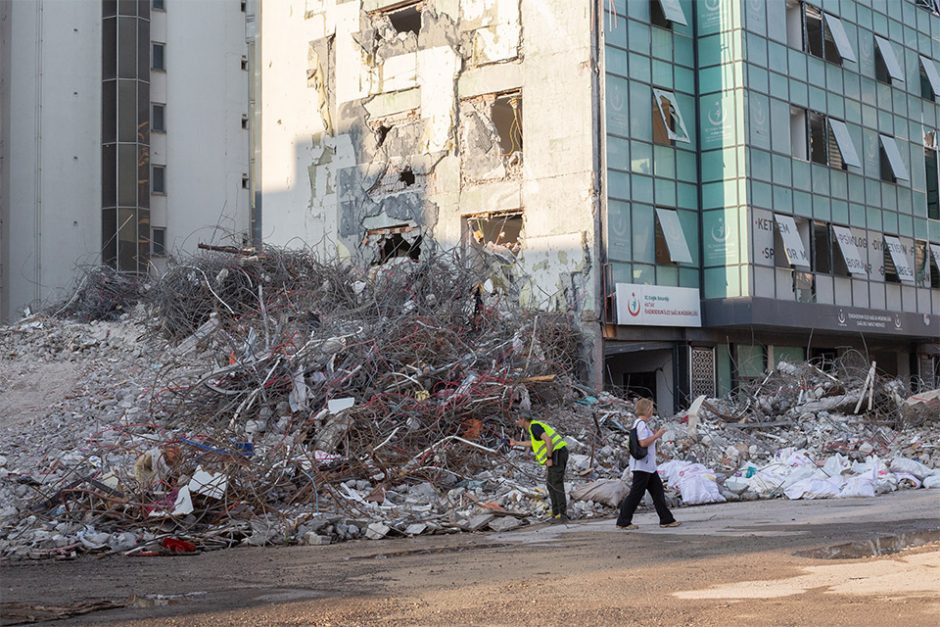
View of collapsed buildings in Iskenderun, a coastal city that experienced liquefaction-induced ground and structural failures. (Credit: UBC Applied Science/Ylenia Gostoli)
Understanding how essential buildings withstand earthquakes is crucial to helping people survive.
Ausenco structural engineer-in-training Dr. Jeffrey Salmon expanded on how base-isolated health-care facilities far outperformed fixed-base structures during high-intensity ground shaking; base-isolated hospitals remained fully operational whereas most fixed-base facilities had to close.
He recounted a story from the director of one base-isolated hospital where a surgery continued during and after the earthquake with no interruption. “To me, it’s an anecdote that highlights the power of base isolation and allowing operations of these facilities.”
UBC adjunct professor of civil engineering Dr. Svetlana Brzev, touched on how multi-family, mid- to high-rise residential buildings made of reinforced concrete were most affected.
“Some buildings that looked by careful inspection to have very little structural damage in fact had extensive non-structural damage and had to be vacated,” she said. She identified imprecise definitions in former building codes, configuration irregularities, and a substandard quality of materials and construction as additional factors leading to the loss of these residences.
Schools generally fared better due to robust design, stronger code enforcement and higher quality of materials, explained Dr. Bishnu Pandey, an engineering instructor at the British Columbia Institute of Technology. Nonetheless, almost 2,000 school buildings were completely damaged, and many more suffered partial or minor damage. Pandey commented on how almost one third of affected households did not send their children to school, in some cases “because they are so scared” of schools with visible damage, even when damage was minor.
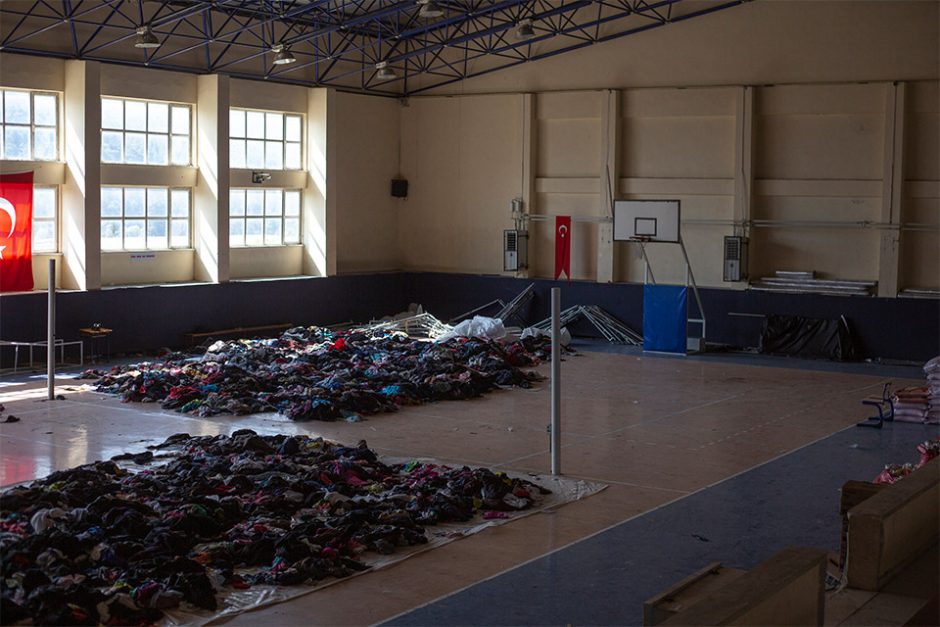
A school gym in Bahçe being used as a shelter. Pandey called these gyms a “great communal or societal asset for people there” in the aftermath of the earthquakes. (Credit: UBC Applied Science/Ylenia Gostoli)
Allison Chen, practice advisor at Engineers and Geoscientists British Columbia, spoke on the similarities between Türkiye and BC’s approach to schools, emphasizing the higher requirements for schools in BC’s building code, as well as the Ministry of Education’s Seismic Mitigation Program. She confirmed, “We’re going to take the lessons learned from Türkiye and update these guidelines” for seismic retrofit of schools, noting liquefaction, non-structural components and post-earthquake evaluation as key discussion topics.
Emergency response and recovery
Speaking again later in the seminar, Salmon detailed recovery and response efforts in the first two months after the earthquakes, including the importance of a rapid building assessment to calculate if buildings were safe enough for people to return to, or if temporary tents would need to be deployed.
Dr. Şerife Özata, a research assistant at Ahi Evran University, was a volunteer for the general damage assessment process and explained how the process works in crisis situations. The aim is to quickly identify what buildings can and cannot be used, and which need to be prioritized for demolishing to prevent further risk to life and safety. “In one month, approximately 6.8 million buildings and detached units were assessed” using this method, she said.
Salmon and Chen also spoke about the psychological impact of the earthquakes on survivors afraid to enter buildings, the challenge of quickly building and transitioning people to temporary prefabricated homes while the rebuilding process continues, and the use of purpose-built community centres to help people socialize and rebuild connections.
“One key takeaway is just how important it is to be prepared to have your networks in place and be able to mobilize immediately… to get that response and recovery process going right away,” said Chen.
She emphasized the role that different government agencies in Türkiye have in disaster preparedness, holding earthquake drills, and having clear search and rescue plans.
“The key things for success in any disaster response plan are: for everyone involved to know what their responsibilities are, to own the plan, to really feel like they’re involved with it. It’s important that they do their job. That they communicate with each other, and that all actions are done on time and in accordance with the plan.”
Earthquakes are a reality in BC, but not to the same degree of public consciousness as in Türkiye. A severe earthquake in BC is inevitable — it is only a matter of when.
Before that happens, everyone in BC — engineers, policymakers and individuals — has a part to play in ensuring that people and buildings are prepared for and ready to respond to the Big One.
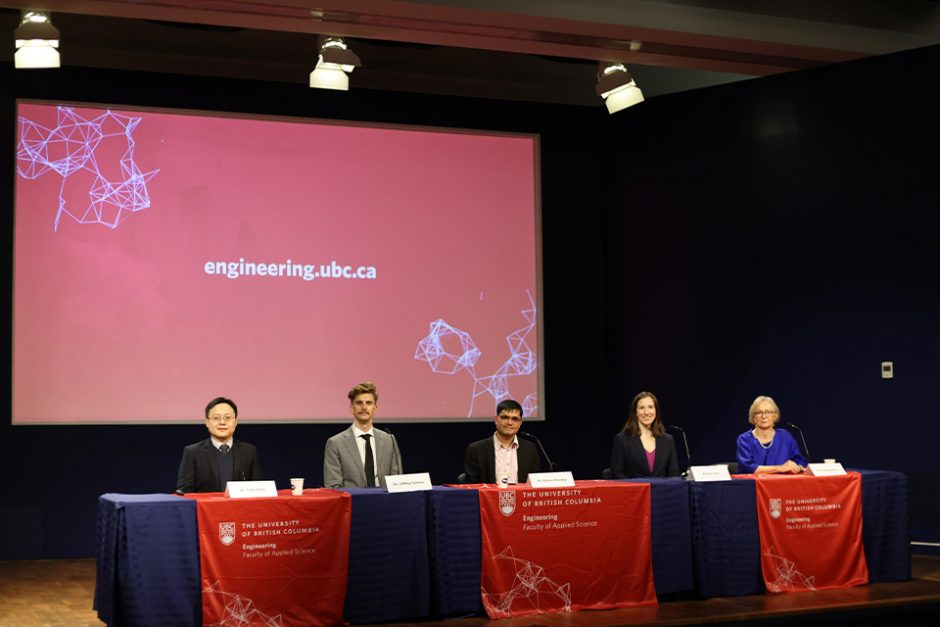
Expert panelists included (left to right): Tony Yang, Jeffrey Salmon, Bishnu Pandey, Allison Chen and Svetlana Brzev. (Credit: UBC Applied Science)
Twelve different projects across UBC, including four at the department of Civil Engineering, are part of a $450,000 funding boost from the Province to help advance approaches in disaster and climate risk assessment and management in B.C.
As part of the funding, the UBC Disaster Resilience Research Network will also form an academic advisory panel to provide the Province with expert input, as the B.C. Ministry of Emergency Management and Climate Readiness embarks on provincial disaster and climate risk and resilience assessments.
“At UBC we have an incredible group of world-leading experts across the natural, applied and social sciences working to improve our understanding of disaster risk and build resilience,” said civil engineering assistant professor Dr. Carlos Molina-Hutt, co-lead of the Disaster Resilience Research Network and principal investigator on this contribution agreement with the Province.
“Integrating the latest research into policy at the provincial level means we can help communities across British Columbia prepare for and reduce the risk of seismic and climate-driven hazards. We’re very grateful to the support from the Province through the Ministry of Emergency Management and Climate Readiness.”
“We know that B.C. is prone to seismic activity and other emergencies exacerbated by climate change,” said Bowinn Ma, Minister of Emergency Management and Climate Readiness. “This research will result in important insights and strategies to reduce risk and better protect people and communities. By working together, we will be better prepared for the future – and I’d like to thank the UBC Disaster Resilience Research Network for being an important partner in this effort.”
“These recent disasters have highlighted the need for communities to enhance their resilience to a wide range of hazards as severe weather becomes more frequent as a result of climate change,” said Dr. Molina-Hutt. He added that in addition to climate-related hazards, people in high seismic regions need to be aware of the ever-present threat of a major earthquake in the province, including ‘the Big One,’ which could expose parts of coastal B.C. to tsunami waves.
The 12 research projects are working on new approaches to quantify and manage these risks and contribute towards disaster resilience. They are led by experts in engineering, urban planning, geography, and other disciplines who are part of the Disaster Resilience Research Network.
Research projects led by UBC Civil Engineering
Four of the twelve funded projects are under the skilled guidance of faculty from UBC Civil Engineering, exemplifying the department’s pivotal role in this endeavor.
Within the domain of hazard and risk quantification, these projects aim to redefine our understanding and management of potential threats. The following dedicated Associate Professors, working at the forefront of their fields, are poised to drive innovation and create solutions to mitigate the diverse risks that British Columbia faces.
Incorporating deep sedimentary basin effects on seismic hazard estimates (Dr. Carlos Molina-Hutt)
Machine learning for flood prediction in ungauged basins in B.C. (Dr. Steven Weijs)
Changing transportation access over time due to natural disaster events (Dr. Amy Kim)
Quantifying the seismic resilience of the network of interdependent hospital and road-based transportation infrastructure (Dr. Carlos Molina-Hutt)
Disaster Resilience Research Network
Dr. Carlos Molina-Hutt and anthropologist Dr. Sara Shneiderman created the UBC Disaster Resilience Research Network in recognition of how disaster resilience research can directly contribute to local and regional mitigation strategies in B.C.
The network, funded by a university grant for catalyzing research clusters, brings together disaster risk and resilience researchers across both UBC campuses to jointly share research with policymakers.
“Our network is well-positioned to engage with active policy debates around disaster preparedness and response which are inherently both technical and social challenges, and we are always open for more UBC experts in the field to join us,” said Dr. Molina-Hutt.
“Our work is tremendously more powerful as a network than working in silos. Working together enables us to advance multi-hazard assessment and mitigation in support of an inclusive and equitable development of just disaster risk management in B.C.”
UBC engineering experts were among a group of researchers that visited Turkey to study the aftermath of its earthquake. Civil engineering professor Dr. Tony Yang said that preparing for an earthquake should include putting measures in place to manage the recovery process. On October 13, Dr. Yang and the Turkiye earthquake research team, including Dr. Mehrtash Motamedi and Dr. Svetlana Brzev from UBC Civil Engineering held a technical briefing at Robson Square to share their findings from the expedition and emphasize earthquake preparedness and safety measures in Canada.
The experts, which include specialists from UBC, Engineers and Geoscientists BC and other research partners, visited Gaziantep, Kahramanmaraş and other affected regions to draw lessons and parallels to earthquake risk and disaster management practices at home in B.C.
“I don’t think we are as vigilant as the Turkish colleagues,” said Tony Yang, a professor of [civil] engineering at the University of British Columbia who led the international team. “If this happens again, in the next minute, they are ready to handle it.”
“As a city we need to start worrying about not just safety, but what happens after an earthquake,” Yang said. “Can our bridges still be functional? Can our electricity still be running? Where are the shelters, because damage will happen, particularly to really old buildings.”
UBC Environmental Engineering (ENVL) has achieved the maximum allowable accreditation period for a new program by the Canadian Engineering Accreditation Board (CEAB). The first accreditation period will be for three years for the four-year program at the UBC Vancouver campus, with regular renewal procedures planned to maintain program accreditation for the foreseeable future.
On May 31, the class of 2023 became the first to graduate from the program, marking the beginning of a new chapter for both the program and graduates. These graduates now possess the tools and knowledge necessary to have a rewarding career as stewards of this planet.
UBC Environmental Engineering continues to provide a world-class degree as a result of a strong partnership between the departments of Chemical & Biological Engineering and Civil Engineering. The program aims to provide an outstanding educational experience that equips students with the knowledge, skills, and ethical principles needed to tackle the complex environmental challenges of our time.
First graduating cohort of the UBC Environmental Engineering (ENVL) program.
UBC Civil Engineering’s REACT Lab has been honored with the 2023 Climate Action Award from the Community Energy Association for their work on an income-qualified e-bike incentive program in collaboration with the District of Saanich, British Columbia and the Greater Victoria Community Social Planning Council. This award highlights the effectiveness of the program in reducing greenhouse gas emissions and promoting equity, underlining the vital role of research and government collaboration in addressing climate challenges.
With a goal of enabling widespread adoption of e-bikes for more sustainable transportation, the Saanich’s e-bike incentive program uniquely combines climate and equity objectives — a novel approach that has since been replicated in other parts of North America.
The UBC REACT Lab, led by Associate Professor Alex Bigazzi, played a vital role in the program’s design, utilizing research findings to inform program development and undertaking a robust study of long-term program impacts. The income-tiered purchase incentives range $350 to $1600 based on household income, enhancing bot program equity and effectiveness in greenhouse gas reductions through travel mode shift away from driving.
The final report on long-term impacts is expected in the fall, but interim results from early data reported to Saanich council earlier this year indicate that the program has been a resounding success.
The effectiveness of this initiative lies in REACT lab’s direct partnership with government agencies. This approach allowed for comprehensive modeling and analysis to predict the program’s impact. The sustainable transportation research translated into action enables policymakers to make informed decisions on sustainable policies.
The UBC REACT Lab is continuing their work in this area through a partnership with the Province of BC on a province-wide e-bike incentive program, built on the Saanich model. They are also partnering with governments and researchers throughout Canada and the USA on development of similar programs to facilitate equitable climate action. Other REACT Lab research is exploring the potential for micro mobility devices, such as e-scooters, to similarly enable a shift away from automobile dependence.
The 2023 Climate Action Award given to UBC REACT Lab and their partners is a testament to the transformative power of research-driven collaboration. The innovative approach taken by this partnership serves as a blueprint for others looking to initiate novel climate action programs.
It is with profound appreciation, that we announce the departure of Dr. Gregory Lawrence from the esteemed role of Environmental Engineering Co-Director. Dr. Lawrence served in this capacity for 3 years, and together with Dr. Madjid Mohseni, was instrumental in the genesis of this program. Co-Directors since the inception of this program, their exceptional vision and tireless efforts in leadership, academics and administration, led to the program’s recent success in being accredited by the Engineers Canada Accreditation Board in June of 2023. It is with the utmost gratitude that we extend our heartfelt thanks to Dr. Lawrence for his unwavering commitment to advancing our program’s mission and success.
As we bid farewell to one exceptional leader, we are excited to announce another. Dr. Tamara Etmannski, with her illustrious journey in academia, is set to embark on a new chapter as our Co-Director, together with Dr. Madjid Mohseni. Dr. Etmannski joined UBC in 2014 after completing her PhD in Environmental Engineering at Oxford. Dr. Etmannski brings a wealth of experience to the position having been the co-director of the Joint UBC/UNBC Environmental Engineering undergraduate program since 2019.
The union of Dr. Tamara’s extensive experience and innovative leadership, alongside Dr. Mohseni’s existing expertise, promises a future filled with exciting possibilities for our program, and we anticipate further growth, innovation, and excellence in Environmental Engineering. Welcome Dr. Etmannski and thank Dr. Lawrence for his dedication to serving as the Co-Director of Environmental Engineering.
In a significant stride towards fostering diversity and inclusion in STEM education, Dr. Sheryl Staub-French, a professor in UBC Civil Engineering and the Associate Dean of Equity, Diversity and Inclusion (EDI) in the Faculty of Applied Science, has been awarded NSERC (Natural Sciences and Engineering Research Council of Canada) funding to bolster the Geering Up initiative. This initiative is poised to make a substantial impact on STEM education and outreach in British Columbia, with a particular focus on Indigenous youth and teachers.
The grant funding will propel Geering Up’s outreach efforts, targeting approximately 3,000 Indigenous youth through a series of workshops, events, and land-based camps, transcending geographical barriers to ensure that every aspiring young mind has access to quality STEM education. The significance of this initiative cannot be overstated, especially in light of the fact that while Indigenous individuals make up between 4-5% of the population, their representation in engineering programs remains under 1%.
Cre: UBC Engineering/Geering Up
So, why the particular focus on Indigenous youth? Indigenous communities in remote regions often lack access to programs like Geering Up. To bridge this gap, Geering Up plans to send instructors directly to these communities, removing the geographical barrier that has hindered access to STEM education.
The reach of Geering Up is extensive, covering a vast expanse of British Columbia, from Prince George in the north to the U.S. border in the south, and even venturing to Vancouver Island. The program is run by a dedicated team comprising Geering Up staff and undergraduate students who work tirelessly to provide mentorship and guidance to aspiring STEM enthusiasts.
Indigenous program instructors have worked with 25 communities annually, bringing STEM education to their doorstep. A notable pilot program brought Indigenous youth and chaperones to campus, fostering connections between students and resources at UBC.
But the Geering Up initiative doesn’t stop at geographical inclusivity; it also aims to weave Indigenous culture into the fabric of engineering education. By collaborating with Indigenous knowledge keepers, the program seeks to establish a strong sense of belonging within the engineering community for Indigenous youth, providing them with mentorship and support.
Moreover, Geering Up offers substantial training opportunities, with staff members receiving comprehensive training before spending a week in the community. Importantly, these staff members don’t have to be engineering students; anyone with a passion for STEM and a desire to inspire young minds can contribute.
But that’s not all. The grant also supports professional development workshops for 2,000 BC teachers. These workshops are designed to enhance hands-on learning and create inclusive STEM environments. They are structured in two distinct delivery types – one comprised of professional staff delivering five-hour teacher professional development workshops, and other focusing on classroom workshops for teachers and their students, in multiple BC school districts. The teacher program has not only impacted 2,000 Canadian teachers but also reached 2,000 international teachers through online workshops and courses.
The impact of this grant is bound to extend far beyond the numbers. It’s about laying the foundation for a future where STEM education is truly inclusive, where Indigenous youth and teachers have the tools, knowledge, and support to succeed in STEM fields, and where diversity in STEM, particularly in engineering, is no longer an aspiration but a reality.
Salmon holds immense ecological and cultural significance in B.C. However, the survival of these magnificent fish is under threat due to multiple stressors. Among the challenge salmon fac is a toxic chemical associated with car tires, which finds its way into our rivers and streams when rainwater washes it off roads. Fortunately, there’s a ray of hope – recent research shows that specially designed rain gardens could help protect salmon from this harmful compound.
The chemical 6PPD-quinone is a byproduct that forms when car tires interact with the atmosphere. Coho salmon, rainbow trout, and other fish are particularly vulnerable to its harmful effects.
Rain gardens, also known as bioretention cells, could play a pivotal role in reducing the impact of 6PPD-quinone on our aquatic ecosystems. These gardens are engineered to manage flooding and capture pollutants from road runoff directed onto them.
Cassandra Humes and Dr. Rachel Scholes investigate a rain garden in Vancouver. Credit to Dr. Timothy Rodgers
In collaboration with the City of Vancouver, Dr. Rachel Scholes’s research group conducted a groundbreaking experiment. They selected a rain garden located at 8th and Pine and simulated a large storm event by pumping 14,000 liters of water containing 6PPD-quinone onto the garden for four hours. They then analyzed the water draining from beneath the garden at regular intervals. The results were remarkable – only about two to five percent of the toxic chemical passed through the garden, with approximately 75 percent of it being captured by the soil and plants.
By extrapolating their findings using computer models, the research team estimated that rain gardens like the one at 8th and Pine could reduce the amount of 6PPD-quinone in road runoff by more than 90 percent during an average year. This suggests that widespread adoption of rain gardens could be a game-changer for salmon conservation efforts.
The notable outcome of this vital research is made feasible due to the collaboration between The City of Vancouver and the university faculties and students. The City of Vancouver is already committed to developing more “green infrastructure,” including rain gardens. This research can serve as a valuable guide for municipalities to strategically plan the implementation of rain gardens, especially in areas with major highways that contribute to runoff pollution in salmon-bearing streams. By redirecting rainwater into these bioretention cells, cities can simultaneously achieve multiple environmental goals including alleviating stress on our sewer system, reducing flooding, improving water quality, and protecting wildlife.
While the initial results are encouraging, the research team acknowledges that there is still much to learn about rain gardens’ efficiency in filtering contaminants like 6PPD-quinone. As the team move forward, they are focusing on fine-tuning the garden designs to optimize pollutant removal. Their next crucial step involves exploring differences in design to assess how effectively rain gardens can filter water. Conducting more extensive field studies will be essential in gathering valuable data to further refine rain garden designs and enhance their contaminant-removal capabilities.
In a world where environmental challenges continue to mount, this research underscores the importance of science-driven solutions and proactive measures to protect our natural resources.
Most navigation apps can show you the fastest possible route to your destination and some can even suggest an eco-friendly route calculated to produce the least amount of carbon emissions.
But what if they could also map the safest route with the lowest possible risk of a crash?
A new algorithm developed by UBC researchers could make this a reality. Led by Dr. Tarek Sayed, professor in the UBC department of civil engineering, and PhD student Tarek Ghoul, the group developed a new approach which identifies the safest possible route in an urban network using real-time crash risk data, and can be incorporated into navigation apps such as Google Maps.
To conduct their research, the team used data from 10 drones hovering over downtown Athens, Greece, over multiple days and recording factors including vehicle position, speed and acceleration. They used this information to identify near-misses between vehicles and then predicted the risk of crashes in real-time.
“This research is the first to use real-time crash risk data to provide navigation directions and give you the safest possible driving route through a city,” said Dr. Sayed. “The algorithm is capable of adjusting directions in real-time, suggesting detours to avoid hazardous locations. This helps enhance road safety for all users. For instance, companies will be able to route their fleet efficiently, prioritizing safety and reducing crash risk.”
Fastest route not always the safest
The study also found that the fastest routes are not always the safest. For example, the team analyzed a small section of Athens’ urban road network and found only 23 per cent of the fastest routes were also considered to be the safest routes. On average, the safest route used 54 per cent of the roads used in the fastest route. This indicates that road users should consider a mix of safety and efficiency when choosing directions, said Ghoul.
“In the network we looked at, there was a clear trade-off between safety and mobility: The safest route tended to be 22 per cent safer than the fastest route, while the fastest route was only 11 per cent faster than the safest route. This suggests that there are considerable gains in safety on the safest routes with just a small increase in travel time. As well, intermediate routes, which consider both safety and mobility, would yield larger safety benefits that would by far outweigh the increased travel time.”
Connected cities
The researchers are currently extending their research into other cities, including Boston, where autonomous vehicles are being tested that produce not only information about themselves and their navigation, but also about traffic routes and crash risk.
“If an urban road network has access to new technologies such as autonomous vehicle data, cameras and other sensing technologies, new possibilities open up for real-time safety measurement and effective routing,” said Dr. Sayed. “These technologies are now generating unprecedented amounts of data, giving rise to new smart mobility applications in the future.”
The algorithm could also be used for bike routing, with cyclists and pedestrians being some of the most vulnerable users of road networks. “Including pedestrian and cyclist data in future algorithms or navigation tools will allow us to improve their safety significantly,” said Dr. Sayed.
It’s important to use real-time crash risk data in any crash prediction or safety optimization algorithm, he added, in order to reflect current conditions, provide more accurate crash risk estimates, and reduce the number of road collisions. Using this data and advanced modelling techniques allows a safer route algorithm that helps road users prioritize safety without compromising efficiency.
After 47 years of service to the Civil Engineering Department at UBC, professor Michael Isaacson retired in June this year.
During his time in the Department, Professor Isaacson’s expertise and dedication to coastal and offshore hydrodynamics significantly influenced the way the Department’s Civil Engineering program is conceptualized and delivered, leaving a lasting impact on future generations of engineers
Dr Isaacson is the author of over 250 papers and has co-authored two books, including Mechanics of Wave Forces on Offshore Structures, a text that has been widely used in the offshore industry. He is also well known for his involvement in advancing the engineering profession—particularly during his tenure as UBC’s Dean of Applied Science, when he worked energetically to raise money for new educational facilities, recruit faculty and develop new programs—still finding time, amidst all this, for his teaching and research activities and his work as a specialist consultant on engineering projects.
Dr. Michael Isaacson and his colleagues in 2018
Joining UBC in 1976, Professor Isaacson remained at the forefront of research, teaching, university service, and professional engagements. He served as the Head of the Department of Civil Engineering from 1992 to 1997, and later as the Dean of the Faculty of Applied Science from 1997 to 2008. Beyond his faculty, he served on UBC’s Vancouver Senate for an impressive 17 years and provided invaluable guidance as a Special Advisor to the Deputy Vice Chancellor of UBC Okanagan.
During his time as Dean of Applied Science at UBC, Dr. Isaacson had the opportunity to engage with an impressive spectrum of engineering and science disciplines. From the classic fields like civil engineering to cutting-edge areas like biomedical engineering, he witnessed firsthand the incredible diversity and ever-expanding scope of these professions. This exposure has allowed him to develop a nuanced understanding of the challenges and opportunities faced by professionals across these various disciplines.
One of the key insights Dr. Isaacson gained from his experience is that a “one-size-fits-all” approach is often inadequate when it comes to serving the diverse needs of different engineering and geoscience disciplines. He acknowledges that regulatory requirements and professional standards can vary significantly depending on the field. For instance, civil engineering may require specific authorizations under “demand side” legislation, while biomedical engineering may be subject to distinct regulatory requirements related to the products themselves. This diversity raises the question of how to ensure the highest standards of regulation, ethical conduct, and professional accountability while catering to the unique characteristics of each discipline.
Dr. Michael Isaacson at his retirement party
According to Dr. Isaacson, four guiding principles drive his professional life: “One is to be service-oriented—to ask ‘how can I help you’ or ‘how can we make it happen.’ A second is to always be mindful of the big picture, and only get into the details when the overall direction has been suitably established. A third is to seek a diversity of viewpoints, learn and improve from these and engage in respectful debate. And, underlying all these is the need for enthusiasm, high energy and hard work.” Underlying all these principles is the unwavering need for enthusiasm, high energy, and hard work, serving as the foundation for success in his endeavors
Beyond his professional achievements, Dr. Isaacson cherishes his personal life and the time spent with his family. He and wife, Sharon, have four children and seven grandchildren between them. “All four children are happily married with successful careers—even though none of them opted for engineering!” he observes.
They share a second home in Gibsons on the Sunshine Coast where they enjoy spending time whenever they can—gardening, hiking, meeting friends and relaxing.
Despite stepping away from his full-time position, he remains deeply committed to the field of engineering and the growth of future generations of engineers. By offering his expertise through occasional teaching engagements, he can continue to inspire and educate students in the discipline he holds dear.
Dr. Jongho Lee and Dr. Ryan Ziels have achieved a significant milestone in their academic careers by being promoted to Associate Professor with tenure at UBC Civil Engineering. This well-deserved recognition is a testament to their exceptional scholarship, dedication to teaching and mentorship, and exemplary service to the university.
Dr. Lee’s research in the field of water and energy nexus, with a specific focus on membrane-based technologies, has garnered significant attention and acclaim within the academic community. His groundbreaking work has made valuable contributions to the discovery of sustainable solutions for critical challenges related to water scarcity, energy efficiency, and environmental conservation.
In 2021, Dr. Lee’s outstanding contributions were honored with the prestigious New Frontier Research Funds, recognizing his remarkable efforts in developing artificial trees to construct cities that are resilient to extreme weather conditions. Additionally, Dr. Lee’s expertise in membrane science has earned him the distinguished role of being the sole Canadian member on the early career editorial board of the renowned Journal of Membrane Science.
Beyond his scholarly achievements, Dr. Lee demonstrates his unwavering commitment to finding sustainable solutions for environmental issues through the establishment of the CLEAN Lab. Leading a group of students, he actively explores technological advancements to tackle various problems in the water-energy nexus, fostering innovation and providing students with valuable hands-on experiences.
Similarly, Dr. Ryan Ziels has accomplished notable achievements throughout his academic journey. With a focus on environmental engineering and sustainability, his research centers around resource recovery through biological waste treatment processes for the betterment of human and environmental health. Specifically, he strives to advance the understanding of microbial ecology within these engineered processes, leading to improved performance in recovering water, nutrients, bioenergy, and other valuable resources. Currently, Dr. Ziels is engaged in investigating anaerobic treatment technologies for biomethane recovery and exploring microbial biotechnologies for nutrient removal.
Dr. Ziels actively contributes to UBC Future Waters, a research cluster that adopts a multidisciplinary approach to examine the future of water system design, management, policy, and governance. Within this cluster, Dr. Ziels and his research group concentrate on engineered systems that harness the immense potential of microorganisms, aligning their efforts with the overarching goal of achieving UN Sustainable Development Goal #6: providing clean water and sanitation for all. To gain deeper insights into the inner workings of microbial communities within engineered treatment systems, his group employs cutting-edge tools such as next-generation DNA, RNA, and protein sequencing.
With their exceptional expertise, dedication, and contributions to their respective fields, Dr. Jongho Lee and Dr. Ryan Ziels epitomize the excellence and innovation that UBC Civil Engineering strives for. Their promotions to the positions of Associate Professors with tenure further solidify their roles as influential scholars and leaders, paving the way for continued advancements in research, education, and the pursuit of sustainable solutions.
“I think the people who impacted my life the most during my degree aren’t the ones who hold the keys to these opportunities, but rather the ones who think differently than me and I have gotten to know anyways”
I think everyone’s university experience will be a huge part of who they grow to become through and after their education. No matter where you go, you are going to meet amazing people and have new experiences that will shape your path and your future. For me at UBC, I feel like more opportunities were available to me than I knew what to do with. This offered a huge amount of choice for me to steer myself in the direction I wanted and enjoyed, which was a welcome change from the limited opportunities available where I grew up.
Why did you choose to go into your field of study at UBC?
I chose engineering because I have always been a problem-solver, which is a huge part of any engineering work. Civil engineering, specifically, focuses on very tangible things that have always made sense to me. Of all the universities I considered, UBC had a wide variety of design teams and the co-op program to facilitate work placements, both of which I knew would complement my classroom learning. It didn’t hurt that UBC had the prettiest campus, either!
How has your identity informed your academic and professional experiences within your field at UBC and beyond?
More a question of character than identity, but I think my ability to put my hand up in class or put my hand out at career fairs has made a big difference in the path that I have taken through my degree and in the opportunities available to me after grad. I am someone who likes to know what is next, and planning further into the future has allowed me to line up co-op opportunities with companies I wanted to work for because they knew I was someone who could see the big picture. I am always keen to learn, understand, and improve, and by bringing this attitude to all my work I have been able to stay on top of things and make a good impression. After graduation I will be returning to one of my co-op employers as a full time EIT, so making a good impression can be worth it.
Has anyone you met impacted your life, or provided opportunities you didn’t expect?
There are opportunities left, right, and center for those who are willing to chase them, especially at UBC. I think the people who impacted my life the most during my degree aren’t the ones who hold the keys to these opportunities, but rather the ones who think differently than me and I have gotten to know anyways. In such a diverse group of students, there are so many opportunities to learn from people about things you never would have thought about yourself, and to step outside of your comfort zone. I am an introvert, so the concept of having conversations that go beyond school with everyone I meet sounds nearly impossible, but if you make a point of getting to know a few people beyond what you have in common, there’s a lot you can learn even just from the people you’ve already met.
Tell us about your experience in your program. What have you learned that is most valuable?
Civil Engineering is one of the larger disciplines within Applied Science, which meant that my classes all had more than one hundred people in them up until fourth year. Sometime in third year, possibly due to the semester of classes I had online, I realized that I got way more out of the classes by engaging in them; not just answering questions, but asking them or asking the professors to repeat themselves if I had not understood something. It sounds obvious, but changing my mindset to “I am here for a reason, and I may as well get my money’s worth” was a game changer for how much I was able to get out of my lectures, and it is an attitude I hope to maintain to make the most of whatever I am given as I move into my career.
What advice would you give a student entering your degree program?
Make friends. I could not have gotten through my degree without the people who I did it with – not just because they were able to help explain concepts or classes I missed, but also because engineering is a particularly time-consuming degree, and being able to make the most of your shared situation with people you like and have fun while you do it is far better than counting down the time until it’s over.
Second to making friends, I would recommend getting involved. I was on a design team for four years, which was a great experience, but only in my last year did I start to take advantage of the other clubs and recreational classes offered outside of engineering. Do something artsy, or athletic, or fun! Worry more about whether you enjoy it than whether it looks good on your resume; if you build a fulfilling life that makes you happy to be where you are every day, your resume will take care of itself.
What are some contributions you would like to make when it comes to the future of work in your field?
When considering my career options, my first priority is feeling like what I’m doing matters. Going into Water Resources Engineering now, after experiencing record floods, heat waves, and droughts in BC over the course of my degree, there is lots of room to make a big impact. The whole discipline is already shifting, and I hope to be an advocate for both people- and climate-friendly practices as the future of the field, but I also hope to be a part of projects that directly benefit and protect people.
Kishoare Tamanna, a PhD student in Civil Engineering and a UBC Killam Doctoral Scholar at the School of Engineering, is making waves in the field of sustainable infrastructure development. Working at the Applied Laboratory for Advanced Materials and Structures (ALAMS) under the guidance of Professor Shahria Alam and co-supervised by Professor Tony Yang at the UBC Smart Structures Lab, Tamanna’s research is focused on developing high-performance, seismic-resilient, and low-carbon precast concrete buildings.
Growing up in Dhaka, one of the top twenty high-earthquake cities in the world, Tamanna recognized the importance in building new structures and retrofit existing structures to be seismically resilient and sustainable in the long run. This is what incited her to pursue Civil Engineering with a focus on Structural and Earthquake Engineering.
Tamanna began her academic journey at UBC Okanagan in 2016, pursuing a Master’s degree in Civil Engineering. During her time as a Master’s student, she delved into the potential of using recycled waste materials to create green structural concrete. Following her graduation in 2018, Tamanna continued her research work as a research assistant at UBC. In 2020, driven by her passion for sustainable and seismic-resilient structures, she made the decision to pursue a PhD.
Tamanna’s work has far-reaching implications, as it enables the creation of low-carbon, sustainable, and seismic-resilient structural precast concrete components, accompanied by design guidelines.
This sustainable approach contributes to a significant reduction in the carbon footprint of the precast concrete industry by curbing CO2 and greenhouse gas emissions associated with cement production and the extraction of virgin aggregates. Ultimately, this research positions the precast concrete industry as a leader in construction innovation, paving the way for low-carbon smart precast structures in Canada and beyond.
The Killam Doctoral Scholarship awarded to Tamanna highlights her exceptional contributions to the field of civil engineering and her commitment to sustainable infrastructure development. Approximately 25 awards are offered each year to the top doctoral candidates in the Affiliated Fellowships competition. Their primary purpose is to support advanced education and research at five Canadian universities and the Canada Council for the Arts.
Expressing her gratitude and excitement, Tamanna shares, “I am truly humbled and honored to receive the Killam Doctoral Scholarship this year. As one of the most prestigious awards available in graduate studies at UBC, the Killam recognition is a major accomplishment in my academic journey. This recognition motivates me to exert myself to live up to scholarly expectations and contribute to society through my work.”
As a female researcher in a traditionally male-dominated field, Tamanna acknowledges the challenges and opportunities she faces. However, she remains steadfast in her belief that every individual, regardless of gender, possesses unique abilities and can contribute meaningfully to society.
“Prioritizing to focus on one’s journey and pace rather than comparing with others helps to improve oneself consistently in career and thereby contribute positively to society”, said Tamanna.
Looking ahead, Tamanna envisions achieving exemplary global innovations by developing an environmentally friendly novel structural system that utilizes sustainable materials. Through her research, she not only aims to benefit the precast concrete industry but also contribute to the environment and circular economy of Canada.
The UBC Concrete Canoe team’s journey in the summer of 2022 was filled with challenges, but their unwavering dedication and resilience propelled them to remarkable success. The team’s outstanding performance at the ASCE Pacific Northwest competition, securing 3rd place overall and achieving notable victories in the races, stands as a testament to their skill and perseverance.
In the summer of 2022, the team overcame the departure of senior leads and a loss of members who felt disconnected after the post-COVID period. The remaining committed team members rallied together and embarked on a mission to push the boundaries of their hydrodynamic design. Leveraging the power of computational fluid dynamics, they made significant advancements in enhancing the accuracy of their structural analysis.
They aimed to create a concrete canoe that would excel in both performance and innovation, through tireless experimentation and refinement.
Months of hard work and dedication culminated in an exceptional showing at the ASCE Pacific Northwest concrete canoe competition. Among the team’s remarkable achievements, one stands out as truly historic. Their paddlers achieved a momentous 1st place win in the races, marking a milestone never before accomplished in the team’s history. However, their achievements didn’t stop there. Their technical report category entry earned them a well-deserved 2nd place recognition, securing a 3rd place overall.
Buoyed by their recent success, the UBC concrete canoe team is eager to build upon their achievements and continue their winning streak. They recognize that their accomplishments were the result of unwavering dedication, collaboration, and the passion for pushing the boundaries of hydrodynamic design. With their sights set on future competitions, they are determined to further refine their techniques, embrace new technologies, and inspire the next generation of concrete canoe enthusiasts.
Professor Tony Yang has been honored with The Canadian Academy of Engineering (CAE) Fellowship in recognition of his exceptional contributions and dedicated service to the field of civil engineering.
The CAE Fellowship is bestowed upon individuals who have demonstrated exceptional contributions to engineering in various sectors, including business, academia, and government, and in diverse roles such as business management, executive management, technical expertise, and university faculty.
The CAE Fellowship nomination and election process selects deserving candidates through a rigorous evaluation. Current CAE Fellows nominate and elect new Fellows based on their distinguished achievements and career-long service. Nomination is mandatory as there is no direct application process. Each year, up to 50 nominations are chosen to proceed as Active Fellows, with an additional category of International Fellow available to non-residents.
Dr. Yang’s election to the Canadian Academy of Engineering is a testament to his remarkable contributions and exemplary career in the field of engineering. His research focuses on improving the structural performance through advanced analytical simulation and experimental testing.
“With the rapid increase in worldwide population, we need to build infrastructure more efficiently, cost effectively and more environmentally friendly. At the same time, we need to maintain the existing infrastructure to ensure they are safe against aging and other natural disasters,” said Dr. Yang.
Dr. Yang played a pivotal role in the seismic evaluation of LA Live, previously the tallest steel plate shear wall in the world, and contributed to the development of the next-generation performance-based design and assessment framework for seismic applications. His notable projects include the seismic upgrade of the Museum of Anthropology (MOA) using base isolation, a pioneering approach in Canadian museums, and the seismic design of the Tsawwassen First Nation Elder Center, utilizing high-performance dampers for structural resilience.
Addressing another critical challenge in the engineering field, Dr. Yang highlighted the scarcity of skilled workers in the industry. This is where the enhancement of construction robots and the utilization of AI in the field become crucial.
“We are developing the next generation structural and robotic construction technologies. Soon, there will be paradigm shift in new structural system which are high performance and will be constructed with autonomous construction technology”, said Dr. Yang.
He envisions future infrastructure equipped with the latest sensing and AI technology, constructed using next-generation high-performance structural systems, and built more efficiently through the utilization of the latest robotic technologies. By realizing this vision, Dr. Yang aims to transform the world, making it a safer, more sustainable, and technologically advanced place for generations to come.
Teams from the University of British Columbia and the University of Waterloo are among the winners of the U.S. Department of Energy’s (DOE) Solar Decathlon 2023 Build Challenge.
This was the 21st edition of the annual Solar Decathlon, a student competition that challenges the next generation of building professionals to design and construction high-performance, low-carbon buildings powered by renewable energy. The Design Challenge is a one- to two-semester project, while the Build Challenge is a two-year competition.
Third Quadrant Design from the University of British Columbia was third overall in the Build Challenge, placing first in the Architecture, Occupant Experience and the Embodied Environmental Impact categories, second in the Durability and Resilience category, and third in the Integrated Performance and Comfort and Environmental Quality categories. Prior to the competition, the team welcomed visitors into Third Space Common, one of Canada’s first institutional spaces designed to be nearly-zero embodied carbon.
Teams from other Canadian universities also placed among the winners, including the University of Waterloo (first in the Build Challenge – Engineering category), Concordia University (third in the Design Challenge – New Housing division), the University of British Columbia Okanagan – Kelowna, and Thompson Rivers University, Kamloops (both winning second place in the Design Challenge – Attached Housing division).
Click here to see the full list of the winners of the Build Challenge, and here to see the winners of the Design Challenge.
The winning designs can also be viewed at the DOE’s Virtual Village.
In April, UBC Seismic embarked on a journey to San Francisco to represent their university in the highly competitive EERI Seismic Design Competition. Competing against 34 universities from around the world, the team showcased their exceptional skills and dedication, earning them several achievements. One of the team’s standout accomplishments in the EERI Seismic Design Competition was receiving the Best Communications Skills Award, which is based on the team’s cumulative scores from their proposal, presentation, and poster performance.
The team’s participation in this year’s competition involved designing and constructing a remarkable 5-foot-tall balsa wood high-rise structure. This structure was specifically engineered to withstand two distinct ground motions provided by the competition organizers. To accomplish this, the team developed a comprehensive architectural concept, created a physical model, and conducted rigorous structural analysis of the tower.
Prior to the competition, UBC Seismic dedicated their efforts to building two towers throughout the school year. The first tower served as a prototype, allowing the team to refine their techniques and strategies. The second tower, the competition tower, represented the culmination of their hard work and determination. Both towers underwent rigorous ground motion testing at the prestigious Earthquake Engineering Research Facility at UBC, where their resilience and stability were thoroughly assessed.
Although their tower collapsed during the competition, their exceptional performance still earned them the second highest overall score. The team embraced the valuable lessons learned from this experience, knowing that they will only strengthen their future endeavors. Besides, the bonds formed and the experience gained as part of a collaborative design team make the journey worthwhile, regardless of the contest results.
Sito Bello-Boulet, the team’s Design Lead and Captain, highlighted that the competition goes beyond the technical aspects, as it provides invaluable experiences and the opportunity to forge lasting connections.
“Being a part of the seismic design team is more than just being part of a competition. It’s a great way to meet people in other years and faculties that you might not have met otherwise. In the end even if the contest results aren’t what you expected it’s worth it just for the people you meet along the way and the experience you get being part of a design team,” said Bello-Boulet.
Looking ahead, the team plan to conduct a thorough review of the lessons learned from the previous year’s design and perform detailed analyses of the tower’s structural integrity. In addition, they intend to incorporate elements of local culture and history into their designs, ensuring that their structures are not only visually striking but also rooted in the community they represent.
On Design and Innovation Day in April, the project titled “Improving 16th Avenue for Walking, Biking and Rolling” by Team 10 from CIVL 446 was selected as the winner of the project poster category among several amazing projects by civil engineering students.
Team 10, consisting of Adi Henegar, Bahati Msakamali, Jasmine Ma, Jeremy Karkanis, Leah Grundison and Veer Joshi, designed a steel bridge structure that raises W 16th Avenue above a dedicated multimodal crossing path, ensuring user safety by eliminating risk of collision and enhancing traffic flow. The grade-separated crossing design ensures user safety by eliminating risk of collision between vehicles and pedestrians and enhances traffic flow by allowing vehicles to pass the crossing location without the need for stopping.
The winning team’s poster
The intersection of W 16th Avenue and Hampton Place/Binning Road currently has an unprotected pedestrian crossing. Large volumes of people cross W 16th avenue at this location, including vulnerable road users such as many children on their way to and from Norma Rose Point Elementary School. There are significant concerns for the safety of those crossing at this location, especially since there has been a recurring problem with speeding on W 16th Avenue. Their industry partner, UBC SEEDS has asked for the implementation of a grade-separated crossing to address these concerns.
“Design details are chosen with the end users in mind. This is particularly impactful for this project because we as designers are also students of UBC, which provides a unique opportunity to imagine how we might interact with our design if it were ever built,” said the team.
While this project is well-defined, it also offers ample space for the exploration and implementation of creative solutions. The team, consisting of members with a keen interest in transportation disciplines and various other components, devised a design that incorporated a range of innovative features. These included stormwater management strategies, enhanced traffic signage, and the utilization of prefabricated components, effectively reducing the construction duration to a mere four months. The efficient timeline allowed for completion during the summer term when traffic volumes tend to be lower, minimizing disruptions to campus activities.
While there is no future development currently planned for this project, concerns for the safety of pedestrians, cyclists and other crossers at this location remains prevalent.
“We hope that one day a design like ours may be implemented by UBC and the Ministry of Transportation and Infrastructure. It would be great to see some of the ideas we worked hard to design in action to make our campus a better place,” said the team.
The American Society of Civil Engineers (ASCE) has bestowed upon Dr. Ehsan Noroozinejad, a distinguished Senior Researcher at UBC Smart Structures, the esteemed ASCE Associate Editor Award of the year. This recognition is an exceptional honor, given the competitive nature of the award, with nearly 1,000 Associate Editors hailing from eminent universities across more than 40 ASCE Journals.
Dr. Noroozinejad was lauded for his continuous and exceptional service, which has significantly improved ASCE’s publication activities. He has been serving as the Associate Editor for the ASCE Practice Periodical on Structural Design and Construction since 2018 and ASCE Natural Hazards Review since 2020. His dedication to ASCE extends beyond his editorial duties and encompasses his participation in various committees, including Emerging Technologies, Risk and Resilience Measurements, Civil Infrastructure and Lifeline Systems, and Structural Health Monitoring & Control.
He has also received numerous accolades both nationally and internationally for his outstanding contributions to the field of civil engineering. He has been instrumental in founding and leading the Resilient Structures Research Group and the International Journal of Earthquake and Impact Engineering since 2017, where he serves as the Chief Editor.
A key factor in conducting research is to ensure that the research has practical applications in the real world. Dr. Noroozinejad emphasizes that it is vital to collaborate with industry partners, stay updated on industry needs and trends, and conduct user studies to validate the effectiveness and usability of the solutions.
Dr. Noroozinejad’s has also been a member of UBC Smart Structures led by Professor Tony Yang since 2022. His research areas include the application of artificial intelligence and robotics in construction, the design of innovative vibration control systems, resilient structures and infrastructure, and modular construction in Canada. Recently, UBC Smart Structure has been investigating the integration of state-of-the-art computer vision, LiDAR, and robotic technologies for smart monitoring and automated construction of civil structures.
“In the future, these technologies will become even more sophisticated and widely used, leading to increased automation, real-time monitoring and analytics, and enhanced decision-making processes for construction projects,” said Dr. Noroozinejad.
The Great Hall of the Museum of Anthropology at UBC (MOA) is a cultural and architectural masterpiece that requires modern seismic safety measures to protect against future risks.
In this interview, Dr. Tony Yang, a professor in the Department of Civil Engineering and an expert in earthquake engineering, discusses the implementation of base isolation technology to upgrade the Great Hall’s seismic safety without compromising its historical significance.
Diving into how the design and execution prioritized sustainability, and the importance of seismic safety in tectonically active regions such as Vancouver, Yang shares advice for engineers and architects working on projects involving historic or culturally significant structures. He also discusses educational opportunities at UBC related to seismic safety and the significance of protecting culturally meaningful buildings for cities across the Pacific Northwest.
Words by Aylin Turker, Digital Content Creator
Can you tell me about the specific seismic update measures that were implemented in the Great Hall of MOA?
The Great Hall of MOA is being seismically upgraded with base isolation technology. This is a technology where we isolate the building from the earthquake, by cutting all the foundations and putting the building co to co on the roller so when the grounds move, the building doesn’t experience the earthquake feeling. That’s the technology that is currently in the process of being implemented to protect the artifacts in the building.
How did you balance the need for seismic safety with the preservation of the building’s cultural and architectural heritage?
We balance it 100%. Nothing you see in the building is being touched – we only protect it. As we do the engineering below the ground, everything remains absolutely the same.
How did you collaborate with other stakeholders such as MOA staff and the wider community in planning and executing the seismic upgrades?
We had a meeting very early on during the process where key staff from MOA and the other key stakeholders within the university gathered. And the best way for us to execute this project is of course by listening to their needs. As MOA is the most influential building on the UBC campus, designed by Arthur Erickson – a well-known Canadian architect, UBC wants to preserve it. Thus, they were very clear on maintaining 100% of the way the building looks inside and outside. Working really hard on not showing any traces of the upgrade but still being able to protect the building, we choose the base isolation technology. That means, we actually lifted the building. Then, hopefully, during the event of an earthquake, we can separate what we call the isolated earthquake shaking from the ground to the structure and protect everything above.
How can other historic or culturally significant buildings be updated to meet modern seismic safety standards while preserving their unique features and significance?
Base isolation is one way that it’s commonly used to protect historical buildings, where very minimum intrusion to the building is necessary, as you do everything on the foundation level. So you can try to preserve it – to a limit – because even if you put everything on the roller if the superstructure is frail it will still be damaged. So we have to cleverly strengthen the superstructure and a lot of times we hide it in an area that people don’t see, to make sure it can still be protected.
Can you talk about any innovative or unique engineering solutions that were developed specifically for the Great Hall seismic updates?
Base isolation technology is an innovative technology where you actually protect the building by isolating the earthquake shaking. from the building. Typically when people do seismic upgrades, it’s because buildings are too weak for taking the load from earthquakes naturally or most of the seismic upgrade is to strengthen the building with the stronger capacity to take the load. And that usually is done by adding a wall or a brace somewhere so the building can take more load or take larger loads. Base isolation is completely different as it involves cutting all the foundations. Instead of strengthening the building, we weaken the building in a way. When a building is weakened, the stiffness of the building reduces. During earthquakes, the inertia force is mass times acceleration. Stiff buildings will have a high acceleration, which will attract more earthquake forces. On the other hand, seismically isolated buildings are softer, which will reduce the earthquake force experienced by the building.
How did sustainability factor into the design and execution of these updates?
The whole reason for the seismic upgrades is sustainability. We want to ensure when the next big earthquake comes, this building remains. If you don’t, we will lose it, and that is very unsustainable.
How important is it to prioritize seismic safety in buildings, especially in regions with high seismic activities such as Vancouver and other cities in the Pacific Northwest?
We want to make sure the buildings will withstand a big earthquake. If you look at the news, Turkey is seeing a big loss in terms of population, and infrastructure. Previously in New Zealand, during the Christchurch Earthquake in 2011, the whole city was wiped out. Japan also experienced the same thing. We are in a similar seismic zone as everyone else. For example, where we are in Vancouver, if you go down south, we have California. If you keep on going down south you have Mexico and Chile and turn around the corner you have New Zealand, Indonesia, Taiwan, Japan, and Alaska. This is called the Pacific Ring of Fire. This is the most seismically active region in the world. So, making sure our [building] inventory here in Vancouver is protected must be our highest priority. We are not allowed to lose the entire city within a few minutes, and we’re developing better solutions for it.
What advice would you give to other engineers or architects who are working on projects involving historic or culturally significant structures?
I think it’s super important, particularly for culturally sensitive buildings because it takes centuries for them to accumulate. So it’s equally important for engineers to really understand the building, and then try to preserve as much as we can.
Can you tell me about any courses or educational opportunities that you offer related to the Great Hall seismic upgrades? Or the broader topic of seismic safety and history or culturally significant buildings? What kind of topics or skills do these courses cover? And what do you hope students will take away from them?
At UBC in the Department of Engineering, we offer a spectrum of courses. As we are the center for earthquake engineering in the country, we have both undergraduate courses and graduate courses regarding earthquake engineering and seismic design. In particular, the technology which is used for the Great Hall is taught in CIVL 505, Principles of Earthquake Engineering and Seismic Design, where we teach students the theory and ways to design the technology to protect buildings. However, there’s no one solution that fits all. So we train the student to understand the basic theory, the building code, and the novel technology that has already been developed. And then we can take the knowledge to apply. There are many projects in addition to the MOA seismic update here in town. The First Nation elderly center in Tsawwassen uses another technology with a self-centering friction damper.
Last week, Third Quadrant Design welcomed students into a vibrant new teaching and learning space, called Third Space Commons, which is one of Canada’s first institutional spaces designed to be near-zero embodied carbon. It’s also the first such building designed by students from different disciplines, including 2 civil engineering students – Peter Ehrlich and Agustina Flores Pitton.
Third Quadrant Design, a 60-member student engineering design team with members across UBC disciplines, managed the project from conception through to completion, assembling a group of supportive industry partners who provide mentorship and guidance.
In our recent interview, Peter and Agustina, the Co-Captain Construction and Co-Captain Engineering respectively of Third Quadrant Design, shared their experience collaborating with other students and industry partners, working on a hands-on construction project and how it has influenced their career aspirations in civil engineering. Below is the interview:
Can you tell us a little bit about yourself?
Peter: I am a 7th year civil engineering student. My focus is more on project management and this is my third year on the team.
Agustina: I am a fourth-year student. So I haven’t technically specialized yet because I haven’t taken my technical electives, but I’ll be more on the structural side of things. I also joined three years ago—the same time as Peter. I started as a structural team lead in my second year here.
What factors did you take into consideration when planning the construction of this space?
Courtesy of UBC Applied Science
Agustina: We have a couple of key design principles that we set up at the beginning that are consistent throughout all of our disciplines. The main ones for us were carbon minimalism and system minimalism. If we could keep our systems minimal, then we could get to as close to net zero in embodied carbon as possible. Another principle we had was flexibility and adaptability. As we are currently living in this climate crisis, it’s really important to design spaces that are flexible for different needs and different uses and different climate conditions. So that paired really well with our next principle, which was resilience. Our building has been designed for seismic resilience and different weather events. And the final one is what we’re calling the living lab. As we designed everything we tried to integrate sensor and different monitors to allow students and future researchers to monitor this space and to also be able to integrate their own technologies and test them in the future.
So you’re talking about reducing embodied carbon by sourcing and reusing materials from other existing buildings. What is the process of that?
Peter: With plenty of materials that were reclaimed and reused, some of those were celling and underneath this bulkhead, the reclaimed lumber for the red cedar. It came from a company called Heritage Lumber and it’s a sister company of Unbuilders. So they go in and deconstruct homes and take the materials from these homes and heritage lumber mills and materials down so they can be used somewhere else. The major portion of the materials of this building is from reclaimed and reused materials, including the windows in the solar room and the solar panels on the roof.
Are there any significant changes from the initial design to the current design of the building?
Agustina: At one point we had a completely different architectural layout. We had what is called the “J” when we originally got this site. Which was kind of going to be a loop around, and then for a bunch of different reasons, we ended up changing it. As you can see now we kind of have this sawtooth group. This helps us with passive ventilation and passive lighting.
What have you learned from collaborating with industry partners and students from different disciplines?
Agustina: I think one of the biggest lessons is how to effectively communicate with each other because we speak different languages in different disciplines. Peter and I, we can understand each other pretty well because we come from an engineering background. I think interdisciplinary collaboration also requires a lot of adaptability, because sometimes there’s going to be things that you want, and sometimes it’s going to be different from what someone from another discipline wants. Since we were trying to have an integrated design process and wanted everybody involved from the beginning, it’s really important to have different perspectives on things and not just look at something from just a structural or civil engineering perspectives.
Courtesy of UBC Applied Science
What kind of advice would you give to yourself in the beginning of this project and your peers in a similar role to you in the future?
Peter: One big thing for me is coming into this, I was pretty close-minded and I had one or two ideas and a process in mind. I thought this is exactly how it is going to work. But along the way, there were a lot of changes that I had to adapt to. So if I could change anything, I would chose to come in with more of an open mind and be ready to adapt.
Agustina: I think a big thing overall is this is a student team and we’re doing all of this on a volunteer basis. I know all of us have put in so many hours on this project. I think it would have been great if we could have gone into this with more empathy. This is such a unique project and I think that over the cycle of this building, we have built such close friendships with each other. Having close relationships on this team has allowed us to be this successful.
Courtesy of UBC Applied Science
Are there any differences between the theories you learned in class about civil engineering and this hands-on project?
Agustina: Even if you understand or think you understand the engineering principles of how something works, it goes so beyond that when you’re actually constructing something, because constructability is really the key of all of this. It’s all in the details. I think that that’s something that we didn’t realize as much going into it and that’s why it was so essential to have partners who have experience on construction sites to be able to help us with that.
Peter: Just on the project management construction side, there’s a lot more coordination and communication that happen on sight, which is not really teachable in the classroom. I mean, we can try to learn in class with group projects and such. But when you’re in the industry, there are a lot of higher stake tasks that you are actually dealing with.
How has this project influenced your career aspiration as a civil engineer?
Peter: Going into this project, I was on the fence between structural and project management. So this project definitely solidified my choice on construction project management. Having this hands-on experience definitely makes you a lot more hirable going into the industry afterwards.
Agustina: I think for myself, it’s only reaffirmed the fact I love working in the construction industry and I love seeing something tangible at the end of the day. I realized that structural engineering is kind of the discipline I want to specialize in, and I’ve gotten a lot of obviously amazing hands-on experience doing the actual calculations for this building that we’re sitting in today.
TQD was founded by women and is currently comprised of 60% female member, so Agustina, what is your experience being a female civil engineer on this project and general?
Agustina: It was definitely something that scared me because engineering is already very male-dominated. But I could say I’ve had very few negative experiences, if at all in general. It’s really satisfying to see how much the industry has changed, definitely to a more open and positive environment for women and for more diversity. I think it’s been so lovely to work on a team that cares about improving the visibility of women in engineering, and I can say that comes both from other women as well as the men that I’ve worked with on the team. I think a big thing being a woman in engineering is that, it can kind of come from a place of confidence. I think it would be scary to think people might not respect me because I’m a woman when I walk into a construction site. All of the lessons and experience that I have gained from this project have really helped me grow as a confident future engineer and has given me the ability to know my worth and know that you know there’s a place for me.
Dr. Amy Kim and Dr. Tarek Sayed are among the 2022 recipients for UBC’s prestigious Killam Research Prize and Accelerator Fellowship. Killam Research Awards recognize individual researchers who demonstrate outstanding potential and impact in their respective fields. Please join us in congratulating Dr. Amy Kim and Dr. Tarek Sayed!
Dr. Kim received a UBC Killam Accelerator Research Fellowship
Associate Professor Amy Kim aims to better inform the planning of transportation systems to ensure they are more adaptable, robust, and resilient to a changing world. Her approach involves collaborating with researchers across disciplines, and working with practitioners in wildfire emergency management, transportation infrastructure decisions under climate change impacts to ensure transportation resilience under extreme weather conditions. Her research also integrates analysis of air and ground transportation systems.
In recognition of her outstanding research potential, Dr. Kim received the UBC Killam Accelerator Research Fellowship. Awarded to only 6 individuals annually, the Fellowship provides scholars with teaching release and funding to advance their research.
To learn more about Dr. Kim and her research, please visit her Faculty Profile.
Dr. Sayed awarded a UBC Killam Research Prize
Dr. Tarek Sayed was awarded the UBC Killam Research Prize for his outstanding research and scholarly contributions in the area of transportation engineering. Dr. Sayed is a UBC Distinguished University Scholar and a Tier 1 Canada Research Chair of Transportation Safety and Advanced Mobility.
Dr. Sayed’s research aims to improve the methods of traffic safety analysis and evaluation to reshape how road safety problems are identified and evaluated. The methods and techniques developed have received wide recognition and are being used by several agencies such as the Insurance Corporation of British Columbia (ICBC), US State Farm Insurance, US AAA Michigan, and the US Federal Highway Administration (FHWA).
To learn more about Dr. Sayed’s research, please visit his Faculty Profile.
When major earthquakes strike, teams of researchers and practitioners quickly move to the affected region to understand what caused the damage. Their goal is to document the damage and create detailed case history reports for advancing research.
In geotechnical engineering, these reports are foundational to design procedures, with the long-term goal of gaining insight to lessen the impacts on communities from future earthquakes.
Hualien County in Southeastern Taiwan
Assistant Professor Trevor Carey recently joined a team that traveled to Hualien County in Southeastern Taiwan to study the impact of the September 2022 Taitung earthquakes. The team was part of the Geotechnical Extreme Events Reconnaissance (GEER) program, funded by the U.S. National Science Foundation (NSF).
Their mission was to document the damage caused by the earthquake sequence and understand the earthquake demands that produced it.
Dr. Carey and the other GEER team members surveyed the region, looking for surface fault rupture and infrastructure damage, particularly bridge failures. While case histories of damage are crucial, conditions where damage did not occur when it was expected are also important for advancing resilience and reducing the impacts of future earthquakes.
3D models of damage area
The research team used a variety of methods to document the damage caused by the earthquake, including taking photos, making detailed measurements, and connecting with local communities. They also used drones to survey areas that had been severely damaged and created accurate 3D models of those areas. In addition, a researcher on the team is analyzing recordings of the earthquake to gain a better understanding of how much force it generated.
“We are turning disasters into knowledge,” said Professor Carey.
“Having more earthquake resilient communities reduces loss of life, lessens economic impacts, and will result in quicker recovery times.”
The team aims to publish the initial report in early April and to complete long-term studies over the next several years.
The research was partially supported by the U.S. National Science Foundation (NSF)-funded GEER and NCEER teams, whose contributions are essential to this work.
Civil engineering professor Dr. Tony Yang and his team are setting new standards for disaster-resilient, mass timber buildings in Canada.
New research in carbon neutral, disaster-resilient timber construction may be the answer to addressing Canada’s urgent housing needs and climate change commitments by 2030.
Dr. Tony Yang, a civil engineering professor in UBC’s Faculty of Applied Science, is leading one of the core themes in a multi-university research project to reset national building standards for mass timber construction.
The “Next Generation Wood Construction” project – a collaboration between 13 universities and 12 government and industry partners – has received $6.25 million in funding from the Natural Sciences and Engineering Council of Canada (NSERC), the largest NSERC Alliance grant in history.
Dr. Yang’s focus is to ensure that new materials, technology and guidelines for mass timber construction of up to 20 storeys are viable, economical and robust by 2028.
“This next generation of mass timber construction will mark a turning point for how we build in this country – and potentially the world,” said Dr. Yang.
“We’re confident that with these new tools and materials under our belt, we will help Canada meet – if not surpass – its 2030 carbon emissions goals.”
Doubly urgent
Canada, like many other countries, is facing a dual challenge to build more housing and replace deteriorating infrastructure while reducing carbon emissions.
With the United Nations projecting a rise in global population to 9.7 billion by 2050, more than 195,000 square kilometres will be needed to house this new population worldwide – equivalent to building the city of Vancouver five times every month for the next 30 years.
Given the building industry is Canada’s third largest carbon emitter – and with Canada expected to spend $11 trillion by 2067 on new infrastructure, as well as to replace deteriorating infrastructure – there is more need than ever for smart, sustainable building innovation.
Enter one of BC’s key renewable resources: wood.
With a much lower environmental footprint than concrete, or even recycled concrete, mass timber constructions holds enormous potential in helping Canada meet its climate goals of a 30 per cent reduction in carbon emissions by 2030, and to reach carbon neutrality by 2050.
Currently, mass timber construction goes up to only 12 storeys under Canada’s national building code.
The project will deal with four key themes to enable safe, energy-efficient and sustainable mass timber construction of up to 20 storeys:
Structural and serviceability performance
Fire safety
Building envelope and energy performance
Sustainable construction technologies and practices
The future of construction
Dr. Tony Yang and his team are developing new forms of modular construction for mass timber buildings in high seismic regions.
In addition to leading the work on structural and serviceability performance, Dr. Yang is heavily involved in the research to develop sustainable construction technologies, such as quake-resilient modular construction.
By completing most construction in factories for quick assembly on site, modular construction promises to reduce labour demands on site – especially valuable during a skilled worker shortage – as well as construction waste. While modular construction is already used Singapore, the UK, USA and Canada, these methods are not applied in quake-prone regions. Dr. Yang’s team aims to develop new modular construction that will excel at withstanding earthquakes in high seismic zones, while reducing the carbon footprint of such construction.
Dr. Yang and his collaborators are months deep into the research, and his team has already developed a prototype for a high-performance timber modular building.
“Everything we are doing in this project is going to fundamentally change how we do things in the construction industry,” said Dr. Yang. “In five years’ time, we will be able to deploy the next generation of technology to make infrastructure safer, more carbon neutral and efficient. We will able to protect people’s lives from the kind of disastrous aftermath you see from severe earthquakes.”
He expects that the construction industry will be able to use these technologies in the field as soon as 2028.
Following the magnitude 7.8 earthquake that struck Turkey and Syria one week ago, faculty members with expertise in earthquake and structural engineering from our Department have been approached by local and national media outlets to offer their analysis and expertise.
They discussed earthquake preparedness, both locally and across BC, demonstrated current technologies, as well as what needs to be done to prevent damage in the event of a future major earthquake.
Dr. Tony Yang speaks to Global News on why thousands of buildings in Turkey still collapsed in spite of having updated building standards in recent years and what could have helped save thousands of lives.
Dr. Tony Yang and Dr. Mehrtash Motamedispeak with CTV News on how Metro Vancouver buildings would stand up in a similar situation and demonstrate tests and simulations that help find new ways to make buildings stronger.
Dr. Perry Adebar appears on Global News to discuss what we could learn from the disaster in Turkey and Syria and what needs to be done to reinforce buildings in BC.